
What loft driver should I use? The number on the head is a starting point, not the answer
Most golfers own the wrong loft driver. Here is how to figure out which number suits your swing speed, attack angle, and current ball flight.
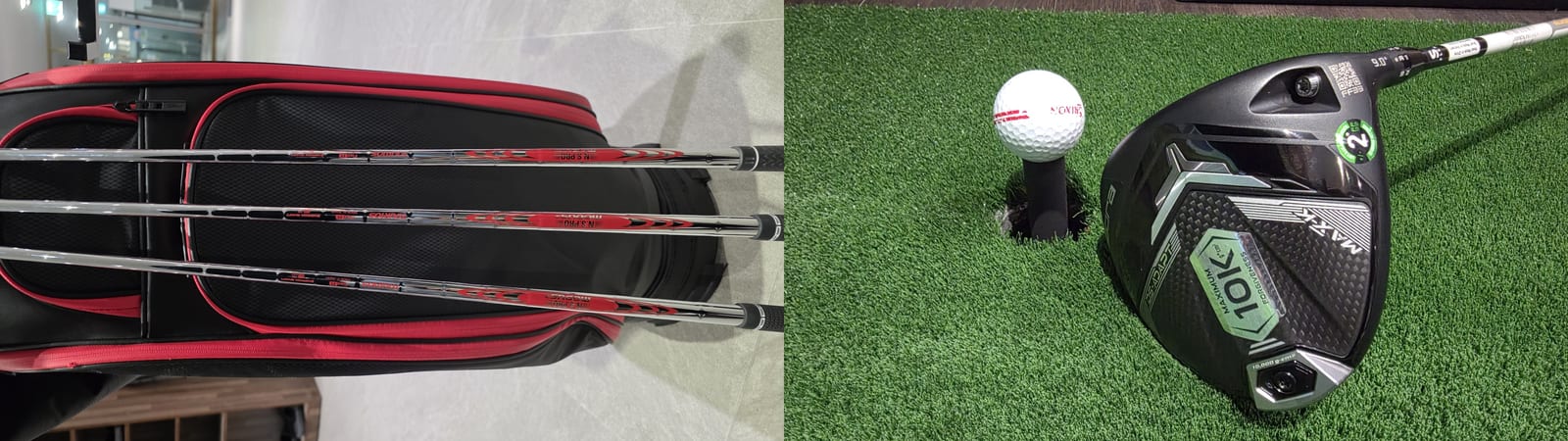
Driver loft is easy to misread. The stamped number describes the club, not what will happen when you swing it. What you actually launch the ball at depends on your attack angle, your swing speed, and how you square the face. Two of those three are yours, not the club’s.
Here is how to figure out which loft suits you, and why “lower loft equals more distance” is only true for some golfers.
Key Takeaways
- Bryson DeChambeau plays a 5.5-degree driver. Phil Mickelson has played 10.5 degrees on Tour. Neither number is universally right (GolfMonthly, Bryson DeChambeau equipment, retrieved 2026-09-13).
- Most beginners and golfers with swing speeds below 85 mph gain distance from a 10.5-degree or higher driver, not from chasing a lower number (GolfSpan, driver loft guide, retrieved 2026-09-13).
- A 9-degree driver with a slow swing produces more spin and less carry than a 10.5 with the same swing - not less spin. The “low loft, low spin” claim assumes you generate enough speed to compress the ball.
- Your attack angle matters as much as loft. A steep downward swing drives spin up regardless of what the hosel says.
- If your ball flight is ballooning (going high and dropping fast), lowering loft is unlikely to fix it. The usual culprit is an open face or a steep attack angle, not too much loft.
In this article:
- Why the stamped number does not equal launch angle
- The swing speed table most fitting guides use
- Why slower swingers gain distance from more loft
- The attack angle problem nobody mentions
- What a ballooning driver usually means
- Who actually needs a 9-degree driver
- Frequently Asked Questions
- What I’d tell someone picking a driver loft
- Terms in this article
Why the stamped number does not equal launch angle
The loft stamped on a driver head is measured in a specific position - usually the head soled flat with the face square. That is not how the club arrives at impact.
Two things change what the ball actually sees at impact.
Attack angle. Whether the club is moving up or down when it meets the ball changes how the ball launches and spins, even with the same head.
Adjustable hosel. Many modern drivers let you dial the loft up or down by 1-2 degrees at the hosel. Turning the loft down on these heads also opens the face angle, which is a separate topic covered in an earlier post on this site. The stamped loft and the playing loft are different numbers once the hosel has been moved.
So when someone says “I play 9 degrees,” they are describing the head setting. The actual launch conditions depend on their swing, and those can look nothing like the label.
The swing speed table most fitting guides use
The standard fitting advice groups players by clubhead speed and suggests a loft range. This is a starting point for conversation, not a prescription.
| Swing speed (mph) | Suggested driver loft |
|---|---|
| Below 75 mph | 14 degrees or higher |
| 75-85 mph | 12-13 degrees |
| 85-95 mph | 10.5-12 degrees |
| 95-104 mph | 9.5-10.5 degrees |
| 105 mph and above | 9 degrees or less |
This table represents common fitting industry guidelines (GolfSpan, driver loft guide, retrieved 2026-09-13). Individual results depend on attack angle, shaft, and ball.
These ranges assume an average attack angle and a reasonably centered strike. If your attack angle is very steep, you may need one full band higher. If you catch the ball with a strong upward sweep, you can handle a band lower.
The typical male amateur swings around 93 mph according to data published by TrackMan. That puts most weekend golfers in the 10.5-degree range, not in the 9-degree range that fills most off-the-shelf displays.
Why slower swingers gain distance from more loft
This is the part that surprises people. If more loft means more spin, how does it also mean more distance?
The answer is that carry distance depends on launch angle, not just spin rate. A ball launched too low does not stay airborne long enough to use its speed. A ball launched at the optimal angle for that speed carries farther even if it spins a bit more.
For slower swing speeds, the optimal launch angle is higher - around 14-16 degrees. A 9-degree driver with a slow swing produces a low launch that runs out of height before it runs out of speed. A 12-degree driver with the same swing gets the ball up into a more efficient trajectory.
Higher loft also produces more forgiveness on off-center hits. For golfers who are still finding consistency, that matters more than squeezing the last yard out of a perfect swing they do not yet have.
The attack angle problem nobody mentions
Most driver loft articles skip attack angle because it is hard to measure without a launch monitor.
A steep, chopping swing - the kind that leaves a deep divot with an iron - often continues into the driver. The ball launches high, spins fast, and drops short. Switching to a lower-lofted driver does not fix this.
The fix for a ballooning driver with a steep attack angle is to work on sweeping the ball off the tee, not to buy a 9-degree head.
What a ballooning driver usually means
Ballooning - high flight, fast drop, short carry - is one of the most common beginner complaints. The usual diagnosis is “too much loft, you need a 9.”
That diagnosis is wrong more often than it is right.
Ballooning comes from high spin rate combined with high launch. High spin comes from three places: steep attack angle, open face at impact, or a strike that is high on the face. The loft setting is rarely the dominant cause.
- Steep attack angle: ball launches high with heavy backspin. Solution is to tee higher and work on sweeping through.
- Open face: ball launches high and right (for a right-hander), with sidespin that also adds to total spin. Solution is addressing the face position, not the loft.
- High face strike: most drivers have a slight gear effect. A strike above center adds backspin. Solution is to check tee height and ball position.
If you lower the loft without addressing any of these, you get a lower launch with the same high spin. The ball goes a bit lower, lands shorter, and is still shorter than it could be.
Who actually needs a 9-degree driver
A 9-degree driver makes sense when all of the following are true.
You swing at 100 mph or faster. You already make consistent, centered contact. Your attack angle is neutral or slightly upward. Your current driver launches too low or at optimal height - not high and ballooning.
PGA Tour players use a range from around 8.5 to 11 degrees depending on their individual attack angle and ball-flight tendencies. Bryson DeChambeau plays a 5.5-degree head (GolfMonthly, retrieved 2026-09-13), a setup built around his own swing, not a template for anyone else.
Most recreational golfers who switch to a 9 because they think it is what better players use end up with a driver that is harder to hit, produces more off-center strikes, and does not gain them distance.
Frequently Asked Questions
Does lower loft mean less spin? Generally yes, but only if swing speed is high enough to compress the ball. A slow swing with a 9-degree head can produce more spin than the same swing with a 10.5, because the lower loft causes a glancing blow at inadequate speed.
I see 10.5 everywhere on the shelf. Is that the default? Yes. Most manufacturers produce more 10.5-degree heads than any other loft because it suits the largest slice of the buying public. 9 and 9.5 are also common. 12-degree heads are less common but exist on most models for high-handicap and senior lines.
Can I just adjust the hosel and find my own number? Yes, adjustable hosels exist for exactly this reason. Start at the midpoint, hit balls, and move in the direction that improves your ball flight. Keep in mind that turning loft down also opens the face on most hosels - an effect that can cause a slice at the extremes.
What if I do not know my swing speed? Most driving ranges and golf stores that sell clubs can measure it for free with a launch monitor. Alternatively, compare your carry distance with your irons to what the manufacturer’s distance chart says. If you are matching the chart with a 7-iron, your swing speed is roughly what they designed the club for.
What I’d tell someone picking a driver loft
If you balloon your drives, start by raising the tee and moving the ball forward in your stance before you change the loft. If that does not help, go up in loft, not down - the flight will lower but the carry will likely go up.
If your drives fly low and roll a long way, you are probably already in good shape. A slight loft reduction might squeeze more carry, but the gain will be small compared to improving your consistency.
If you are new to golf or have been playing fewer than three years, put the 9-degree back on the display. A 10.5 or 11 will hit more fairways, give you more feedback on your swing, and let you develop consistency faster.
The number that gets you the most distance is the one that launches the ball at the best angle for your speed. That is rarely the lowest one on the shelf.
Terms in this article
- Loft: The angle of the clubface, measured in degrees. Higher loft numbers produce higher ball flights.
- Attack angle: The direction the clubhead is traveling at impact - upward (positive) or downward (negative).
- Dynamic loft: The actual loft delivered to the ball at impact, which can differ from the club’s static loft. This is the number that drives launch conditions.
- Launch angle: The angle the ball leaves the club, measured from the ground. Optimal launch angle for distance varies with swing speed.
- Spin rate: The rate of backspin on the ball after impact, measured in revolutions per minute (rpm). High spin with high launch causes the ballooning flight.
- Adjustable hosel: A collar between the shaft and head that allows the loft and lie angle to be changed without replacing the club.
- Carry distance: Distance the ball travels through the air before landing. Different from total distance, which includes roll.