
50g vs 60g driver shaft: what the 10 grams changes, and who each one suits
Ten grams sounds negligible, but it changes how a driver feels and how fast you can swing it. Here's how to choose between a 50g and 60g shaft.
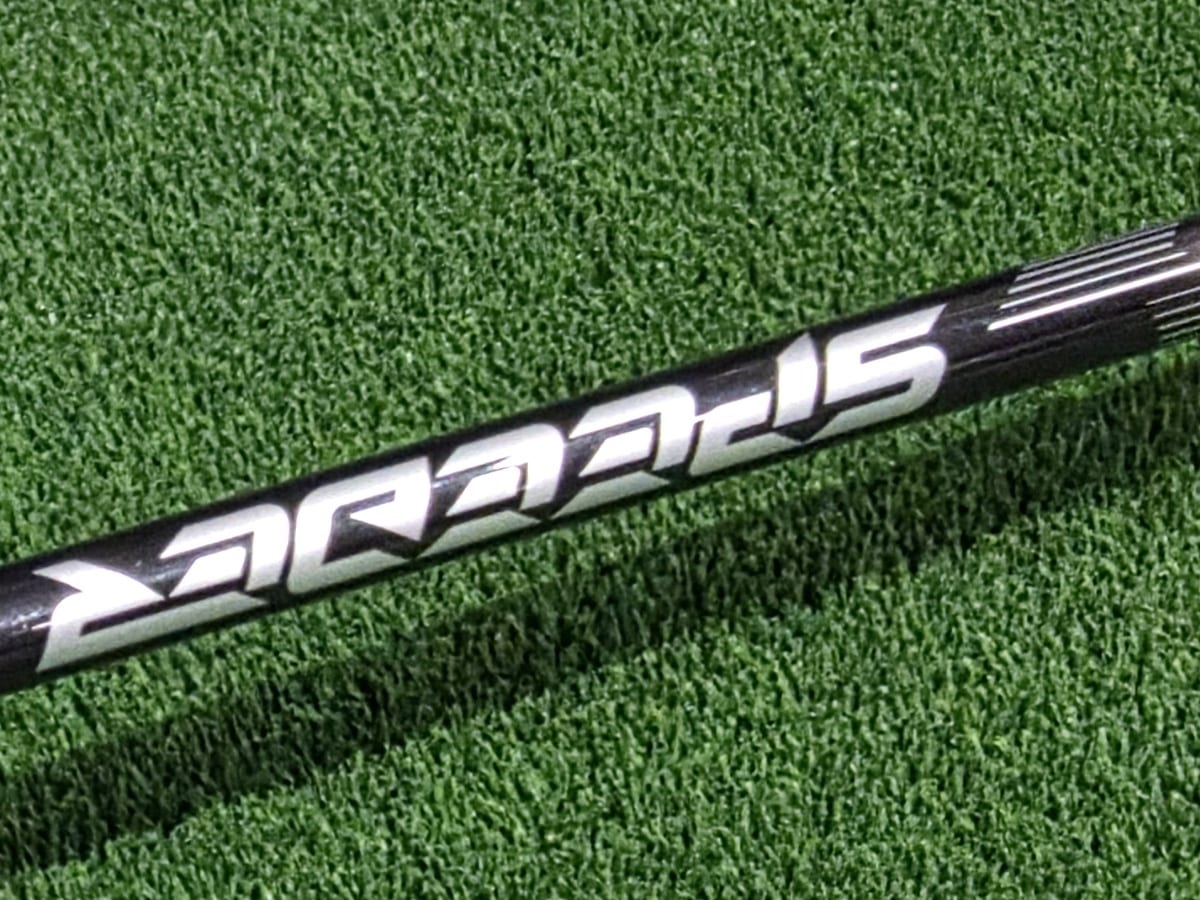
When you shop for a new driver shaft, flex is the letter everyone talks about. People debate Regular versus Stiff like it’s the only letter that matters.
Meanwhile, the club fitter is looking at a different number entirely: shaft weight.
Ten grams sounds trivial. But on the longest club in your bag, it changes how heavy the club feels at the top and how much effort it takes to swing fast.
In shops, the stock driver shaft is usually a 50-gram class, and heavier ones are something you ask for. That’s shop convention, not a spec.
Here’s what that step changes, where the usual advice gets it wrong, and how to test which one fits your swing.
Key Takeaways
- Stock drivers usually come with a 50-gram class shaft. That’s shop convention, and the class number isn’t the exact weight.
- A heavier shaft is supposed to calm a quick transition. That’s a fitter’s starting point, not a promise.
- A shaft that’s too light can make it easy to rush the transition from backswing to downswing.
- A shaft that’s too heavy can cost you swing speed late in the round.
- The shop rule says slower swingers go lighter and faster swingers go heavier. One equipment tester calls that rule “often wrong” (Plugged In Golf), so you’ll want to test both.
In this article:
- Why retail drivers default to 50 grams
- What 10 grams changes in your swing
- Signs the weight is wrong
- The 50g vs 60g comparison table
- How to choose between them
- Frequently Asked Questions
- What I’d tell someone testing driver shafts
- Terms in this article
Why retail drivers default to 50 grams
If you pick up an off-the-rack driver from TaylorMade, Callaway, Ping, or Titleist, check the small spec label beneath the grip for the shaft’s weight class.
Manufacturers don’t publish why. The usual explanation in shops is that a lighter club is easier to swing fast, and speed shows up as distance on the screen.
A lighter club requires less effort to accelerate. In an indoor hitting bay, a 50-gram shaft can help a weekend golfer swing a little faster than a 60-gram shaft.
On the screen, the lighter shaft looks like the better buy.
The problem emerges three weeks later on the fourth hole of a windy Sunday morning. When your timing is slightly off, that featherweight shaft stops feeling fast and starts feeling uncontrollable.
What 10 grams changes in your swing
Two different weights matter here. Total weight is what the club weighs on a scale. Swingweight is how heavy the head feels when you swing it.
A golf club is not a barbell. You do not lift it vertically; you rotate it around your body on an inclined plane.
Where those extra grams sit depends on how the shaft is built, so two 60-gram shafts can feel different. Fitters usually describe two effects, and there’s one thing weight doesn’t do:
- Increases rotational inertia: Rotational inertia is how hard something is to start or stop turning. The heavier club resists sudden, jerky accelerations. It forces your arms and torso to swing as a coordinated unit rather than letting your hands snap the club down from the top.
- Improves kinesthetic awareness: Kinesthetic awareness is your sense of where your body and the club are without looking. Golfer hands have sensitive pressure receptors. A heavier shaft gives your nervous system clearer feedback about where the clubhead is located throughout the backswing.
- Doesn’t set torque by itself: Torque, how much the shaft twists, is a separate number on the spec sheet, so check it instead of assuming a heavier shaft twists less.
Signs the weight is wrong
When the shaft is too light
When an amateur plays a shaft that is too light for their natural strength and tempo, their swing symptoms follow a predictable pattern:
- Rushed transition: Because the club offers little physical resistance at the top, the golfer jerks the club down prematurely instead of letting gravity start the downswing.
- The two-way miss: One drive goes left and the next goes right. Your swing path and face angle are the bigger causes, and the shaft is a secondary suspect (golf shaft flex chart guide).
If you swing hard and feel like you never know where the ball is heading, a heavier shaft is worth testing.
When the shaft is too heavy
Conversely, a shaft that exceeds your physical threshold shows up as speed loss. Your arms work against the extra mass. Late in the round, fatigue sets in, and your swing speed drops.
The 50g vs 60g comparison table
Here is how the two weight classes stack up across key player profiles:
| Metric | 50-Gram Class Shaft | 60-Gram Class Shaft |
|---|---|---|
| Typical swing speed | Slower | Faster |
| Swing tempo profile | Smooth, rhythmic, passive transition | Aggressive, fast transition from the top |
| Primary benefit | Easier to swing fast | Steadier feel for a quick transition |
| Sign it’s wrong for you | Rushed transition from the top | Lost speed late in the round |
| Stock availability | Standard off-the-rack default | Common custom option or aftermarket build |
The swing-speed and tempo rows are shop convention, not measurements. Treat them as a starting point to test.
How to choose between them
Choosing between 50g and 60g is not an ego contest. It is an honest assessment of your tempo and physical stamina.
Choose a 50-gram shaft if:
- Your driver swing speed is on the slower side.
- You have a smooth, deliberate backswing and a fluid transition without a sharp jerk at the top.
- You’ve tried a heavier shaft and your swing felt labored by the back nine.
Choose a 60-gram shaft if:
- Your driver swing speed is on the faster side.
- You have an aggressive, quick tempo with a hard transition from backswing to downswing.
- Your drives go both ways and you’ve already worked on path and face, so a heavier shaft is the next thing to test.
- You feel like your current retail driver feels like a plastic toy that you cannot feel at the top of your swing.
To see how many grams one class step adds, read moving from the shaft you already play.
Frequently Asked Questions
Can I play a 50-gram shaft in Stiff flex? Yes. Weight and flex are separate choices, so a 50S gives you a light shaft with a stiffer flex.
Does a 60-gram shaft automatically lower ball flight? Not automatically. Shaft makers build high-launch 60g shafts and low-launch 50g shafts, so check the launch rating on the spec sheet, not the weight.
Is a 50-gram driver shaft too light? Only if your swing tells you so. If you rush the transition, try one class heavier, and if the heavier shaft feels labored by the back nine, the 50 was fine.
What I’d tell someone testing driver shafts
When you test driver shafts on a launch monitor, do not look at your single longest shot of the session. Look at the size of your shot grouping.
A launch monitor is the device that measures your club and ball at impact and estimates how far the shot went.
If one shaft gives you a single long drive and four in the rough, and the other puts five drives close together in the fairway, the second one is working, even if its longest drive is shorter.
A fairway you hit beats a yardage you saw once on a simulator.
The weight you want is the heaviest one you can still swing comfortably for 18 holes. Shops usually start faster players at 60 grams and smoother swingers at 50, but that’s a convention to test, not a rule.
Terms in this article
- Shaft weight: The weight of the shaft alone, in grams. The 5, 6, or 7 on the band is a rounded weight class, not the exact weight (why the class number isn’t the shipped weight).
- Swingweight: A measurement of the club’s weight distribution, indicating how heavy the head feels relative to the grip end (e.g., D2, D3).
- Tempo: The rhythm and elapsed time of your swing from takeaway to impact. Fast tempo players load shafts harder.
- Transition: The directional shift at the top of the backswing where the club pauses and accelerates toward the ball.
- Two-way miss: A frustrating ball-striking condition where a golfer alternates between hooking left and slicing right without predictability.
- Torsional twist (Torque): The degree to which a shaft twists around its longitudinal axis during the swing, measured in degrees.
- Launch monitor: A device that measures your club and ball at impact and estimates how far the shot went.
- Rotational inertia: How hard something is to start or stop turning. A heavier club has more of it.
- Kinesthetic awareness: Your sense of where your body and the club are without looking.