
Ventus TR vs VeloCore+: Buy TR for Feel, Used 2022 for Value
Ventus TR fits if your transition feels loose and you like the Blue profile; non-TR VeloCore+ if your Ventus feels stable; a used 2022 TR for value.
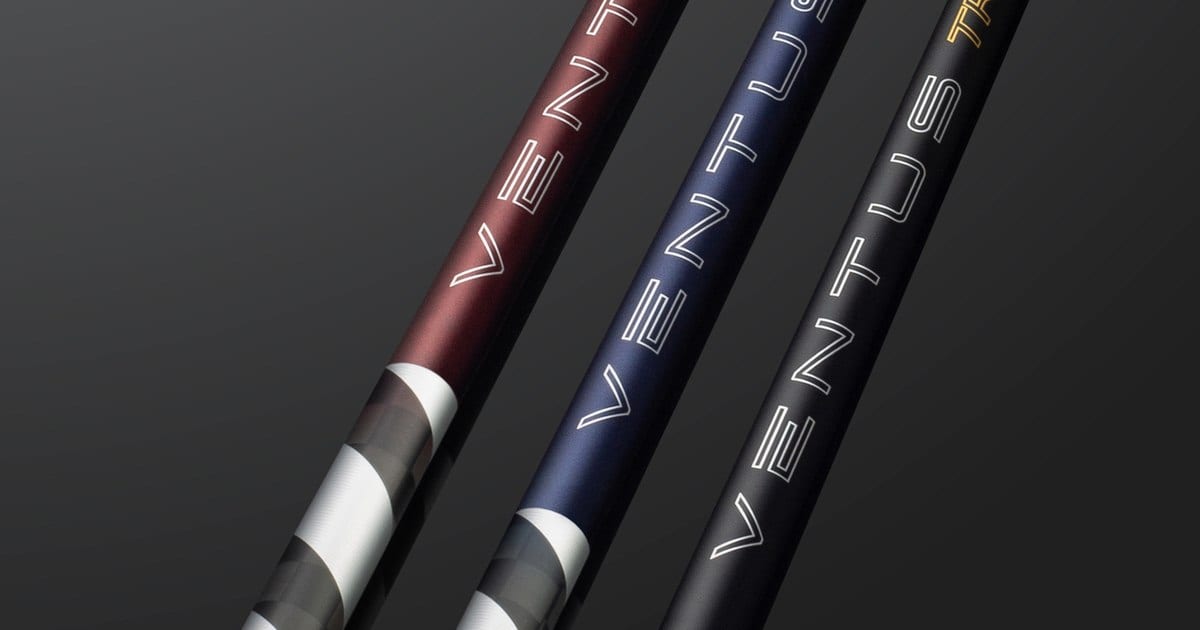
My ball speed jumped up out of nowhere, and that sent me shopping for a used Fujikura Ventus 5S. Then I couldn’t tell from the listings whether I was looking at a Ventus TR or one of the newer VeloCore+ shafts. This post answers the question I had then: which one to buy, and how to tell them apart on a used listing.
The short answer:
- You’ll want TR if your transition feels loose or whippy and you already like the Ventus Blue’s mid-launch, low-spin flight. If your shots also scatter left and right, a fitting will tell you whether TR tightens them; the torque numbers alone can’t.
- You’ll want a non-TR VeloCore+ if your current Ventus already feels stable and you don’t need TR’s firmer transition.
- For value, a used 2022 TR is worth a look. At Blue 6-S, it’s one gram and zero degrees of torque away from the 2026 TR.
Transition is the moment your swing changes direction at the top. Torque is how far the shaft twists, in degrees; lower means less twist. In “6-S,” the 6 is the weight class and the S is the flex, or stiffness.
| Blue 6-S | Weight (g) | Torque (deg) | Pick it if |
|---|---|---|---|
| 2022 TR (VeloCore) | 68 | 3.1 | You want TR’s firmer transition for less, used |
| 2024 VeloCore+ (non-TR) | 65.5 | 3.3 | Your Ventus already feels stable and you don’t need TR’s firmer transition |
| 2026 TR with VeloCore+ | 69 | 3.1 | Your transition feels loose and you like the Blue profile |
Source: Fujikura Golf spec pages for Ventus TR, Ventus with VeloCore+, and Ventus TR with VeloCore+, retrieved 2026-08-30. Full Blue tables for every flex are below.
Key Takeaways
- “VeloCore” and “VeloCore+” are two different shaft cores six years apart, not the same thing with a typo. “TR” is a separate, overlapping upgrade (Spread Tow fabric) that either core can carry.
- Not every shaft with VENTUS on the band has VeloCore. Fujikura, quoted secondhand in a six-year-old GolfWRX thread, said TaylorMade’s stock Ventus ships without it (GolfWRX, retrieved 2026-08-30). A used listing that looks unusually cheap may be that part.
- At Blue 6-S, both TR shafts read 3.1 degrees of torque whichever core is inside, and the non-TR VeloCore+ reads 3.3 (Fujikura Golf TR, Fujikura Golf, Fujikura Golf TR VeloCore+, retrieved 2026-08-30). In Fujikura’s numbers, lower torque follows the Spread Tow fabric, not the core swap.
- A GolfWRX regular measured their own Ventus 5S at 58 g and called it “pretty close up 60g.” That means a 5-weight shaft plays closer to a 6 (GolfWRX, retrieved 2026-08-30). The class number on the label is a rounded suggestion, not the shipped weight.
- Four years of a GolfWRX thread on Ventus Blue vs. Ventus TR still haven’t settled whether TR tightens dispersion (GolfWRX, retrieved 2026-08-30). For your own swing, that answer comes from a fitting.
- There’s no product called “Ventus Plus.” The ”+” you’ll see on listings marks VeloCore+, the 2024 core upgrade, not a separate shaft line.
In this article:
- VeloCore, VeloCore+, and TR are three different words for three different things
- The weight-class number is a rounded suggestion, not the shipped weight
- The full spec tables: three Blue generations
- What the numbers actually show, generation to generation
- Ventus TR vs regular Ventus: what TR actually changes
- Who should actually look at TR
- Buying used: what you can and can’t tell from a listing
- Frequently asked questions
- The short version
VeloCore, VeloCore+, and TR are three different words for three different things
Start here, because the shaft market conflates all three constantly, and the confusion is exactly what cost me time shopping used.
VeloCore is the core construction Fujikura has used since the very first Ventus launched on tour in 2018. It’s a multi-material bias core built around full-length, ultra-high-modulus Pitch 70-ton carbon fiber. Fujikura describes it as delivering “ultimate stability through transition and impact” (Fujikura Golf, retrieved 2026-08-30). The aftermarket Ventus line is built around it. Fujikura’s current product pages all carry “with VeloCore” or “with VeloCore+” branding.
But not every shaft with VENTUS on the band actually has it, and that matters most to the exact buyer this article is for. A GolfWRX poster relayed a statement attributed to Fujikura (GolfWRX, retrieved 2026-08-30). In it, Fujikura calls TaylorMade’s stock Ventus “a Ventus part without VeloCore Technology (no Pitch 70 ton or 40 ton in the bias core).” Fujikura says it was built with TaylorMade to suit a wide range of golfers. The same statement says TaylorMade is “the ONLY company offering ventus without VeloCore as their stock shaft.” A Ventus part at any other brand is described as the aftermarket version, with VeloCore and a $350 MSRP. The named exception is Tour Edge, whose “4T Core” is “same construction as VeloCore, but without the $$$ Pitch 70T material.”
Weigh that source for what it is. It is a manufacturer statement relayed by a forum poster, who says Fujikura was answering questions in a separate thread. I did not read it on fujikuragolf.com. A quote passed along secondhand is weaker evidence than a spec page. The thread is also six years old, with the last reply about four years back. It describes the market as it stood then, not a guarantee of what any brand ships today.
The practical consequence is money. A Ventus listing that looks unusually cheap may be a non-VeloCore stock pull rather than a bargain on the aftermarket shaft. The price gap is the tell.
VeloCore+ is the 2024 replacement for the original core: a re-engineered bias construction with an added premium bias-core material. Fujikura positions it as “the ultimate consistency upgrade” for tighter dispersion and higher ball speed (Fujikura Golf, retrieved 2026-08-30). If a shaft is stamped “VeloCore+,” it’s running the newer core. If it just says “VeloCore,” it’s the older one. That’s the entire distinction, and it applies whether or not the shaft is also a TR.
TR is a separate, independent upgrade that launched in 2022, two years before VeloCore+ existed. It adds a lightweight Spread Tow carbon fabric to the handle and mid-section. That’s aimed at reducing torsional deformation as the shaft loads and unloads through transition. Fujikura’s own description of the original TR line: “while VeloCore is still used throughout the Ventus TR shaft, the new construction features Spread Tow fabric in the butt-end section to increase torsional stiffness.”
TR and VeloCore+ shipped two years apart. That created a real window, 2022 to 2024, where you could only buy TR with the old core. A second two-year window followed, 2024 to 2026, when you could get VeloCore+ only without TR. Only in 2026 did Fujikura combine both into one shaft. That gives four historical products, but this article covers the three that actually turn up on a shopping search or a used-market listing today. The original 2018 Ventus (VeloCore, no TR, no plus) is rare enough on resale now that it’s a footnote here, not a full entry. I reference its numbers once below, where they explain a pattern in the newer data.
| Generation | Launch | Name | Core | Spread Tow (TR) |
|---|---|---|---|---|
| 2 | 2022 | Ventus TR | VeloCore (original) | Yes |
| 3 | 2024 | Ventus with VeloCore+ | VeloCore+ | No |
| 4 | 2026 | Ventus TR with VeloCore+ | VeloCore+ | Yes |
One naming note before the numbers: there is no shaft called “Ventus Plus.” The ”+” that shows up in listings and on the shaft graphics marks VeloCore+, the core technology, not a separate product tier. “Ventus TR+” and “Ventus TR with VeloCore+” refer to the same current shaft.
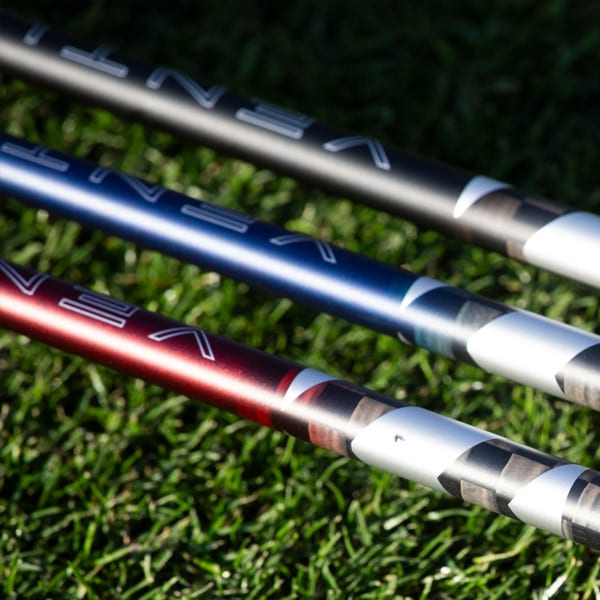
Photo: Fujikura Golf official product page, retrieved 2026-08-30.
The weight-class number is a rounded suggestion, not the shipped weight
This is the specific confusion that stalled my own used-shaft search, and a GolfWRX thread confirms it isn’t just me. In “Move from Ventus 6S to 5S experiences??,” a poster who’d owned several weight classes measured their own shafts and reported: “PS weights of Ventus shafts are slightly heavy (5S are 58 g, so pretty close up 60g) so a 5 weight is more like a 6-” (GolfWRX, retrieved 2026-08-30). The number stamped on the shaft (5, 6, 7, 8, 9) is a weight class. The class boundaries don’t line up with the grams as cleanly as the single digit implies.
Fujikura’s own tables back that up. Combine the two TR-badged generations (2022 and 2026), and Ventus TR Blue class 5 runs 56-60 g across its flexes; class 6 runs 67.5-69.5 g; class 7 runs 77.5-79 g (Fujikura Golf, Fujikura Golf TR VeloCore+, retrieved 2026-08-30). A class boundary that looks like a clean 10-gram step on the label is really a 7.5-to-13.5-gram jump. It depends which two flexes you’re comparing across the line.
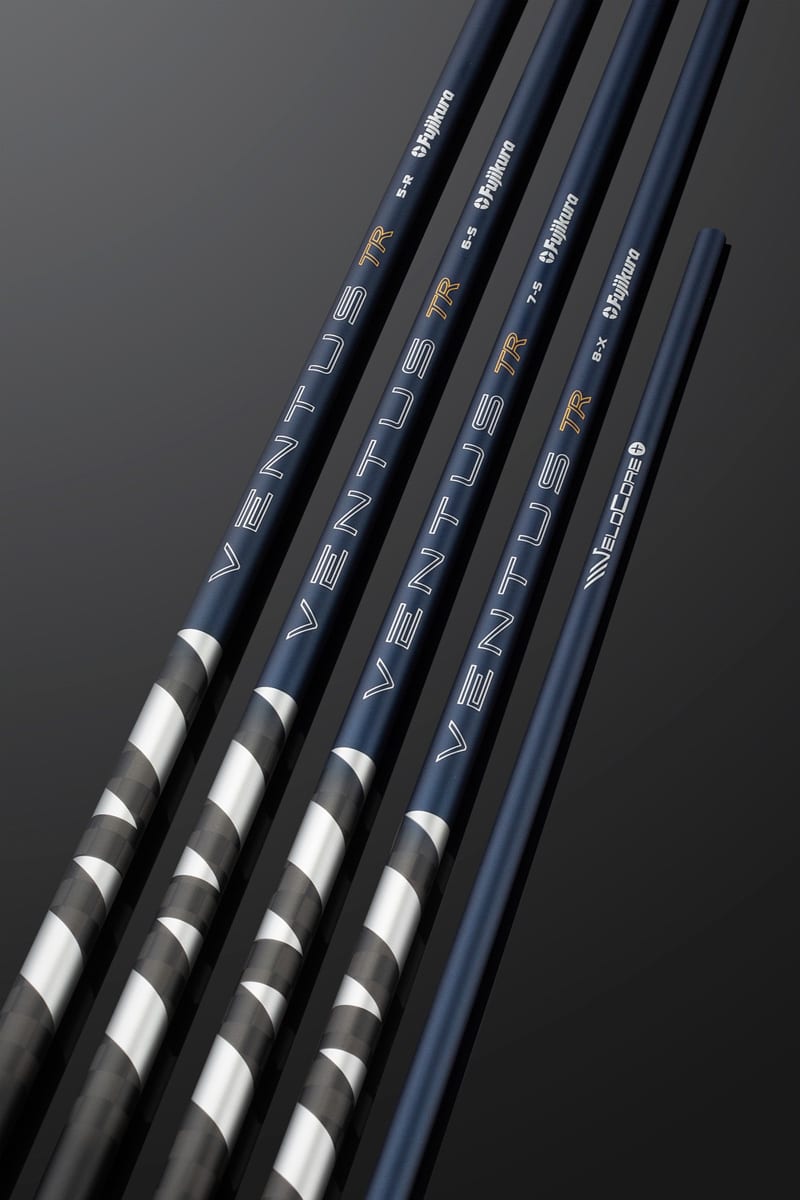
Photo: Fujikura Golf official product page, retrieved 2026-08-30. Read the weight class off the band, then check the table below for the actual gram count before you buy.
Real swing speeds attached to real class-changes, from the same thread. One poster averaging 110 mph (up to 115 “when stepping on one”) moved from a 6S to a 5S and liked it. Another at 102 mph decided to stay put: “That’s much faster than me. I’ll stick with stiff.” (GolfWRX, retrieved 2026-08-30). Nobody in that thread was moving classes based on the label number alone. They were moving based on how the actual weight played at their own speed, which is the right way to read the tables below.
The full spec tables: three Blue generations
Here’s the actual data, generation by generation, straight from Fujikura’s product pages. Weight is grams; torque is degrees (lower means less twist through the swing). See the torque section of my flex chart guide for the fuller explanation of what that number does to your miss.
I also pulled three more columns Fujikura publishes alongside weight and torque. Most third-party charts strip these out: Bend Point (what golfers usually call kick point, on a Low-to-High scale), Spin, and Launch. A low bend point sits nearer the clubhead and helps the ball climb; a high bend point sits nearer the grip and holds flight down. L/M/H stand for Low, Mid, and High; combined ratings like M/H mean Fujikura places that row between the two.
Generation 2 - Ventus TR (2022, VeloCore)
| Color | Class-Flex | Weight (g) | Torque (deg) | Bend Point | Spin | Launch |
|---|---|---|---|---|---|---|
| Blue | 5-R2 | 56 | 3.7 | M | L | M |
| Blue | 5-R | 58 | 3.5 | M | L | M |
| Blue | 5-S | 58 | 3.3 | M | L | M |
| Blue | 6-R | 67.5 | 3.3 | M | L | M |
| Blue | 6-S | 68 | 3.1 | M | L | M |
| Blue | 6-X | 68 | 2.9 | M | L | M |
| Blue | 6-TX | 69.5 | 2.9 | M | L | M |
| Blue | 7-S | 77.5 | 2.9 | M | L | M |
| Blue | 7-X | 78.5 | 2.7 | M | L | M |
| Blue | 8-S | 86.5 | 2.8 | M | L | M |
| Blue | 8-X | 88.5 | 2.6 | M | L | M |
| Blue | 9-X | 97 | 2.5 | M | L | M |
Source: Fujikura Golf, “Ventus TR” (VeloCore) official spec page, retrieved 2026-08-30.
Generation 3 - Ventus with VeloCore+ (2024, non-TR)
| Color | Flex | Weight (g) | Torque (deg) | Bend Point | Spin | Launch |
|---|---|---|---|---|---|---|
| Blue | R2 | 58 | 3.9 | L/M | M | M/H |
| Blue | R (5-class) | 58.5 | 3.7 | M | L | M |
| Blue | S (5-class) | 58.5 | 3.5 | M | L | M |
| Blue | X (5-class) | 59 | 3.3 | M | L | M |
| Blue | R (6-class) | 65 | 3.4 | M | L | M |
| Blue | S (6-class) | 65.5 | 3.3 | M | L | M |
| Blue | X (6-class) | 66 | 3.1 | M | L | M |
| Blue | TX (6-class) | 66.5 | 3.1 | M | L | M |
| Blue | S (7-class) | 75.5 | 3.0 | M | L | M |
| Blue | X (7-class) | 76 | 2.9 | M | L | M |
| Blue | TX (7-class) | 77 | 2.9 | M | L | M/L |
| Blue | S (8-class) | 84.5 | 2.9 | M | L | M/L |
| Blue | X (8-class) | 85 | 2.8 | M | L | M/L |
| Blue | X (9-class) | 94 | 2.8 | M | L | M/L |
Source: Fujikura Golf, “Ventus with VeloCore+” official spec page, retrieved 2026-08-30.
Generation 4 - Ventus TR with VeloCore+ (2026, current)
| Color | Class-Flex | Weight (g) | Torque (deg) | Bend Point | Spin | Launch |
|---|---|---|---|---|---|---|
| Blue+ | 5-R | 60 | 3.6 | M | L | M |
| Blue+ | 5-S | 60 | 3.4 | M | L | M |
| Blue+ | 5-X | 60 | 3.4 | M | L | M |
| Blue+ | 6-R | 68 | 3.3 | M | L | M |
| Blue+ | 6-S | 69 | 3.1 | M | L | M |
| Blue+ | 6-X | 69 | 2.9 | M | L | M |
| Blue+ | 6-TX | 69 | 3.0 | M | L | M |
| Blue+ | 7-S | 79 | 2.9 | M | L | M |
| Blue+ | 7-X | 79 | 2.7 | M | L | M |
| Blue+ | 7-TX | 79 | 2.8 | M | L | M |
| Blue+ | 8-S | 87 | 2.8 | M | L | M |
| Blue+ | 8-X | 87 | 2.6 | M | L | M |
| Blue+ | 9-X | 98 | 2.6 | M | L | M |
Source: Fujikura Golf, “VENTUS TR with VeloCore+” official spec page, retrieved 2026-08-30.
What the numbers actually show, generation to generation
Competing shaft guides describe VeloCore+ in adjectives: “tighter dispersion,” “the ultimate consistency upgrade.” None of them line the gram and torque numbers up side by side. Once you do, the pattern isn’t what the marketing copy implies.
Take Blue at the 6-class, S flex, across every version Fujikura has shipped:
Read straight down that column and the torque number tracks Spread Tow, not the core. Both TR versions land at 3.1 degrees, four years apart, regardless of which core is inside. The one non-TR VeloCore+ entry, 2024’s Blue S, is actually the softest of the four at 3.3 degrees. That’s softer than the 2018 original it replaced (Fujikura Golf, retrieved 2026-08-30). The core upgrade alone didn’t tighten anything at Blue; adding the fabric did.
One data point doesn’t prove a pattern. The rest of the Blue table backs it up, though. From class 5 through 9, all but one TR row read lower in torque than the non-TR row with the same flex letter. The exception is Generation 4’s 5-X: 3.4 degrees against Generation 3’s 3.3.
So it isn’t a law. It’s consistent enough at the classes most golfers buy that I’d trust it as a buying signal. It doesn’t prove VeloCore+ “does nothing” on its own. Here’s the honest read: the Spread Tow fabric does more of the work behind the firmer transition and lower torque than the core swap, at least in Blue.
Across every generation, weight climbs a little as classes go up (5 to 9), and torque falls a little as weight climbs. That relationship holds inside each generation’s own table. It’s the comparison across generations, at a fixed class number, where the surprise is.
Ventus TR vs regular Ventus: what TR actually changes
TR changes how the shaft twists through transition. At Blue, it mostly leaves the flight alone. That comes from one part: the Spread Tow carbon fabric in the handle and mid-section.
Apart from R2, Fujikura rates Blue TR and non-TR rows with the same mid bend point and low spin. Launch matches too, at mid, through 7-X. If you’re buying 7-TX or heavier, the non-TR VeloCore+ is rated one notch lower in launch (M/L). If you play R2, the non-TR VeloCore+ R2 is rated with a lower bend point, higher launch and more spin.
On the spec sheet, the difference shows up as torque. At Blue 6-S, both TR versions hold 3.1 degrees whichever core is inside, while the non-TR VeloCore+ reads 3.3 (Fujikura Golf TR, Fujikura Golf, Fujikura Golf TR VeloCore+, retrieved 2026-08-30). The same pattern holds across the Blue tables, with 5-X the one exception.
The numbers explain the mechanism. The “Ventus Blue vs. Ventus TR?” GolfWRX thread is where you find out whether players feel it. It’s been running since 2022, and it was still getting replies when I checked in August 2026: 52 total, 102,400 views (GolfWRX, retrieved 2026-08-30). That’s a large enough sample of self-reported fittings to treat as more than one person’s opinion.
The recurring description of TR: “The TR mostly comes across as firmer with less of that rubbery loading quality that mid soft shafts like the Blue tend to have,” from one longtime poster who plays both. Another, coming from a Blue 6S at 107 mph swing speed, described the TR version as “loving the penetrating flight with firmer with compared to blue, and it does load a little bit but not as much as blue.”
Not everyone is sold. One poster asked the thread outright: “Is the hype of better dispersion with the TR anything more than a marketing gimmick?” That question never gets a clean yes from the thread, and I’m not going to invent one either. The torque numbers above say TR shafts twist less, which is a real, measurable difference. But “less twist” and “meaningfully tighter dispersion for you personally” are not the same claim. Only a fitting session settles the second one.
One more correction worth keeping: a poster tried TR expecting it to play like a hybrid of Black and Blue. They reported back that it doesn’t. “I thought the TR would play more like a blend of a ventus black and blue, but to be clear, this is still very much a ‘blue’ profile.” TR firms up Blue’s transition feel. It doesn’t shift Blue’s launch and spin identity toward a different profile in the lineup.
Who should actually look at TR
Based on the spec deltas and the practitioner reports above, TR is worth seeking out specifically if:
- You’ve described your own transition as “loose” or “whippy” in a fitting, independent of flex. That’s the loading behavior Spread Tow targets directly
- Your shots scatter left and right and a fitting points at the shaft. The torque tables show TR twists less; only that fitting shows whether it tightens your dispersion
- You’re already fit into the Ventus Blue profile and like its launch and spin character. You want the same profile with a firmer, more locked-in feel through transition, not a different flight shape
That third bullet assumes you already know which color you belong in. If you don’t, that’s the prior question, and it’s a different one: you work it out from the shaft you play now, one axis at a time. I walk through that in how to pick a Ventus color, weight, and flex from the shaft you already play.
A non-TR VeloCore+ shaft is the better starting point if your current non-TR Ventus already feels stable and you have no complaints about the transition. Next to a used 2022 TR, it’s also the newer core, though the 2026 TR carries that same core. The data above doesn’t support “VeloCore+ makes everything stiffer” as a blanket claim. At Blue 6-S, it’s rated softer than both TR versions on either side of it.
If you’re shopping used and money matters more than having the newest core, an older TR VeloCore shaft (2022) is worth a look. It delivers most of the torque tightening that TR VeloCore+ (2026) does, at the same weight class, for a fraction of retail. The gap between generation 2 and generation 4 in the Blue 6-S row above is one gram and zero degrees of torque.
Buying used: what you can and can’t tell from a listing
I spent longer than I’d like to admit deciding whether to buy a used Ventus 5S. Cost wasn’t what held me up at first. I couldn’t tell what I was looking at, or whether “5S” meant the same weight on both shafts. Every listing photo showed the same three colors, the same font, and the same “TR” badge on some and not others. No seller could tell me which core generation was under the paint.
That’s why I put two sources side by side. Fujikura’s own product pages settle the weight and torque question with real numbers. A few very active GolfWRX threads settle the “does it actually feel different” question with real swing speeds attached. Neither is hard to find on its own, but I couldn’t find anyone who had lined them up.
Photos alone never settled my own Ventus 5S question, and I’d be lying if I said there’s a foolproof visual trick. What settled it in the end was the price. I’d heard VeloCore was the part that mattered, but in listings I kept reading plain “Ventus Blue” and “Ventus Blue VeloCore” as the same shaft. They are not. When I searched specifically for the VeloCore versions, they cost noticeably more. So I waited on the used market. What I ended up with is a Ventus TR Blue 5S with VeloCore, the 2022 Generation 2 shaft in the tables above. I already had a Titleist sleeve on hand, so it went in without an adapter change.
What the spec tables above do let you do is cross-check a claim once you have real numbers in hand:
- Ask the seller for the weight and torque printed on the shaft band, not just the color and class number. Cross-reference against the tables above. If a “5S” weighs 65 g, it isn’t a Blue 5S from any generation in the tables above (those run 58-60 g). Something doesn’t match, and that’s worth a direct question before you pay
- “TR” on the band means Spread Tow is present, regardless of which core generation it pairs with. A shaft marked plain “Ventus” with no TR badge is a non-TR shaft, generation 1 or generation 3. It can also be an OEM stock part with no VeloCore in it at all, so ask what club it came out of
- The ”+” mark indicates VeloCore+. No plus mark on an otherwise TR-badged shaft points to the 2022 Generation 2 TR, not the current 2026 version
None of this replaces asking Fujikura directly if you have real doubts about authenticity. That’s a separate question from which generation you’re looking at, and out of scope here. But if the seller can give you the weight off their own scale, you can place the shaft in the tables above with real confidence.
Frequently asked questions
Is Ventus TR the same as Ventus VeloCore+?
No. TR refers to the Spread Tow fabric reinforcement, first added in 2022. VeloCore+ refers to the core material upgrade, first added in 2024. A shaft can have either one alone or both together; “Ventus TR with VeloCore+” is the current flagship that combines them.
What does the ”+” mean on a Ventus shaft?
It marks VeloCore+, the 2024-and-later core construction. There is no separate product called “Ventus Plus.” The plus sign is shorthand for the core technology, not a different shaft line.
Does a heavier weight class always mean lower torque?
Within one generation’s table, yes, roughly: weight and torque move together as class numbers climb. Across generations at the same class number, no. The data above shows a non-TR VeloCore+ Blue 6-S at higher torque than either TR version, despite similar weight.
Is TR worth the upgrade over a standard Ventus?
If your complaint is transition feel, yes: TR twists less, and GolfWRX posters who’ve hit both call it firmer. Only a fitting shows whether that tightens your dispersion. If your complaint is launch or spin, TR won’t change much. At Blue, TR and non-TR rows share the same spin rating outside R2 and the same launch rating in most classes.
The short version
“VeloCore” and “VeloCore+” are two core generations, six years apart. “TR” is a separate fabric upgrade that either core can carry. It’s the fabric, not the core, that shows up as lower torque in Fujikura’s own numbers. The class number on the band (5 through 9) is a rounded suggestion; the grams printed next to it are the real spec. Cross-check both against the tables above before you buy, especially used.
If you’re weighing a broader shaft question, I covered that ground in my golf shaft flex chart guide. It covers why flex letters vary across brands and how much weight actually belongs in your driver versus your irons. It pairs well with the generation-specific numbers here. And if the shaft swap has you looking at the driver head itself too, I broke down how loft sleeve settings change face angle in my driver loft sleeve guide.
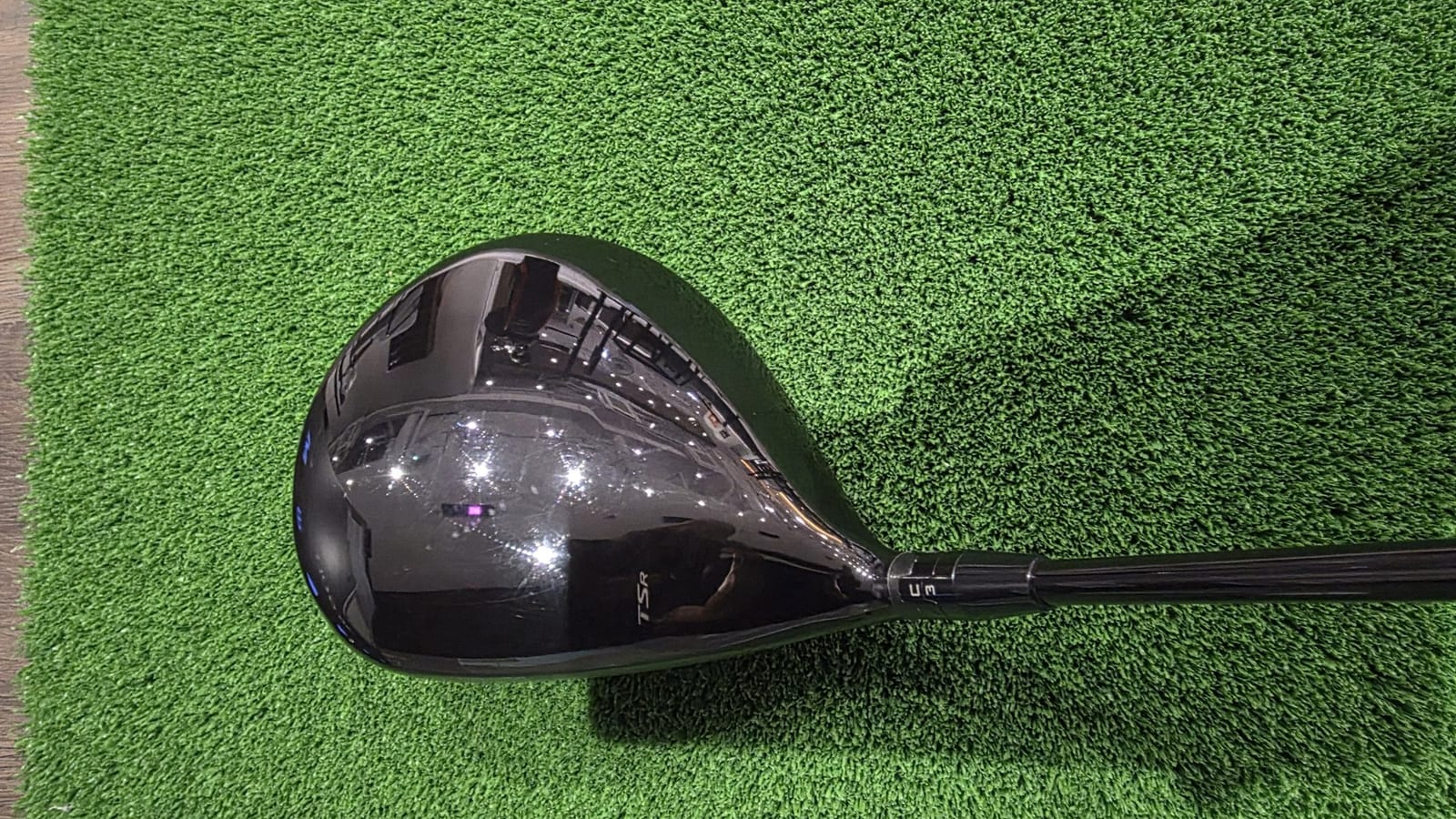
My Titleist TSR3 U3 fairway wood, the club I was shopping a replacement shaft for while writing this.
Terms in this article
- Transition: the moment your swing changes direction at the top.
- Torque: how far the shaft twists, in degrees. Lower means less twist.
- VeloCore: Fujikura’s original Ventus core, from 2018.
- VeloCore+: the 2024 replacement core. The ”+” on a band marks it.
- TR (Spread Tow): a carbon fabric in the handle and mid-section that cuts twist. Either core can carry it.
- Bend point: where the shaft bends most. Low helps the ball climb; high holds flight down.
- Weight class: the 5-9 number on the band. It rounds the real grams.
- Flex (R2, R, S, X, TX): the stiffness letter after the class number, softest to stiffest. R2 sits below R.