
145 mph ball speed, 220-yard drives: check carry against total first
TrackMan's average male amateur carries 204 yards and totals 226 off the same swing. Before blaming spin, find out which of the two numbers your screen shows.
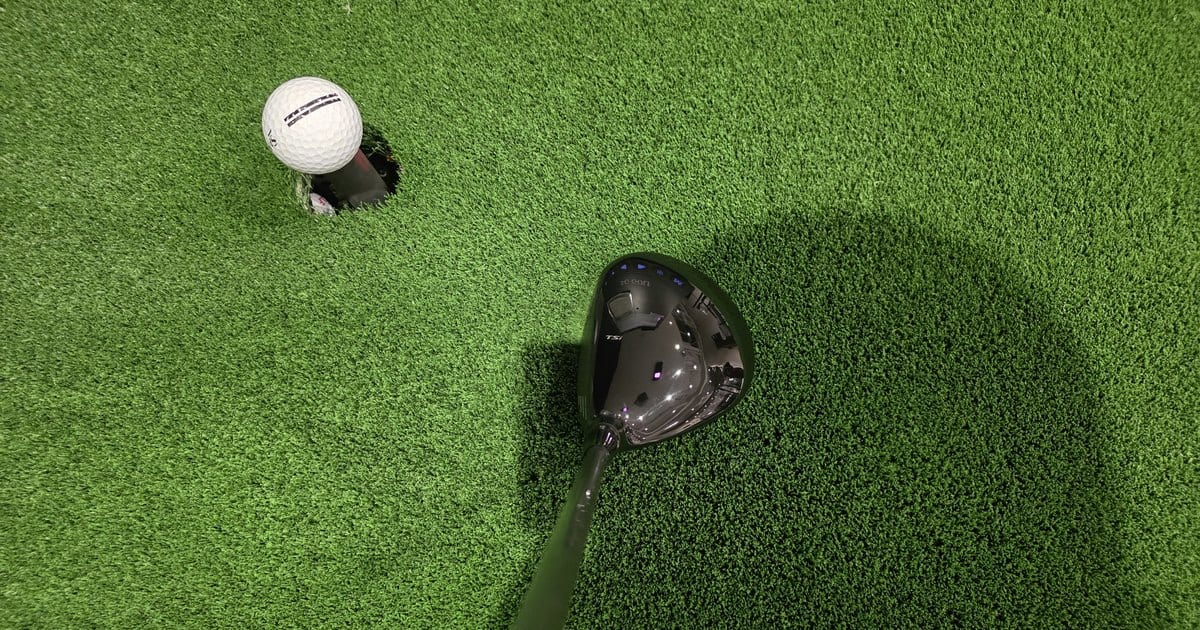
Your monitor says 145 mph of ball speed. The distance field next to it says 220 yards. Those two numbers look like they came from different golfers. The first answer online is that your spin is too high.
It might be. But there’s a cheaper question to ask first, and almost nobody asks it. Is that 220 yards the carry, or the carry plus the roll?
The answer changes the size of your problem. In the TrackMan data below, carry and total sit 22 yards apart on one drive. It also changes what you go looking for, so we’ll settle that first.
The short answer
- TrackMan’s average male amateur carries 204 yards and totals 226 off one swing. A launch monitor may show you either number.
- That amateur’s optimal launch conditions top out at 140.1 mph of ball speed. At 145 you already have more speed than that row.
- That optimal row changes three inputs: spin (3,275 to 2,300 rpm), launch angle (12.6 to 14.7 degrees), and ball speed (132.6 to 140.1 mph).
- So: find which distance you’re reading, get a reading that includes spin, then work on spin and launch. At 145 mph the speed gain is already banked, so speed isn’t your bottleneck.
Is that 220 yards your carry or your total?
Carry is how far the ball flies before it first touches the ground. Roll is how far it runs after landing. Total distance is the two added together.
That gap isn’t small. In TrackMan’s measurements of the average male amateur, one drive carries 204 yards and totals 226 (TrackMan Golf, in Japanese, retrieved 2026-09-01). Same swing, same ball, 22 yards apart.
Here’s the readout from my own session.
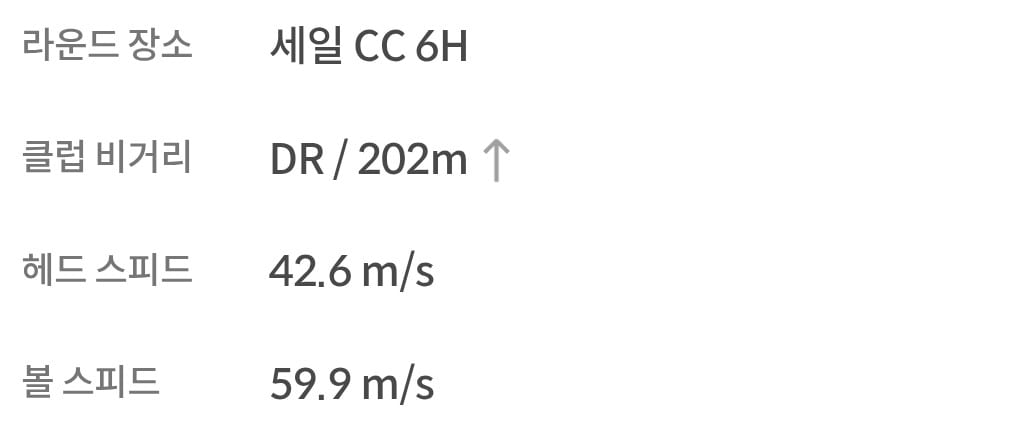 My own Golfzon screen-golf readout, January 2026, indoor bay, driver. The rows read course, club distance 202 m, head speed 42.6 m/s, ball speed 59.9 m/s.
That’s 95 mph of club speed, 134 mph of ball speed, and 202 m (221 yards). Both speed numbers land almost exactly on TrackMan’s amateur row. But my reported distance is much closer to their 226-yard total than their 204-yard carry.
That’s one session from one player, not a teardown of how simulators compute distance. My 134 mph isn’t the 145 mph this article is about, so don’t assume your machine behaves like mine. The point is the field label, not the speed. Go find the same answer for your own machine before you change anything.
What 145 mph of ball speed is actually worth
Now the benchmark. TrackMan publishes what its average male amateur does with a driver, and what the same swing would do with optimal launch conditions. The figures come from TrackMan Combine sessions with more than 10,000 golfers, normalized to sea level (TrackMan Golf, in Japanese, retrieved 2026-09-01). That same source puts that average player at a handicap of 14 or 15.
| Actual | Optimal | |
|---|---|---|
| Club speed | 93.4 mph | 93.4 mph |
| Ball speed | 132.6 mph | 140.1 mph |
| Launch angle | 12.6 degrees | 14.7 degrees |
| Attack angle | −1.6 degrees | not published |
| Spin rate | 3,275 rpm | 2,300 rpm |
| Carry | 204 yards | 228 yards |
| Total | 226 yards | 255 yards |
Read the ball speed row twice. The optimal column only reaches 140.1 mph. If you’re reading 145, you’re already past the best-case ball speed for that swing.
You’re not short on speed. You’re short on the launch conditions that turn speed into yards.
One caveat before you carry that 24-yard figure around. The optimal column also raises ball speed from 132.6 to 140.1, so it assumes better contact too. The gain isn’t purely spin and launch. At 145 mph that contact gain is banked, and what’s left is the launch window.
For scale, TrackMan puts a 5-handicap male amateur at 147 mph of driver ball speed and a 10-handicap at 138 (TrackMan Golf, retrieved 2026-09-01). At 145 you’re in single-digit-handicap company on speed alone.
The first thing eating it: spin
Spin rate is how fast the ball rotates backward as it leaves the face, in revolutions per minute. Too little and the ball falls out of the air. Too much and it climbs, stalls, and drops short.
The amateur spins the driver at 3,275 rpm. The optimal row for the same swing sits at 2,300.
That’s about 42 percent more spin than the optimal figure. Spin is also the one variable that can climb while your ball speed stays put.
Three things push spin up, and none of them is a measurement:
- hitting down on the ball
- striking low on the face
- delivering more loft than the club is stamped with
That’s how fitters talk about the causes. The measurement is the rpm figure your monitor shows, if it shows one.
If your monitor doesn’t report spin, that’s worth knowing before you spend money.
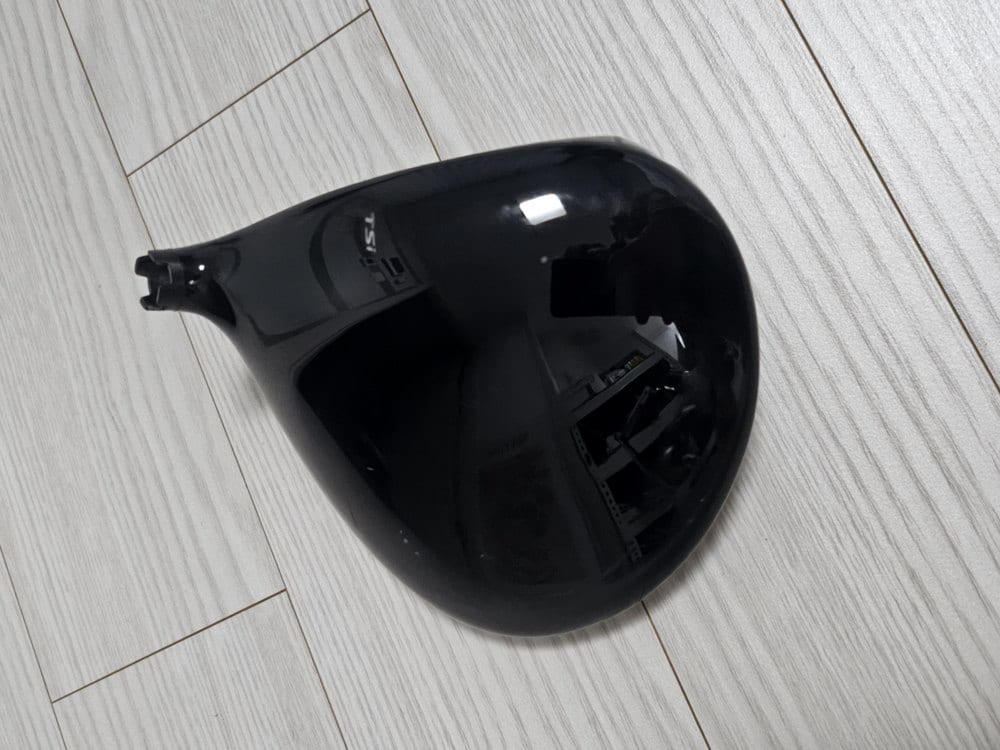
Adjustable hosels change delivered loft, and I worked through what those settings move in my piece on the driver loft sleeve.
The second thing: launch angle and attack angle
Launch angle is the angle the ball leaves the ground at, in degrees. Attack angle is whether the club head is descending or rising when it reaches the ball. Negative means you’re hitting down on it.
In the table above, the amateur launches at 12.6 degrees and the optimal row wants 14.7. His attack angle is −1.6 degrees, so he’s hitting down on a driver.
These two aren’t separate projects. Attack angle moves launch and spin at once, in opposite directions. Hit up instead of down, and launch rises while spin drops. That’s what the optimal row is built from.
Fitters work to a window, not a single value. True Spec Golf publishes preferred driver parameters for a 97 to 104 mph club speed. They put launch at 12 to 16 degrees and spin at 2,000 to 2,500 rpm (GOLF.com, retrieved 2026-09-01). If your club speed sits in that band, TrackMan’s 14.7 and 2,300 land inside the window too.
If you want the cheap version: tee it higher and play the ball farther forward, then watch what the numbers do. That’s a starting position, not a swing fix.
So what do you actually do?
Here’s the order I’d work in, and the first step is free.
- Find out whether your number is carry or total. Look for a second distance field or a settings toggle. If it shows only one, check whether it sits above or below the benchmarks in the table above.
- If it’s carry and you’re near 220, you’re close to the ceiling. TrackMan’s optimal carry at 140.1 mph is 228 yards. Not much is left on the table.
- If it’s total, first get a reading that includes spin and attack angle. Golf shops will usually put you on a launch monitor for free, and many report both.
- Then start with spin. In relative terms that’s the largest gap in TrackMan’s table, and it moves without touching your speed.
- Don’t buy a stiffer shaft to fix this. Flex isn’t the distance lever the rack implies, and I went through the measured evidence in regular versus stiff. The same letter also shifts between brands, which the flex chart guide lays out.

If your only numbers come from an indoor bay, treat them as a comparison tool. They’re good for telling whether today’s change helped, weaker for telling you how far you hit it on grass.
Frequently asked questions
How far should 145 mph of ball speed carry?
TrackMan’s optimal launch conditions produce 228 yards of carry at 140.1 mph of ball speed (TrackMan Golf, in Japanese, retrieved 2026-09-01). TrackMan separately says 1 mph of ball speed can add up to 2 yards of driver distance (TrackMan Golf, retrieved 2026-09-01). That’s a ceiling, and it’s stated for distance, not carry. So the extra 4.9 mph is worth at most about 10 yards, which makes 238 an upper bound rather than a target.
Is 220 yards bad for 145 mph of ball speed?
It depends on which number you’re reading. As a carry figure it’s respectable and close to the practical ceiling for that speed. As a total it’s roughly 35 yards short of what TrackMan’s optimal row reaches from less ball speed.
Does more ball speed always mean more distance?
No. Ball speed sets the size of the container, and launch angle and spin decide how much of it you get. TrackMan’s amateur table shows a 24-yard carry gap between the real and optimal rows at the same club speed. That optimal row also raises ball speed from 132.6 to 140.1 mph, so those 24 yards are not launch and spin alone.
Why is my screen-golf distance different from what I hit on the course?
Simulated distance comes from what the sensor sees, run through the course conditions the software models. Slope, turf, and roll assumptions all move it. Use it to compare one swing against another on the same machine, not to set club distances for a real course.
Terms in this article
- Ball speed: how fast the ball moves immediately after impact, in mph. The biggest single input to distance, but not the only one.
- Carry / roll / total distance: carry is the flight before the first bounce, roll is the run after it, total is both added. A launch monitor may headline either one.
- Spin rate: how fast the ball rotates backward in flight, in revolutions per minute. Too much makes the ball climb and drop short instead of running out.
- Launch angle: the angle the ball leaves the ground at, in degrees.
- Attack angle: whether the club head is descending or rising when it reaches the ball, in degrees. Negative means you’re hitting down on it.