
Golf swing speed and distance: what the average amateur hits, and where yards leak
TrackMan's average male amateur swings driver at 93.4 mph and finishes 214 yards out. Here is why swing speed alone doesn't set your distance, and how to read your own launch monitor numbers.
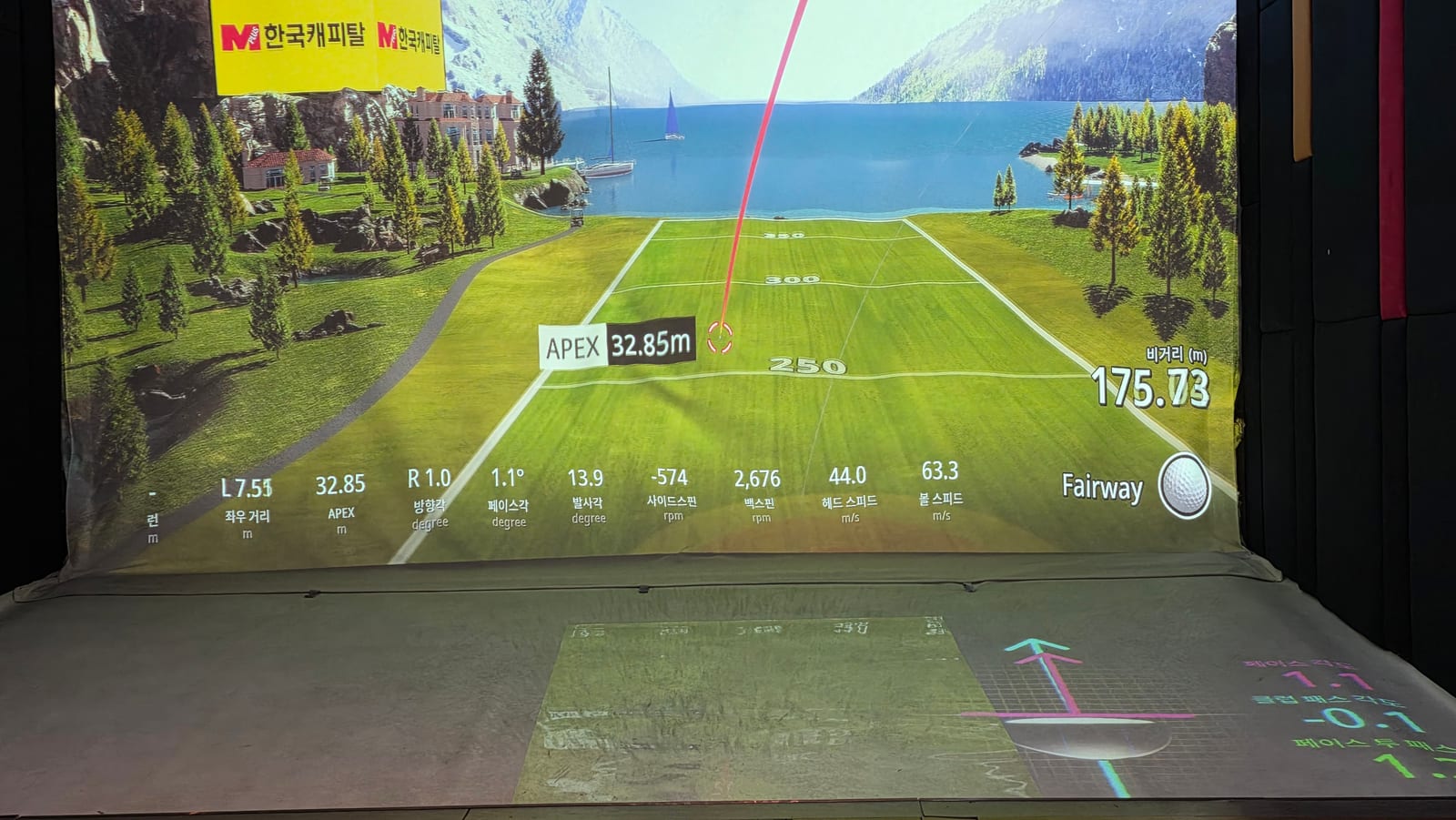
Swing speed creates potential distance, not guaranteed distance. What actually determines how much of your speed turns into distance is how cleanly you transfer club speed into the ball, and whether your launch angle and spin rates work together.
Here is what the average amateur’s numbers look like, and the three reasons your drives might be falling short of your radar number.
Key Takeaways
- The average male amateur swings a driver at roughly 93.4 mph and finishes 214 yards out, roll included (TrackMan Golf, Performance of the Average Male Amateur, retrieved 2026-09-21). That is total distance in the real world, not potential carry.
- Missing the sweet spot lowers your smash factor and costs carry without any loss in swing speed.
- Total distance depends on roll, and roll changes with the turf. When judging club distances, track carry, not total.
In this article:
- Why your drives fall short of your swing speed
- Smash factor: the efficiency multiplier
- How to read your own numbers on a launch monitor
- Frequently Asked Questions
- What I’d tell someone chasing speed
- Terms in this article
Why your drives fall short of your swing speed
Three common culprits account for missing yards:
- Off-center strike (Heel or Toe): Hitting off center robs you of ball speed. A fast swing that strikes the toe behaves like a slower swing in terms of ball flight.
- Excessive backspin: A downward attack angle on the driver adds backspin. The ball climbs steeply, stalls against the air, and drops down with little rollout.
- Low dynamic launch: Catching the ball low on the clubface decreases launch angle and kills carry. Slower swingers need high launch to give the ball time to travel.
Smash factor: the efficiency multiplier
Smash factor is the simplest and most brutal number in golf: ball speed divided by clubhead speed.
Consider two golfers swinging at 95 mph:
- Golfer A strikes the sweet spot with a smash factor of 1.48: 95 mph x 1.48 = 140.6 mph ball speed.
- Golfer B strikes the heel with a smash factor of 1.38: 95 mph x 1.38 = 131.1 mph ball speed.
Golfer A gets 9.5 mph more ball speed on every tee shot without swinging a single mile per hour faster. Centered contact beats raw swing effort every time.
How to read your own numbers on a launch monitor
When you next practice on a launch monitor, look at these metrics in order:
First, look at Ball Speed, not club speed. Ball speed is what the ball actually experiences. If your club speed goes up by 4 mph but your ball speed stays flat, you swung harder and hit it worse.
Second, check Smash Factor. If your smash factor is low compared with your better swings, stop trying to swing faster. Move your tee height, check ball position, and focus entirely on finding the center of the face.
Third, check Backspin Rate. On a driver, high backspin usually means you are hitting down on the ball or leaving the face open.
Frequently Asked Questions
How do I measure my swing speed without buying an expensive monitor? Most indoor golf simulators and retail clubfitters display clubhead speed and ball speed on their screens. You can also use a portable pocket radar (like PRGR or Swing Caddie) on the range.
Is it better to swing faster or focus only on center contact? Center contact first, always. Increasing swing speed with an off-center strike magnifies dispersion and widens your slice without gaining reliable yardage. Once you consistently find the center of the face, speed training pays massive dividends.
Why does my 7-iron go as far as my 6-iron? This is a classic issue for slower swing speeds. Slower swings struggle to generate enough ball speed and backspin to keep lower-lofted long irons airborne, causing 5-iron, 6-iron, and 7-iron to land in roughly the same cluster.
What I’d tell someone chasing speed
If you want more distance off the tee, put impact tape or foot spray on your driver face before you buy a speed training stick.
If your drives come up short for your swing speed, you don’t need more speed first. You need the middle of the clubface.
Speed is a multiplier. If your strike efficiency is clean, speed creates easy distance. If your strike is sloppy, extra speed only sends your slice deeper into the trees.
Terms in this article
- Clubhead speed: How fast the driver or iron head travels immediately prior to ball contact, measured in mph.
- Ball speed: The initial velocity of the golf ball immediately after leaving the clubface, measured in mph.
- Smash factor: Ball speed divided by clubhead speed. Measures the mechanical efficiency of energy transfer at impact.
- Carry distance: The distance a golf ball travels in the air before first making contact with the ground.
- Backspin rate: The speed of backward ball rotation in revolutions per minute (rpm). Determines lift and rollout.
- Attack angle: The vertical angle of clubhead travel at impact. Positive means sweeping up; negative means hitting down.