
XXIO 13 vs 14 Driver: Same Weight, 1.5° Less Real Loft
XXIO 13 vs 14 driver: weight (284 vs 282 g) and R-flex swing speed range match. The 14's 10.5° head measures 1.5° less loft and adds a ±1.5° sleeve.
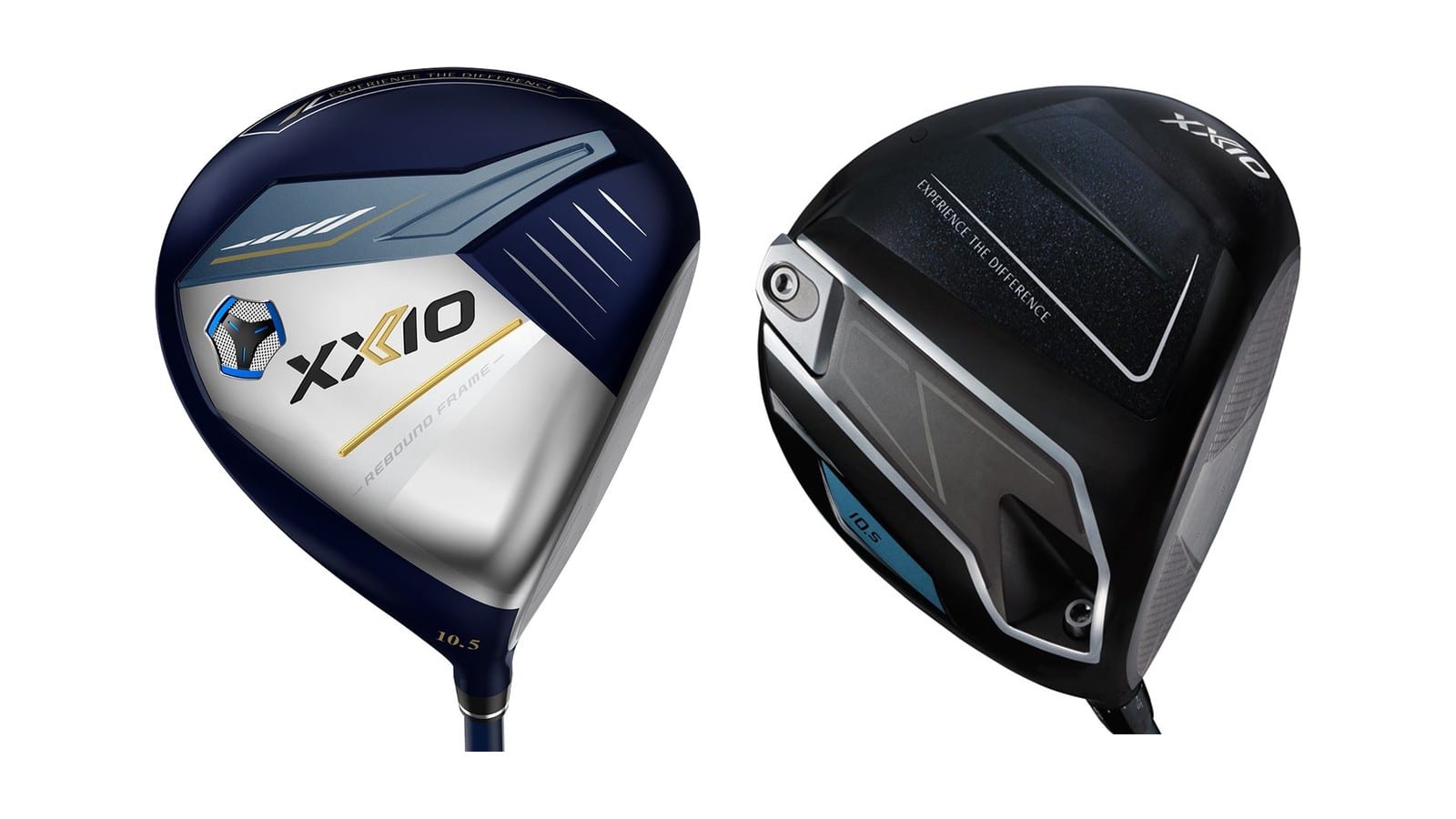
The XXIO 14 driver launched in the US at $799.99 (First Call Golf). When I checked Dunlop’s US site on October 10, 2026, the XXIO 13 it replaced was listed at $529.99, down from $699.99 (Dunlop US).
That’s a $270 gap. Most of what you’d be paying for is the same on both drivers. Three things change, and the biggest one isn’t printed on either spec sheet.
This post compares the standard men’s drivers at R flex and 10.5°. The XXIO 14+ and Prime get one paragraph at the end, and the ladies’ models are left out. The table uses Dunlop Korea’s spec sheets, because they list both drivers in the same format, flex by flex. US numbers differ by a few grams, and I point out where.
I play a 9° Titleist TSR myself and haven’t had either XXIO in my bag. So nothing here is about how they feel. It all comes from Dunlop’s own sheets and one set of independent head measurements.
What changed, in short
- Total weight, head size and swing weight are the same, or within 2 grams (Dunlop Korea 13, Dunlop Korea 14). The R-flex swing speed range is the same 72-92 mph on both.
- Both heads are stamped 10.5°. Measured, the 13 read 12.0° and the 14 read 10.5° (Golf Digest Japan).
- The 14 adds an adjustable hosel with ±1.5° of loft range (First Call Golf). The 13 has none.
- The 14’s shaft is listed with a lower kick point and a little more torque (Dunlop Korea 13, Dunlop Korea 14).
- “The 14 is half an inch longer” is most likely a measuring difference. Measured the same way, the two are 0.06” apart (Golf Digest Japan).
- Distance: Dunlop claims 2.9 yards more at about 85 mph, from its own test with no method published. I found no independent head-to-head.
- If you play a 13 now and its flight suits you, the specs give you little reason to switch.
XXIO 13 vs 14 driver specs, side by side
| XXIO 13 | XXIO 14 | |
|---|---|---|
| Loft options (Korea) | 9.5° / 10.5° | 9.5° / 10.5° |
| Real loft of the 10.5° head (measured) | 12.0° | 10.5° |
| Head size | 460cc | 460cc |
| Lie angle | 59° | 59° |
| Length, as listed | 45.5” (method not stated) | 46” (60-degree method) |
| Total weight, R flex | 284 g | 282 g |
| Swing weight | D3 | D3 |
| Stock shaft | MP1300K | MP-1400K |
| Shaft weight S / SR / R | 42 / 40 / 38 g | 42 / 41 / 39 g |
| Torque S / SR / R | 6.4 / 6.5 / 6.6 | 6.8 / 6.8 / 6.8 |
| Kick point | Mid | Low-mid |
| Adjustable hosel | No | Yes, ±1.5° |
| Face angle (measured) | 2.0° closed | 2.0° closed |
| Swing speed for R flex | 72-92 mph (32-41 m/s) | 72-92 mph (32-41 m/s) |
| US price | $699.99 at launch, $529.99 on 2026-10-10 | $799.99 |
Sources: Dunlop Korea spec sheets for the XXIO 13 and XXIO 14 (read from the sheet images), except these rows. Real loft and face angle: Golf Digest Japan head measurements, 2025-11-18. Adjustable hosel and 14 price: First Call Golf, 2025-12-08. 14 swing speed: Dunlop Japan. 13 swing speed: my-best, a Japanese retail comparison site, because I couldn’t find it on a Dunlop page. 13 price: Dunlop US. Retrieved 2026-10-10. Dunlop Korea notes that listed weights are design values and a real club can differ.
A few terms in that table, before the numbers.
Flex is how much the shaft bends during the swing. R (regular) bends more than SR, and SR more than S (stiff).
Swing speed is how fast the clubhead is moving when it reaches the ball. The sources list it in meters per second, so I’ve converted to mph.
Swing weight is a letter-and-number scale for how heavy the club feels at the head end when you swing it. D3 on both means the same balance on paper.
Lie angle is the angle between the shaft and the ground when the sole sits flat.
Face angle is where the clubface points when the club rests on the ground. “Closed” means it points left of the target for a right-handed golfer.
What stays the same
Start with weight, since it’s the first thing most people ask about a lighter driver. Dunlop Korea lists the 13 at 284 g and the 14 at 282 g in R flex. Golf Digest Japan weighed its two test clubs at 285.8 g and 284.4 g, with swing weights of D3.2 on both (Golf Digest Japan).
If you find the 13 too heavy, the 14 won’t fix that.
You may read that the 14 is 3 g lighter. That figure comes from US-market numbers: Dunlop’s US page lists the 13 at 286 g, and its South African page lists the 14 at 283 g. On the Korean sheets the gap is 2 g.
Most of the gap is the grip: 36 g on the 13, 33 g on the 14 (Dunlop US, Dunlop South Africa). Those pages also list each R shaft 3 g lighter than the Korean sheets, at 35 g and 36 g.
Swing speed works the same way. For the 14, Dunlop Japan lists R at 72-92 mph (32-41 m/s), SR at 81-98 mph (36-44 m/s) and S at 87-105 mph (39-47 m/s) (Dunlop Japan). The 13’s R range on my-best is the same 72-92 mph.
For one data point, my own driver read 42.6 m/s (95 mph) head speed on a Golfzon simulator in January 2026. That’s one shot’s readout, not my average (my ball speed post). On the 14’s chart that sits in SR or S, above the R range, so R wouldn’t be my starting flex.
So your swing speed picks the flex, not the generation. If you’re deciding between R and the softer flexes below it, the ladies flex vs senior flex post covers the XXIO 14 Ladies shafts.
The real change: 1.5° less loft under the same 10.5° stamp
Loft is how far the clubface tilts back from straight up, in degrees. More loft generally sends the ball higher.
Real loft is the loft measured on the head itself, rather than the number stamped on the sole. The two don’t have to match.
For Golf Digest Japan, a club designer measured heads from several XXIO generations, all stamped 10.5°. The XXIO 13 read 12.0°. The XXIO 14 read 10.5° (Golf Digest Japan).
So if you move from a 10.5° 13 to a 10.5° 14, you’re taking about 1.5° of loft off the face. That’s roughly the step from a 12° driver to a 10.5° one, with the same number on both soles. The driver loft post covers why the stamp is only a starting point.
The 13 was the high one. The XXIO 12 before it read 11.5°, and the 14 came back down to its stamp.
What that means depends on your current flight. If your 13 already sends the ball higher than you want, the 14 moves in your direction. If you count on that extra loft to get the ball in the air, the 14 at the same stamp gives you less of it.
You’ll want to hold this number a little loosely. It’s one head of each model, and a different head off the same line could read a bit differently. The 13 that was measured had an S shaft (Golf Digest Japan, 13); the 14 article doesn’t give its flex. I didn’t find a second set of measurements.
The same tester read the 14’s head as built more for ball speed and distance (Golf Digest Japan, 14). That’s a reading of the design, not a count of shots, and the article is marked as sponsored.
What the adjustable hosel and the new shaft add
The 14 has a loft sleeve, ±1.5°
The 14 is the first standard men’s XXIO with an adjustable hosel (Dunlop Japan press release). Dunlop calls it QTS, and it moves loft up or down by as much as 1.5° (First Call Golf).
An adjustable hosel is a sleeve where the shaft meets the head. Turning it changes the loft, and usually the face angle with it.
On paper, a 10.5° 14 turned up by 1.5° lands at 12.0°, the 13’s measured real loft. That’s the closest thing to “keep my 13’s flight in a new head” the 14 offers. In Korea both come only in 9.5° and 10.5°. Outside Korea, Dunlop also lists an 11.5° head for each (Dunlop US, Dunlop South Africa).
There’s a catch with any sleeve. The settings are printed as loft, but they also turn the face open or closed, and makers don’t always say by how much. The driver loft sleeve post covers that, including one measured hosel that read the same loft at every setting. I couldn’t find anyone who has measured what the XXIO 14’s sleeve actually delivers.
The shaft is listed a little softer
Torque is how much the shaft twists during the swing, in degrees. A higher number means more twist.
Kick point is the spot along the shaft where it bends the most. A lower kick point is usually described as launching the ball a bit higher.
The 13’s MP1300K shaft has a mid kick point and R-flex torque of 6.6. The 14’s MP-1400K moves to low-mid and 6.8, and the S flex jumps from 6.4 to 6.8. Shaft weight goes up by 0-1 g depending on flex (Dunlop Korea 13, Dunlop Korea 14).
Notice the two changes point opposite ways. The head lost loft, and the shaft labels point toward a slightly higher launch. Nobody has published what they add up to on a launch monitor, so I won’t guess.
A launch monitor is a device that measures each shot, such as ball speed, launch angle, spin and distance. TrackMan is one well-known brand.
The half inch and the 2.9 yards are smaller than they look
“The 14 is half an inch longer”
The sheets say 45.5” for the 13 and 46” for the 14. But only the 14’s sheet names its method, the 60-degree method. The 13’s sheet doesn’t name one.
The 60-degree method is a way of measuring club length with the club resting on a measuring board set at 60 degrees. Different methods can give different numbers for the same club.
Golf Digest Japan measured both clubs with the 60-degree method. The 13 came to 45.88” and the 14 to 45.94”, a gap of 0.06” (Golf Digest Japan).
So the half inch is most likely a labeling difference. If you’re worried the 14 will feel longer at address, those measurements don’t support it.
Address is your setup position, standing over the ball with the club behind it, before you start the swing.
“The 14 goes farther”
Dunlop says the 14 goes 2.9 yards farther than the 13 at a swing speed of about 85 mph (38 m/s), from its own testing (Dunlop Japan press release, Dunlop Korea 14). It doesn’t say whether a robot or golfers hit the shots, which ball was used, or how many shots were counted. Dunlop credits the gain to a thinner face in a new titanium and a head built to flex more at impact.
For scale, the 13’s own sheet claimed 2.7 yards over the XXIO 12 (Dunlop Korea 13).
That’s the only distance number that compares the two. I looked for the same golfer hitting both on the same launch monitor and found none.
MyGolfSpy hasn’t reviewed the 14. Plugged In Golf, National Club Golfer, GolfMagic and GOLF.com each covered one model, or put it against a different brand. Golf Digest Japan measured both heads but put only the 14 on a launch monitor.
The closest pair I found doesn’t work either. Korea’s Golf Issue put the 13 on a TrackMan in 2024 (Golf Issue, 13).
Its 2026 session used the 14+ with a custom shaft (Golf Issue, 14+). That’s a different club, a different shaft and two years apart, so I’m not lining up their numbers.
So treat 2.9 yards as the maker’s claim and nothing more. At your own speed, nobody has shown what the gap is.
Should you switch from a 13, or buy one used?
You play a 13 now. The specs give you two reasons to switch. One is a ball flight that’s higher than you want, since the 14’s head has less real loft. The other is wanting to adjust loft yourself.
If neither applies, Dunlop’s 2.9 yards is all that’s left. If I had a 13 I liked, I’d keep it.
You’re buying new. If the 13 is still in stock near you, the US prices put the two $270 apart. You’d give up the sleeve and get 1.5° more real loft on a 10.5° head.
In Korea, Dunlop’s own outlet listed the 13 at a discount but had the men’s right-handed driver sold out on 2026-10-10 (Dunlop Korea outlet). So a new 13 may already be hard to find.
If I were buying new today, I’d take the 14. The 13’s extra real loft is the one thing you’d give up, and the sleeve can move the 14’s loft up by 1.5°, although nobody has measured what that setting actually delivers.
You’re looking at a used 13. Weight and the R-flex swing speed range match the 14, so a 13 in your flex is a fair alternative. The loft you buy is the loft you keep, though. With no sleeve, the stamped loft you pick (9.5° or 10.5° in Korea, plus 11.5° in the US) is final. I couldn’t find used prices to compare.
The face looks closed to you. On a Korean golf forum in 2024, one reply said the standard 13 sits closed at address while the XXIO X looks square (Dealbada forum). That’s one golfer’s eye, but the measurements line up with it. Both the 13 and 14 heads read 2.0° closed, so switching won’t change that look.
The head that measured square is the XXIO 14+, at 0.0° (Golf Digest Japan). It’s a different club, though, the successor to the XXIO X. It measured about 15 g heavier than the 14 (299.2 g against 284.4 g), and Dunlop aims it at swing speeds of 90-100 mph (First Call Golf). XXIO Prime is another separate line, lighter still: the 2023 Prime driver measured 259 g in the same Golf Digest Japan series.
Terms in this article
- Flex: how much the shaft bends during the swing. R (regular) bends more than SR, and SR more than S (stiff).
- Swing speed: how fast the clubhead is moving when it reaches the ball, in mph or meters per second.
- Swing weight: a letter-and-number scale for how heavy the club feels at the head end when you swing it.
- Lie angle: the angle between the shaft and the ground when the sole sits flat.
- Face angle: where the clubface points when the club rests on the ground. “Closed” means left of the target for a right-handed golfer.
- Loft: how far the clubface tilts back from straight up, in degrees. More loft generally sends the ball higher.
- Real loft: the loft measured on the head itself, rather than the number stamped on the sole.
- Adjustable hosel: a sleeve where the shaft meets the head. Turning it changes the loft, and usually the face angle with it.
- Torque: how much the shaft twists during the swing, in degrees. A higher number means more twist.
- Kick point: the spot along the shaft where it bends the most. A lower kick point is usually described as launching the ball higher.
- 60-degree method: a way of measuring club length with the club resting on a measuring board set at 60 degrees.
- Address: your setup position, standing over the ball with the club behind it, before you start the swing.
- Launch monitor: a device that measures each shot, such as ball speed, launch angle, spin and distance. TrackMan is one well-known brand.