
4 New Golf Drivers Actually Worth Considering in 2026
PING G440 K, TaylorMade Qi4D, Callaway Quantum Max, and Titleist GTS2 all launched in 2026. Here's what actually differs, and who each one fits.
Four of the biggest names in golf all released a new driver in 2026. The ad campaigns all say roughly the same thing: more forgiving, more ball speed, easier to hit. If you’re two or three years in and still carrying a hand-me-down driver, that sameness doesn’t help you pick.
I haven’t hit any of these four heads myself, so this isn’t a swing-tested review. It’s a synthesis of what each maker states and what independent testers have measured so far. The organizing question is simple: which of these actually fits your situation.
How carry relates to total distance is covered separately in the ball speed vs. carry guide. This article stays on which head to buy.
The short answer
- All four 2026 core drivers below are built forgiveness-first. That’s the industry default this year, not a difference between them. The real differences are price, testing evidence, and which ecosystem you’re buying into.
- Callaway’s Quantum Max posted the highest forgiveness score (9.8 of 10) in MyGolfSpy’s independent 2026 driver test.
- Titleist retired the “GT” name in June 2026. If a review you’re reading says “GT3,” it’s talking about last year’s driver, not the new GTS2.
- Street prices start around $647.00 (PING G440 K, base shaft) and run to about $899.99 (Titleist GTS2, premium shaft) as of September 2026.
- Skip ahead to “So Which One Should You Actually Buy?” if you just want the decision, not the spec sheet.
PING G440 K: Built for the Miss You Actually Make
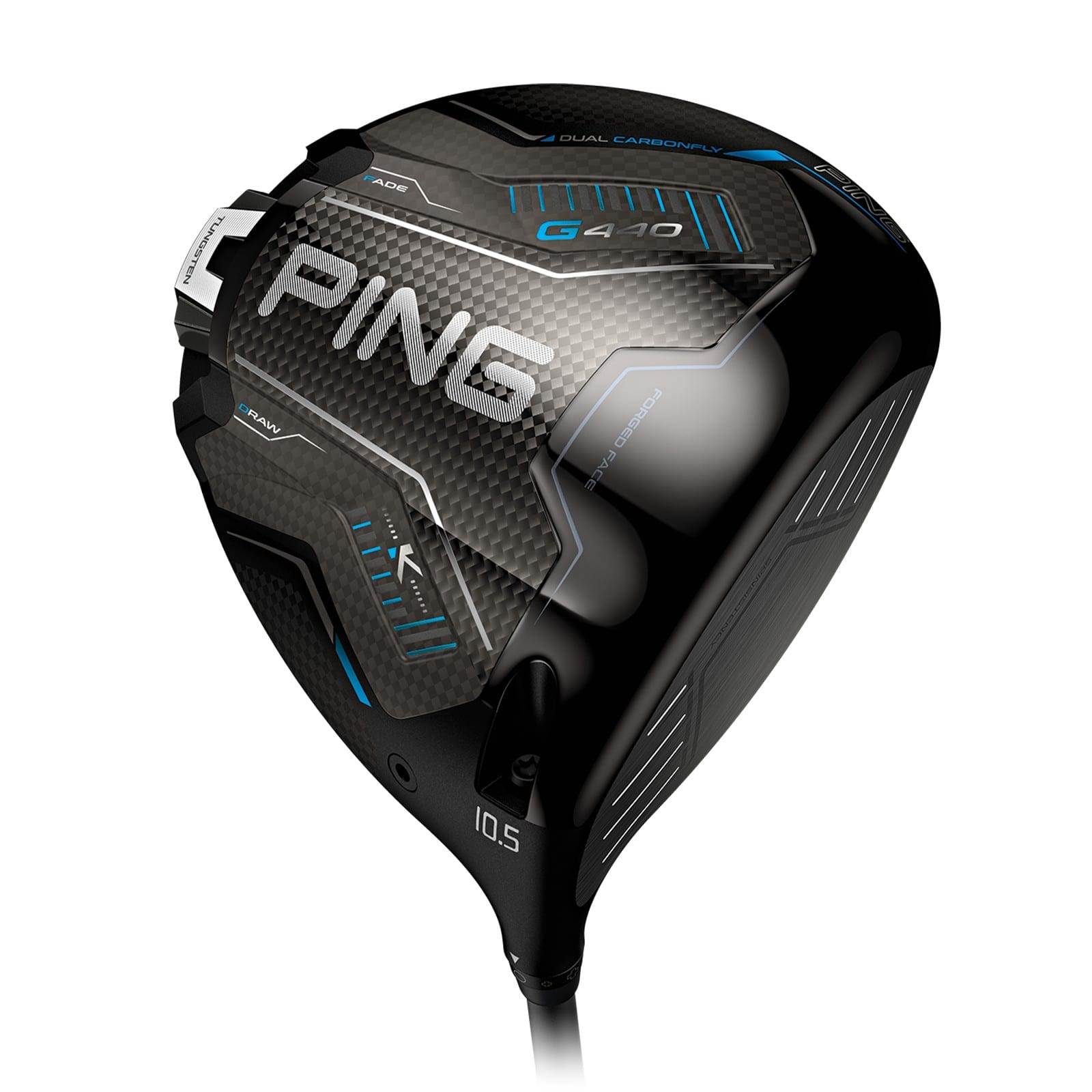
PING announced the G440 K on January 13, 2026 (PGA Tour, retrieved 2026-09-09). It replaces the G430 MAX 10K as PING’s highest-MOI driver, built around one problem: what happens when you don’t hit the center of the face.
MOI, if you’re comparing spec sheets, stands for moment of inertia: a head’s resistance to twisting on an off-center hit, the engineering term for forgiveness. PING says the G440 K sets a new company record here, edging out the G430 MAX 10K it replaces (Today’s Golfer, retrieved 2026-09-09).
The bigger change from that older driver is the back weight, not the MOI number. The G430 MAX 10K’s 28-gram weight was fixed in place. The G440 K’s is 32 grams and moves between draw, neutral, and fade positions. That lets you bias shot shape instead of only maximizing stability (TGW, retrieved 2026-09-09).
A carbon crown and sole (“Dual Carbonfly Wrap”) frees up mass that PING moves lower and deeper. A forged face holds ball speed on off-center hits. Today’s Golfer frames the target golfer directly: “the ideal driver for the stereotypical everyday golfer… if you struggle with consistency across the face, tend to miss right, or simply want the most stable driver head Ping have ever produced, this is for you” (Today’s Golfer, retrieved 2026-09-09).
The hosel (the joint where the shaft meets the head) adjusts loft by up to 1.5 degrees. It comes in three stock lofts: 9, 10.5, and 12 degrees. That’s most golfers two or three years in: broad, adjustable forgiveness for a wide range of swings, not one specialist strength. The other three drivers below lean toward a different problem instead: “I already hit it flush and want more ball speed.”
At retail, the G440 K lists at $647.00 for the base shaft (Golf Discount, retrieved 2026-09-09), against a PING-stated $705 MSRP (Today’s Golfer, retrieved 2026-09-09). That’s the cheapest entry point here, though only barely. If you later upgrade the stock shaft, how a shaft upgrade changes ball flight walks through what it buys you.
TaylorMade Qi4D: The One-Driver-and-Done Pick
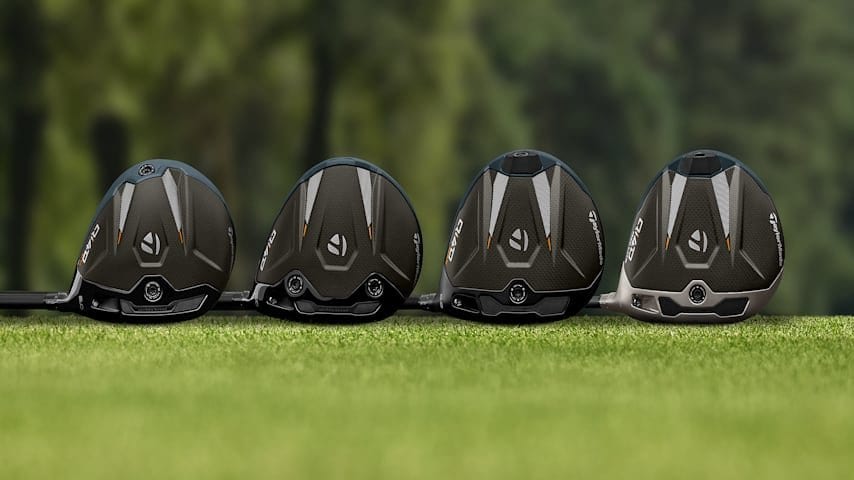
TaylorMade’s Qi4D line earned strong marks in early 2026 independent testing. Testers praised its balance of distance and forgiveness, rather than maximizing one at the other’s expense (Golf Monthly, retrieved 2026-09-09).
The Qi4D Max variant goes further. It’s built around a forged 7075 aluminum collar, not the titanium construction almost every other driver here uses. TaylorMade positions this as adjustable and forgiving without giving up ball speed (TaylorMade Golf, retrieved 2026-09-09).
The practical read: Qi4D is the pick for someone who doesn’t want to keep shopping. It’s not the single most forgiving head here. That’s the Quantum Max, below. It’s not the cheapest either.
What it does have is no obvious weak side. That’s good if you’d rather buy once than fit your swing to a specialist’s strength.
The Qi4D Max lists at $649.99 (PGA Tour Superstore, retrieved 2026-09-09). That’s the same starting price as Callaway’s Quantum Max, below.
Callaway Quantum Max: The Core-Line Standout
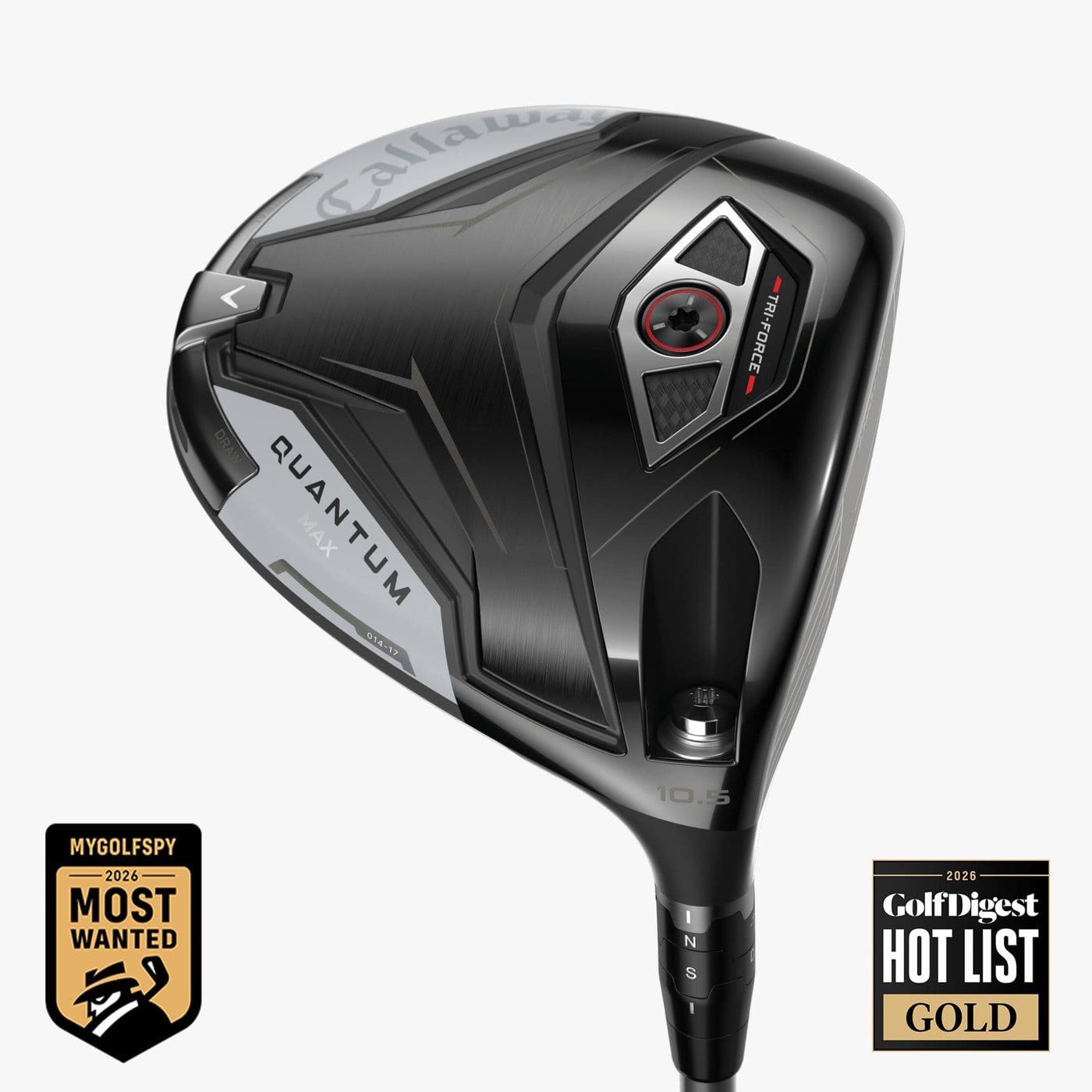
Callaway’s Quantum line replaces last year’s Elyte family. It introduces a “Tri-Force Face.” That’s three performance zones designed to hold ball speed across more of the face, not just the center (Golf Monthly, retrieved 2026-09-09).
In MyGolfSpy’s 2026 driver test, the Quantum Max posted a forgiveness score of 9.8 out of 10. That’s the highest of any driver in its swing-speed category. It also led that category on overall performance (MyGolfSpy, retrieved 2026-09-09).
That’s the one hard, independently measured number in this whole comparison. It’s the reason Quantum Max gets a slot here over Callaway’s pricier Triple Diamond version.
Callaway’s own product page lists the Quantum Max as built for “players wanting speed, consistent tee shots, forgiveness and control” (Callaway Golf, retrieved 2026-09-09). In practice, that’s a mid-to-high handicap description, even though Callaway doesn’t use that term itself. If you’re still learning your own numbers, that’s almost certainly you. A Quantum Max D variant is also available, at the same $649.99 price. It’s built with draw bias, for a swing that tends to slice (Callaway Golf, retrieved 2026-09-09).
Retail price for the standard Quantum Max is $649.99 (PGA Tour Superstore, retrieved 2026-09-09).
Titleist GTS2: Buying Into a Fitting Ecosystem
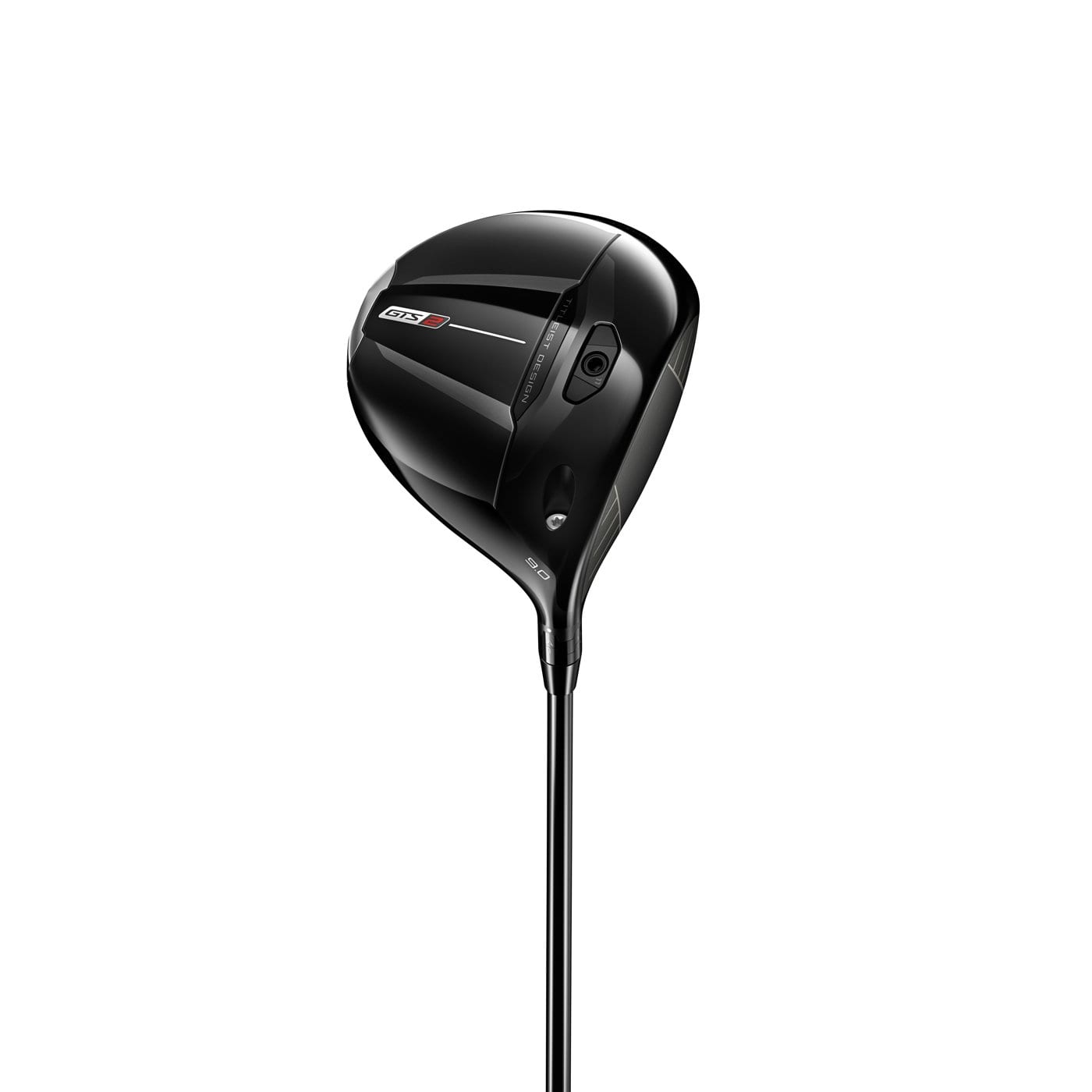
Here’s the naming trap. Titleist retired the “GT” line and launched a new GTS family (GTS2, GTS3, GTS4), on shelves worldwide June 11, 2026 (AmateurGolf.com, retrieved 2026-09-09). GTS stands for speed, stability, and versatility. The line also adds a new Split Mass Frame over the old GT series: a two-piece chassis that shifts weight lower and further back.
If a review you’ve read cites “GT3” ball speed numbers, that’s last year’s driver, not what’s currently on shelves. It’s an easy mix-up, since the names are one letter apart.
Of the three GTS heads, GTS2 is built for this audience. Titleist lists it under “Distance & Forgiveness,” its forgiving, higher-launch core model (Titleist, retrieved 2026-09-09). GTS3 (“Speed & Precision”) is the more adjustable, shot-shaping option (Titleist, retrieved 2026-09-09). GTS4 (“Speed with Maximum Spin Reduction”) is the lowest-spinning model, built for faster swings losing distance to high spin (Titleist, retrieved 2026-09-09).
More than 60 PGA Tour players, including Justin Thomas, Jordan Spieth, and Cameron Young, had a GTS driver in play within months of launch. The debut came at the Texas Children’s Houston Open in late March 2026, three months before the June 11 retail launch (PGA Tour, retrieved 2026-09-09). That validates the family overall, not GTS2 specifically. GTS4, the lowest-spin head, is the one built for tour swing speeds.
The case for GTS2 isn’t raw performance data; it’s too new for the kind of independent numbers Quantum Max already has. The case is Titleist’s fitting network, one of the most established in golf. If you start on a GTS2 and outgrow it, moving to a GTS3 stays inside the same platform. That’s a smaller step than switching brands entirely.
GTS2 starts at $699.99. Premium shaft options push it to $899.99 (PGA Tour Superstore, retrieved 2026-09-09). That makes it the most expensive of the four.
So Which One Should You Actually Buy?
If you came in assuming forgiveness would be the deciding factor, it mostly isn’t. All four heads above are forgiveness-first designs this year. None of the manufacturers is competing on “least forgiving.” What actually separates them is price, how much independent evidence backs the marketing claim, and which company’s fitting ecosystem you’d rather commit to.
| Driver | Starting price | Independent forgiveness data | Best for |
|---|---|---|---|
| PING G440 K | $647.00 | Not in this comparison’s dataset | Heel misses, tightest budget |
| TaylorMade Qi4D Max | $649.99 | Rated for balance, not one extreme | One driver, no more shopping |
| Callaway Quantum Max | $649.99 | 9.8/10 forgiveness (MyGolfSpy) | Strongest measured evidence |
| Titleist GTS2 | $699.99 | Too new for third-party testing yet | Buying into a fitting ecosystem |
Prices: Golf Discount (PING) and PGA Tour Superstore (TaylorMade, Callaway, Titleist), retrieved 2026-09-09. Forgiveness score: MyGolfSpy, retrieved 2026-09-09.
- Your miss is a heel strike and you want the cheapest way to tighten it up: the PING G440 K. It’s the cheapest of the four at the entry configuration, though only by a few dollars, and its record-setting MOI specifically targets that miss.
- You don’t want to think about this again for three years: the TaylorMade Qi4D. Independent testers rate it for balance, not one standout trait. That’s exactly what you want if you’d rather not re-optimize your bag every season.
- You want a head with a real measured number behind it, not just a marketing claim: the Callaway Quantum Max. A 9.8 forgiveness score from an independent tester is the strongest evidence in this list.
- You’re planning to get properly fit and might upgrade within the same line later: the Titleist GTS2. You’re paying for Titleist’s fitting infrastructure and tour pedigree, not for third-party data GTS2 doesn’t have yet.
One caution applies to all four. Retailer prices shift by shaft and loft configuration, and a driver head is only half the fitting.
The hosel matters too. An adjustable sleeve usually moves face angle more than loft. A loft change alone may not fix a face-angle problem you already have (how a driver loft sleeve actually moves face angle).
If you haven’t had your current shaft properly identified, check what’s actually printed on a shaft band first. It’s worth doing before you spend $650 to $900 on a head that just inherits the same stock shaft.
Frequently Asked Questions
Is the Titleist “GT3” the same as the new “GTS2”?
No. GT3 was a model in Titleist’s previous line, discontinued when the GTS family launched in June 2026 (AmateurGolf.com, retrieved 2026-09-09). GTS2 is the new line’s forgiving, higher-launch core model (Titleist, retrieved 2026-09-09).
If you’re reading a review, check the date. Anything published before June 2026 that mentions “GT3” ball speed numbers is talking about the discontinued model.
Do I need a professional fitting to buy one of these?
Not to buy one, but you’ll likely leave distance on the table without one. None of the four claims above swap loft, lie, or shaft the way a fitting session would optimize for your swing. If you’re buying off the rack, the “who actually suits this” breakdown above is a reasonable starting filter. A fitting narrows it further.
Should I just buy last year’s driver on discount instead?
That’s a legitimate option this article doesn’t cover in depth. Last year’s G430, Qi10, Elyte, and GT2/GT3 heads are typically discounted once a new line launches. The forgiveness gap between one generation and the next is usually smaller than the price gap. If budget is the constraint, a discounted previous-generation head is worth pricing against these four before you commit.
Does “more forgiving” mean easier for a beginner specifically?
Not automatically. Forgiveness, as tested here, measures carry and dispersion loss on a mis-hit, not how easy a head is to launch at a slower swing speed.
A driver can score well on forgiveness and still be hard to get airborne if you swing under about 85 mph. If that’s your situation, the ball speed vs. carry guide is more directly relevant than the forgiveness scores above.
Terms in this article
MOI (moment of inertia): a driver head’s resistance to twisting on an off-center hit. Golfers call this forgiveness.
Hosel: the joint where the shaft meets the head. An adjustable hosel changes loft, lie, or face angle depending on how it’s set.
Split Mass Frame: Titleist’s two-piece internal chassis, used in the GTS line to shift weight lower and further back in the head.