
Cabretta leather golf glove or synthetic? Synthetic first
Cabretta is the name for hair-sheep leather, not a premium tier. If you mostly practice, a synthetic glove is enough. Add a cabretta glove once rounds start.
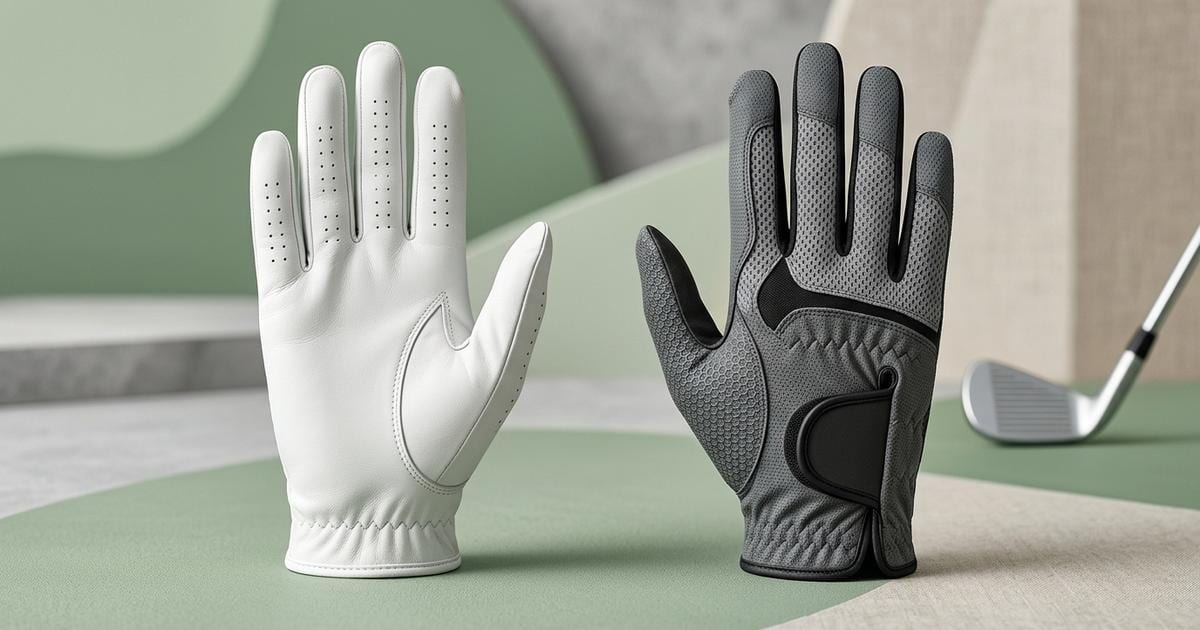
The glove wall at a golf shop splits into two price zones. One side has tags that say “cabretta” or “AAA cabretta”. The other side has cheaper synthetic gloves, and somewhere in between sit gloves that mix leather and synthetic, often sold as “all-weather”.
Search the question and most of the top answers come from companies that sell gloves. They repeat the same list of feel, durability, sweat and price, then end on their own product page. None of them explains what the word cabretta means, or that gloves mixing the two materials come in two quite different builds.
Here’s where I stand. I wear a synthetic glove when I practice and a cabretta glove when I play a round. The glove I wear most is the synthetic one.
I’m not going to tell you how the two compare in my hand. For the material facts, this post leans on maker pages, a dictionary and a couple of reviews.
The short answer
- Cabretta isn’t a premium grade. It’s the general name for leather from hair sheep, which grow hair instead of wool (Dictionary.com, retrieved 2026-09-23).
- Inside one brand, the price spread across leather gloves is wider than the step from synthetic to leather. Callaway’s line runs from $13.99 for a mostly synthetic glove to $19.99 for a cabretta palm with a synthetic back. Its all-cabretta models are $28.99 and $39.99 (Callaway, prices checked September 2026, sources under the table below).
- “AAA” on a cabretta tag is the brand’s own label. I couldn’t find an industry standard behind it.
- Gloves that mix leather and synthetic come in two builds: a leather palm with a synthetic back, or a mostly synthetic glove with a leather patch. Check which one you’re holding.
- Makers sell treated leather as moisture resistant. I’d read that as sweat, not heavy rain. Heavy rain is what rain gloves are for, whichever material you pick.
- If you mostly go to the range, you’ll be fine starting with synthetic. Add a cabretta glove when you start playing rounds.
What “cabretta” on the tag actually means
Cabretta is a kind of leather. It isn’t a brand, a breed or a quality tier. Dictionary.com defines it as “a leather made from the skins of sheep that grow hair rather than wool, tougher than other sheepskins and used chiefly for gloves and shoes” (Dictionary.com, cabretta, retrieved 2026-09-23).
Hair sheep are sheep that grow a coat of hair rather than wool. Their skin is what a glove maker means by cabretta.
The name trips people up because it sounds like goat. The same entry traces it to Portuguese or Spanish cabra, “she-goat”, plus the Italian ending -etta. The leather in the glove is still sheepskin.
So when you see cabretta on a tag, it tells you the glove is sheep leather. It doesn’t tell you where that glove sits in the maker’s range. That part comes from the price and the model name.
“AAA” is the brand’s label, not a shared grade
Callaway describes its Tour Authentic glove as “Ultra-Soft AAA Cabretta Leather” (Callaway, Tour Authentic, retrieved 2026-09-23). G/FORE uses “AA” for its leather instead (Plugged In Golf, G/FORE glove review, retrieved 2026-09-23).
I looked for an industry body that defines these letters and found none. For you, that means “AAA” is a maker ranking its own leathers. You can compare it inside one brand, but not across brands.
Callaway shows this itself. The priciest glove on the list below, the TA Triple Diamond, is described as “highest-grade AAA leather”, and the Tour Authentic is AAA too. The same three letters sit on a $28.99 glove and a $39.99 glove, so they don’t tell you which one you’re looking at.
The price ladder inside one brand
Callaway sells every type in one line, so its prices make a clean ladder.
| Glove | What Callaway says it’s made of | Type | Price |
|---|---|---|---|
| Weather Spann | “Proprietary Fusetech Premium Synthetic” plus “Leather Palm and Thumb” | Mostly synthetic, leather patch | $13.99 |
| Dawn Patrol | “Cabretta Leather” on the palm, fingers and thumb; “Fusetech” synthetic on the back | Leather palm, synthetic back | $19.99 |
| Fusion | “Cabretta Leather” on the palm, fingers and thumb; “Fusetech” synthetic on the back | Leather palm, synthetic back | $19.99 |
| Tour Authentic | “Ultra-Soft AAA Cabretta Leather Infused with Griptac 2.0” | Cabretta | $28.99 |
| TA Triple Diamond | “finest AAA grade cabretta leather”, “highest-grade AAA leather” | Cabretta | $39.99 |
Sources: Weather Spann, Dawn Patrol, Fusion, Tour Authentic and TA Triple Diamond, all on callawaygolf.com, prices and materials checked 2026-09-23.
If you check the Dawn Patrol yourself, you’ll see its description call it “a full leather glove”. Trust the feature list on the same page instead. That’s where Callaway puts synthetic on the back of the hand.
Read the ladder from the bottom. Going from the cheapest glove to a leather palm costs you $6 on this list. Going from there to the top cabretta costs $20 more.
So the big money isn’t in choosing leather over synthetic. It’s in choosing which leather glove, and that’s a choice you can put off until you know you want leather at all.
Synthetic, cabretta, and the two kinds of mixed glove
A synthetic glove is made from man-made fabric instead of animal skin. Each maker gives its material a house name. FootJoy’s is a microfiber called FiberSof, and Callaway’s is Fusetech.
A cabretta glove, as above, is sheep leather. Many full leather gloves also have perforations, rows of small punched holes across the fingers and back.
The confusing ones are gloves that mix leather and synthetic. They come in two quite different builds, and the price tag alone won’t tell you which one you’ve picked up.
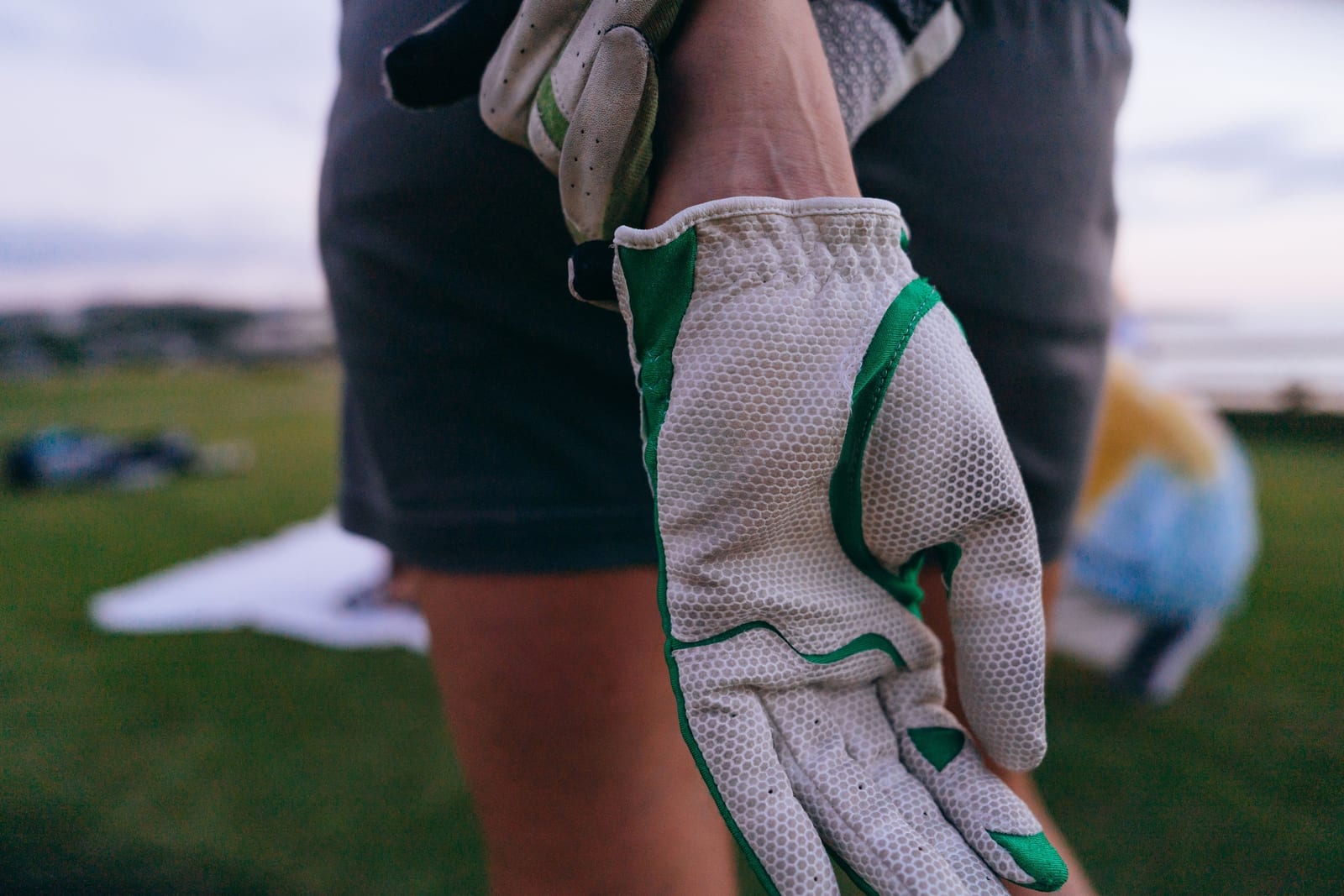
Photo: Mikhail Nilov / Pexels. A textured, synthetic-style glove. It’s a stock photo, so I can’t confirm the material, but this raised surface is the look you’ll see on the synthetic side of the glove wall.
Type A: leather palm, synthetic back
This is a leather glove with the back of the hand swapped for synthetic or mesh. Your palm and fingers still touch the grip through leather.
The Titleist Players Flex is cabretta with a synthetic back and satin net panels (Today’s Golfer, Titleist Players Flex, retrieved 2026-09-23). The Callaway Fusion in the table works the same way.
Type B: synthetic glove with a leather patch
This one starts from the other end. It’s a synthetic glove with leather added on the palm and thumb, where the grip rubs.
The FootJoy WeatherSof has a microfiber palm and back with a cabretta patch on the palm and thumb (Golf Monthly, WeatherSof review, 2020-11-11, retrieved 2026-09-23). The Callaway Weather Spann in the table is built the same way.
Makers sell Type B gloves as “all-weather” gloves.
So if you’re pointed to a glove that mixes the two, it’s fair to ask which kind. Type A is a leather glove with a cooler back. Type B is a synthetic glove with some leather on the wear spots.
Sweat, rain and washing: makers and golfers disagree
This is the one place where the sources pull in different directions.
Makers say treated leather resists moisture. FootJoy says the StaSof’s “exclusive APL leather maximises moisture resistance” (Golfalot, FootJoy StaSof, from FootJoy’s press release of 2023-03-30, retrieved 2026-09-23). Treated here means the leather went through an extra step at the tannery, the factory that turns skin into leather, to handle water better.
Golfers say leather gets slick when wet and stiff once it dries. That’s the common view on forums, and it leads to a simple habit. One Golf Monthly forum member put it as “you use the slick (all leather) in the dry and the synthetic all weather glove in the wet” (Golf Monthly forum, 2013). It’s a habit, not a measurement, and no test comparing wet grip turned up.
The two claims fit together if you split sweat from rain. The maker claim is about moisture in general, and the forum complaint is about soakings. I’d read treated cabretta as built for sweaty hands and leave a soaking to a rain glove, which makers sell separately.
Your club grips have their own wet-weather story, and the sources disagree there too. That one is in rubber vs elastomer golf grips.
If it were me, I’d judge a cabretta glove on sweat and wouldn’t buy any glove on a rain promise. If you play in real rain often, a rain glove is its own purchase.
Washing and wear
Leather is the fussier one to clean. Bionic, a glove maker, says “Most leather golf gloves are not washable” and tells you to “Always air dry”. Heat, it warns, causes “cracking and/or shrinking” (Bionic, How to clean golf gloves, retrieved 2026-09-23). For you, that means a sweaty leather glove mostly gets aired out, not washed.
You’ll probably want to know how many rounds each glove lasts. I couldn’t find a maker or independent tester who has measured it. Seller blogs give numbers, but none says how they got them, so they aren’t in this post. When to replace a glove gets a post of its own.
So which glove should you buy?
Start from how you play, not from the material names.
You mostly hit balls at the range. You’ll be fine starting with synthetic. Range sessions put a lot of swings on one glove, and a cheaper glove is the one golfers commonly keep for that. A GolfWRX thread on cheap practice gloves (2017) describes exactly this: an inexpensive glove for the range, a nicer one for rounds. On Callaway’s ladder, a mostly synthetic glove like the Weather Spann is $13.99 against $28.99 for the Tour Authentic (Weather Spann, Tour Authentic, checked 2026-09-23).
The cheap glove doesn’t have to be synthetic, though. The player who started that thread said a synthetic 3-pack “fell apart really fast”, and others pointed to cheap leather multipacks instead. If a synthetic glove wears through quickly for you, a budget leather glove does the same job.
You’re starting to play rounds. This is when you’ll want to add a cabretta glove and keep it for the course. That’s the split I use: synthetic for practice, cabretta for rounds. I didn’t arrive at it by testing. It’s the common habit described above, and it’s where the price ladder points. The glove that takes most of the swings is the cheaper one.
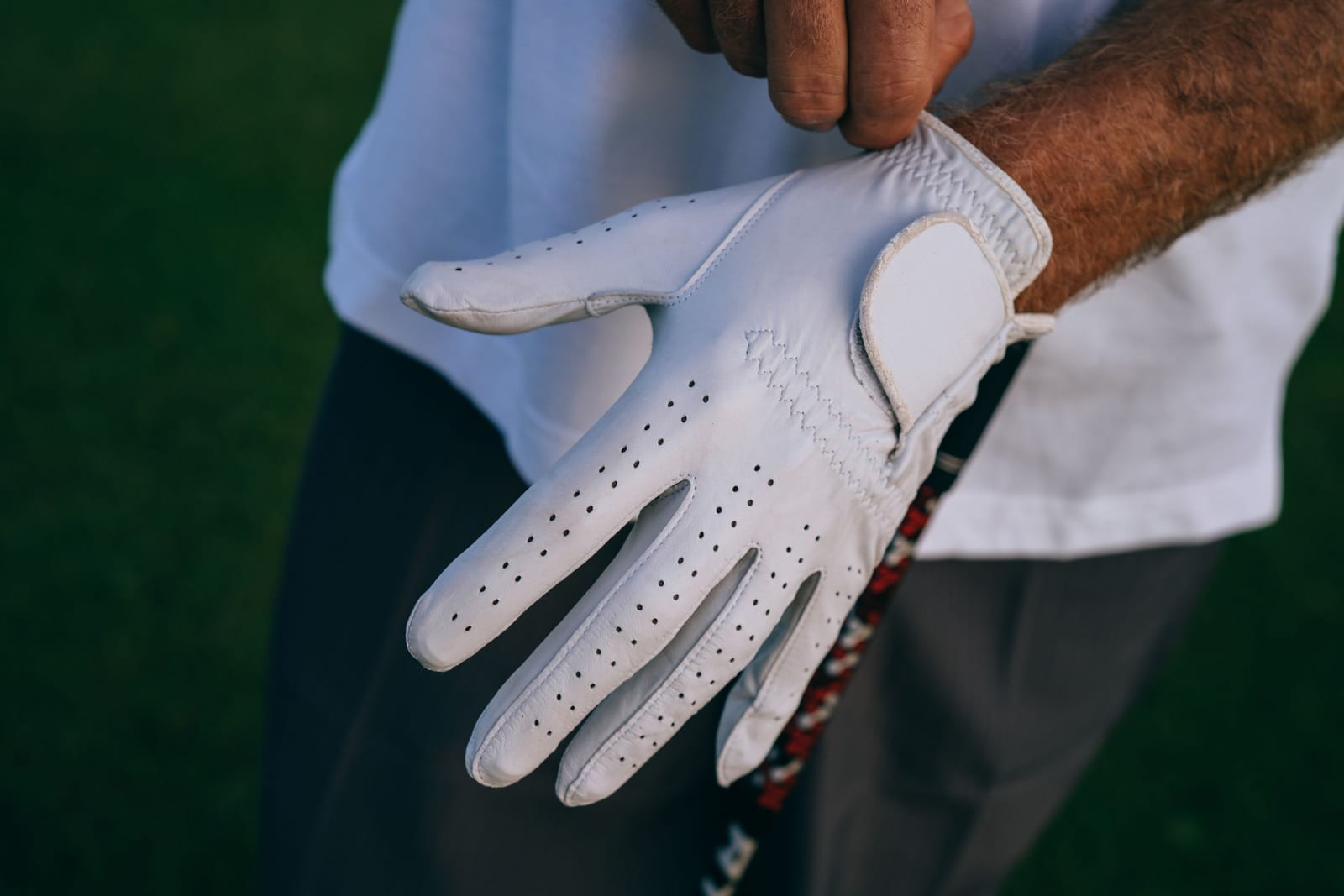
Photo: Mikhail Nilov / Pexels. The smooth, perforated look you’ll see on a lot of cabretta gloves. Again a stock photo, so read it as the look, not a confirmed material.
You want one glove for everything. A Type B glove is the middle ground: a synthetic body with leather where the grip rubs. The trade-off players mention is thickness. In a Golf Monthly forum thread (2019), a full-leather user says the WeatherSof and gloves like it are “simply too thick”.
Your hands sweat a lot. A treated cabretta glove is the one makers pitch on moisture resistance. You’ll still want a rain glove for actual rain.
You’re comparing two leather gloves. The AAA won’t help you here. You’ll want to compare price and model inside one brand, since that’s the only place the letters mean anything.
Sizing and which hand wears the glove each get their own post later. Your glove number also points toward a grip size, and the golf grip size chart covers that step.
Terms in this article
- Cabretta: leather from hair sheep. It’s a general name for the material, not a brand, a breed or a grade.
- Hair sheep: sheep that grow a coat of hair instead of wool. Their skin is tougher than other sheepskins, per Dictionary.com.
- AAA: a leather label some brands print on cabretta gloves. No industry standard defines it, so it only compares gloves within one brand.
- Synthetic glove: a glove made from man-made fabric instead of animal skin. FootJoy’s version is a microfiber called FiberSof, and Callaway’s is Fusetech.
- Mixed glove, Type A: a leather glove with a synthetic or mesh back. Examples: Titleist Players Flex, Callaway Fusion.
- Mixed glove, Type B: a synthetic glove with leather on the palm and thumb, sold as “all-weather”. Examples: FootJoy WeatherSof, Callaway Weather Spann.
- All-weather glove: the makers’ name for a Type B glove.
- Perforations: rows of small punched holes across a glove’s fingers and back.
- Treated leather: leather given an extra step at the tannery to handle moisture better.
- Tannery: the factory that turns animal skin into leather.
- Rain glove: a separate glove made for wet conditions, sold as its own product.