
3 hybrid loft and distance: 18-20°, check your 4-iron first
A 3 hybrid is 18-20°, and in Arccos's data it only matches a 3-iron's distance from about 17 handicap. Check your 4-iron's loft first.
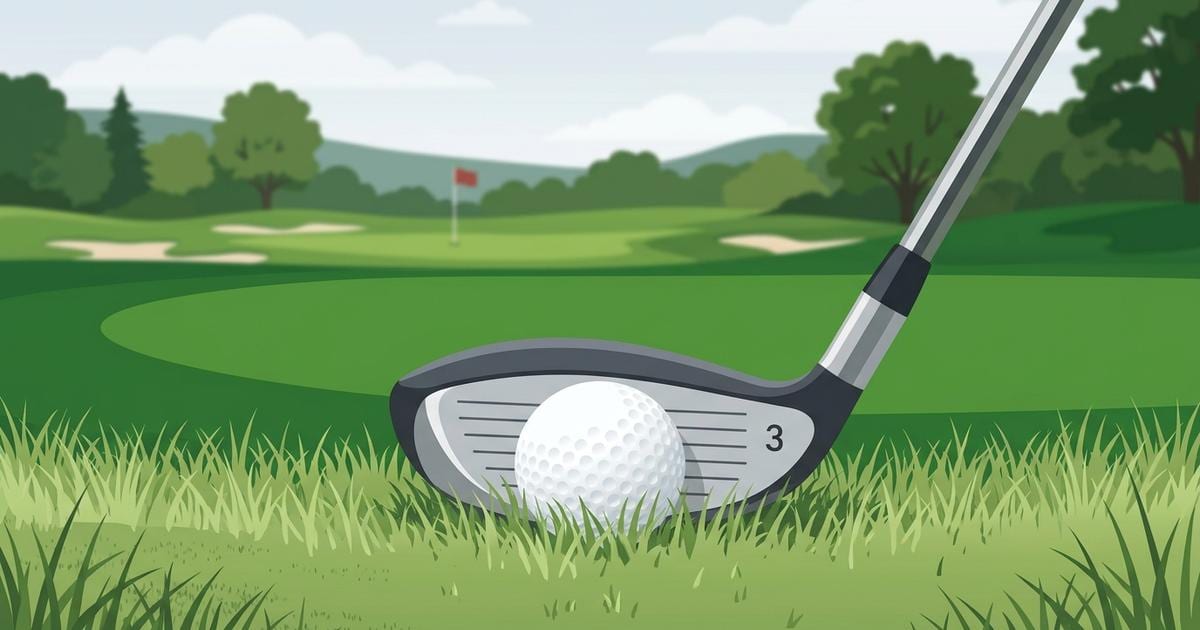
A 3-hybrid has 18-20° of loft, depending on the brand. Cobra’s is 18°, Callaway’s is 19° and PING’s is 20° (Cobra via Fairway Jockey, Callaway, PING).
Loft is how far the clubface tilts back from straight up, in degrees. More loft sends the ball higher and shorter. A hybrid is a club with a small, wood-shaped head on a shaft about as long as an iron’s.
Before you buy one, look at your 4-iron. In most beginner-friendly iron sets I checked, it’s already 18.5-20°, the same loft as a 3-hybrid. A 3-hybrid earns its place when your irons start at about 22-24°, or when your long shots keep coming from the rough.
On distance, a 3-hybrid doesn’t beat a 3-iron for everyone. In Arccos’s 2020 data, it only caught up from about 17 handicap (Arccos).
The short answer
- Numbered 3-hybrids run 18-20°. Cobra’s is 18°, Callaway’s and TaylorMade’s Qi4D are 19°, and PING’s is 20° (Cobra via Fairway Jockey, Callaway, GolfWRX on TaylorMade, PING). Titleist lists its hybrid lofts by degree, and the hosel shows both the club number and the loft. Read the loft on the sole, not the 3.
- Five of the six beginner-friendly sets I checked start with a 4-iron at 18.5-20° (Today’s Golfer on TaylorMade Qi Max, Titleist). If yours does, a 3-hybrid would duplicate it.
- In Arccos’s 2020 data, the 3-hybrid matched or passed the 3-iron only from about 17 handicap (Arccos). Shot Scope says a hybrid goes 8-12 yards farther than the matching iron (Shot Scope). Arccos’s biggest 3-hybrid edge was 1 yard, so the two don’t line up.
- From the rough, hybrids went 11 yards farther than long irons for 20-handicap golfers in Shot Scope’s data (Shot Scope). That’s the stronger reason to carry one.
- Against a 3-wood, 20-25 handicaps gave up only 5-7 yards with a 3-hybrid in Arccos’s data, and the hybrid was easier to get airborne off the fairway (Arccos).
- I swapped a 4-hybrid for an 18° 3-hybrid after my 24° 4-iron seemed to go as far as the hybrid. I plan to keep it that way.
3 hybrid loft: 18-20° depending on the brand
Every loft below is a standard loft, the loft a maker lists for the club as sold. I’ve put each brand’s 5-wood and 3-iron next to its 3-hybrid. Those are the two clubs a 3-hybrid usually gets compared with.
| Brand | 3-hybrid | Same brand’s 5-wood | Same brand’s 3-iron |
|---|---|---|---|
| PING | G440, 20°, 40.25” | G440 Max, 19°, 42.5” | Blueprint S, 19°, 39” |
| Titleist | GT2, 18°, 40.5” (GT3 19°, GT1 20°) | GTS2, 18°, 42” | 2025 T100, 20°, 39” |
| Callaway | Quantum Max, 19°, 40.75” | Quantum Max, 18°, 42.75” | Apex CB, 20.5°, 39” |
| Cobra | OPTM, 18°, 40.88” | OPTM X, 18°, 42.5” | KING TEC, 19°, 39.25” |
| TaylorMade | Qi4D 19°, Qi4D Max 20° (length not found) | Qi4D, 18°, 42.25” | no 3-iron in the sets I checked |
Sources: PING G440 hybrid, PING G440 Max fairway, PING Blueprint S; Titleist Newsroom, GT hybrids, Titleist Newsroom, GTS fairways with Fairway Jockey for its length, and Fairway Jockey, 2025 T100; Callaway Quantum Max hybrid, fairway and Apex CB; Fairway Jockey for Cobra OPTM hybrid, OPTM X fairway and KING TEC; GolfWRX and Fairway Jockey for TaylorMade. Retrieved 2026-09-26 and 2026-09-27. Every Cobra figure, the GTS2 length and the T100 row come from a retailer, not the maker.
Titleist lists its hybrid lofts by degree, and the hosel shows both the club number and the loft. I’ve put the 18° GT2 in the 3-hybrid column because its loft fits the 18-20° range. Cobra’s OPTM 3-hybrid also adjusts from 16° to 20° (Fairway Jockey), and PING’s adjusts 1.5° either way (PING). If yours has a Titleist or Callaway sleeve, the settings charts for Titleist and Callaway hybrids show the loft at each position. So you’ll want to read the loft on the sole, not the 3.
Within each of the four brands with published lengths, the 3-hybrid is 1.5-2.25 inches shorter than the 5-wood and 1.25-1.75 inches longer than the 3-iron. Those are my subtractions from the table, brand by brand, not averages. Titleist shows the idea neatly: 18° comes as a 42-inch 5-wood and as a 40.5-inch hybrid.
Your 4-iron may already be at 3-hybrid loft
If you play a beginner-friendly iron set, check your 4-iron’s loft before you shop. Game-improvement irons are sets built to forgive off-center hits, the kind most newer golfers play. In the ones I checked, the 4-iron is 18.5-20°.
- TaylorMade Qi Max: 18.5° (Today’s Golfer)
- Callaway Quantum Max: 19° (Callaway)
- Cobra 2026 KING: 19° (Fairway Jockey)
- Mizuno JPX925 Hot Metal: 19° (Mizuno)
- Titleist 2025 T350: 20° (Titleist Newsroom)
That’s the same loft as a 3-hybrid. None of these sets has a 3-iron, and PING’s G740 starts at a 21° 5-iron (PING). So if you’re newer to the game, a 3-hybrid usually wouldn’t replace a 3-iron. It would land on your 4-iron’s loft.
Players’ irons are sets with smaller heads and more loft per number, usually aimed at stronger ball-strikers. Their 3-irons are 19-20.5° (table above), the same loft as a 3-hybrid, so there a 3-hybrid takes the 3-iron’s place. If your players’ set starts at the 4-iron instead, like the 24° 4-iron in a 2023 Titleist T100 set (T100 lofts by generation), there’s a real hole under your 3-wood. Many current players’ 4-irons are 22-23° (golf club loft chart).
The 3-hybrid bar sits right on top of the beginner-set 4-iron bar. My 4-iron, at 24°, sits well to the right of all four. That left a 9° hole under my 15° 3-wood, and my 18° 3-hybrid is what went into it. The golf club loft chart shows where every other club lands.
3 hybrid distance: what tracked amateurs hit
How far your 3-hybrid goes depends a lot on your handicap. A handicap is a number for roughly how many strokes over par you usually shoot. Lower means better, and a scratch golfer is about zero.
The biggest measured comparison I found is from Arccos, a shot-tracking company. It covers more than 300 million shots from 5 million rounds (Arccos).
| Handicap | 3-iron | 3-hybrid | 3-hybrid minus 3-iron (my subtraction) |
|---|---|---|---|
| 0 | 198 yd | 193 yd | -5 yd |
| 5 | 185 yd | 183 yd | -2 yd |
| 10 | 179 yd | 176 yd | -3 yd |
| 17 | 166 yd | 167 yd | +1 yd |
| 20 | 162 yd | 163 yd | +1 yd |
Source: Arccos, 2020-10-07, retrieved 2026-09-27. It’s the newest readable amateur 3-hybrid table I could find, so treat it as a 2020 picture. Your 3-hybrid may not have the same loft these golfers carried, because Arccos labels clubs by number and doesn’t give lofts.
If you’re a 17 handicap or higher, your 3-hybrid should go about as far as a 3-iron, not farther. In Arccos’s words, “It’s not until we reach the 17-handicap that the script is flipped.” If you’re 10 or lower, your 3-iron may go a few yards more.
Arccos also found golfers pick long clubs for more distance than they get. Its 20-handicap golfers “select 3-irons on 213-yard shots but only end up hitting it 162 yards.” So if you’re around a 20 handicap and reach for your 3-iron or 3-hybrid from 210 yards, plan on it coming up short.
Shot Scope, another shot-tracking company, reads it differently. It says “a hybrid will travel 8 to 12 yards further than the corresponding iron” (Shot Scope). That’s a general claim about hybrids, not split by handicap, and the page isn’t dated. It doesn’t match Arccos. If you’re a 10 handicap or lower, Arccos has your 3-iron going farther. Even at 17-20, its hybrid edge is only 1 yard.
Shot Scope’s own per-handicap figures, in the 5 wood loft and distance post, run longer: a 3-hybrid at 193 yards for a 15 handicap and 211 for a 5 (MyGolfSpy, reporting Shot Scope data, 2025). The two tables also use different handicap points and don’t say how shots were picked. So if you compare your own 3-hybrid, use one company’s table, not a mix of both.
Why a hybrid tends to fly farther than the iron with the same number is in hybrid vs iron distance and lofts.
For the 3-hybrid question, I’d go with Arccos. It compares the two 3s directly, at more handicap levels. Just keep in mind it’s six years old.
Shot Scope’s data also shows the 3-hybrid is the club where golfers differ most. In a separate Shot Scope table, scratch golfers gain 73 yards over 25 handicaps with it (National Club Golfer, reporting Shot Scope data). That isn’t the MyGolfSpy table above, so don’t add the 73 to its 164. If your 3-hybrid seems short next to a friend’s, this is the club where that happens most.
I couldn’t find a 3-hybrid distance chart by swing speed from a measured source. The swing speed and distance post covers how speed turns into distance in general.
From the rough, hybrids pull ahead
The rough is the longer grass beside the fairway. A long iron is a 3-, 4- or 5-iron. From the rough, Shot Scope found a clear edge for hybrids over long irons, unless you’re a scratch golfer.
Hybrids went 11 yards farther than long irons from the rough for 20 handicaps and 14 yards for 10 handicaps. For scratch golfers, the edge was 1 yard (Shot Scope). The hybrid shots also finished 16, 14 and 11 feet closer to the hole.
So if you’re somewhere between 10 and 20, the rough is where a 3-hybrid pays you back. Shot Scope adds that “from over 200 yards a hybrid is almost twice as effective compared to a long iron” (Shot Scope).
A 2015 GolfWRX test shows the same thing on one golfer. An instructor hit three 19° clubs from the rough on a TrackMan launch monitor (GolfWRX). A launch monitor is a device that measures each shot’s flight. His 3-iron averaged 151.1 yards of carry, the distance the ball flies before landing, and the hybrid 186.5. It’s one tester, so read it as an example, not a rule.
3 hybrid vs 3 wood: what you give up
If you’re a 20-25 handicap, a 3-wood’s extra distance over a 3-hybrid is small. For that group, Arccos found “the extra distance provided by the 3-wood’s loft, lie and shaft length is negligible (five to seven yards) over the 3-iron and 3-hybrid” (Arccos). Lie here means the lie angle: how upright the shaft sits when the sole rests flat on the ground.
It also called the 3-hybrid a “much easier club to get airborne off the fairway,” with lower dispersion. Dispersion is how widely your shots spread around the target. Less spread means fewer big misses.
Part of the difference is the shaft. Current 3-woods are 43-43.25 inches (3 wood loft and distance), and the 3-hybrids in the table above are 40.25-40.88 inches. Against a standard 15° 3-wood, a 3-hybrid also has 3-5° more loft (my subtraction from the 18-20° range).
With faster swings, the gap grows. In TrackMan’s 2009 PGA Tour averages, the 3-wood carried 243 yards and the hybrid 225 (TrackMan 2009 figures, relayed by 3Jack). TrackMan didn’t give that hybrid’s loft, so read it as “a hybrid,” not a 3-hybrid.
You won’t swing at tour speed, and your yards will be shorter. What carries over is the direction. The 3-wood goes farther, and at 20-25 handicap Arccos measured that edge at only 5-7 yards.
Keep the 3-wood for the tee
A 3-hybrid doesn’t make the 3-wood pointless. The 3-wood’s best job is the tee shot where your driver would carry into trouble (see when a 3-wood earns its tee shots). Off the grass, for most higher-handicap golfers, the 3-hybrid is the easier club to get in the air.
So who should carry a 3-hybrid?
Start with your 4-iron’s loft, then think about where your long shots come from. Here’s how I’d sort it, starting with my own bag.
Why I swapped my 4-hybrid for a 3-hybrid
Below my 15° 3-wood, I used to carry a Titleist TS3 4-hybrid. Then I got a 2023 Titleist T100 set, and its 4-iron is 24°. That 4-iron seemed to go about as far as my 4-hybrid, so two clubs were doing one job. That’s a feel, not a measured gap.
So I swapped the 4-hybrid for a Titleist TSR2 3-hybrid at 18°. My long clubs now go 3-wood 15°, 3-hybrid 18°, 4-iron 24°. That’s a 3° step, then a 6° step.
The head was the other reason. The TS3 head was small, and when it turned even slightly at address, it bothered me. Address is the moment you set the club behind the ball, just before you swing. The TSR2 looks bigger back there, and I feel calmer standing over it.
That matches how the two heads are described. Golfalot called the TS3 “the more compact head for the better player,” built for golfers who hit down (Golfalot, 2019). Titleist gave the TSR2 a “lengthened blade” and calls it a “forgiving long-iron replacement” for sweeping swings (Titleist Newsroom).
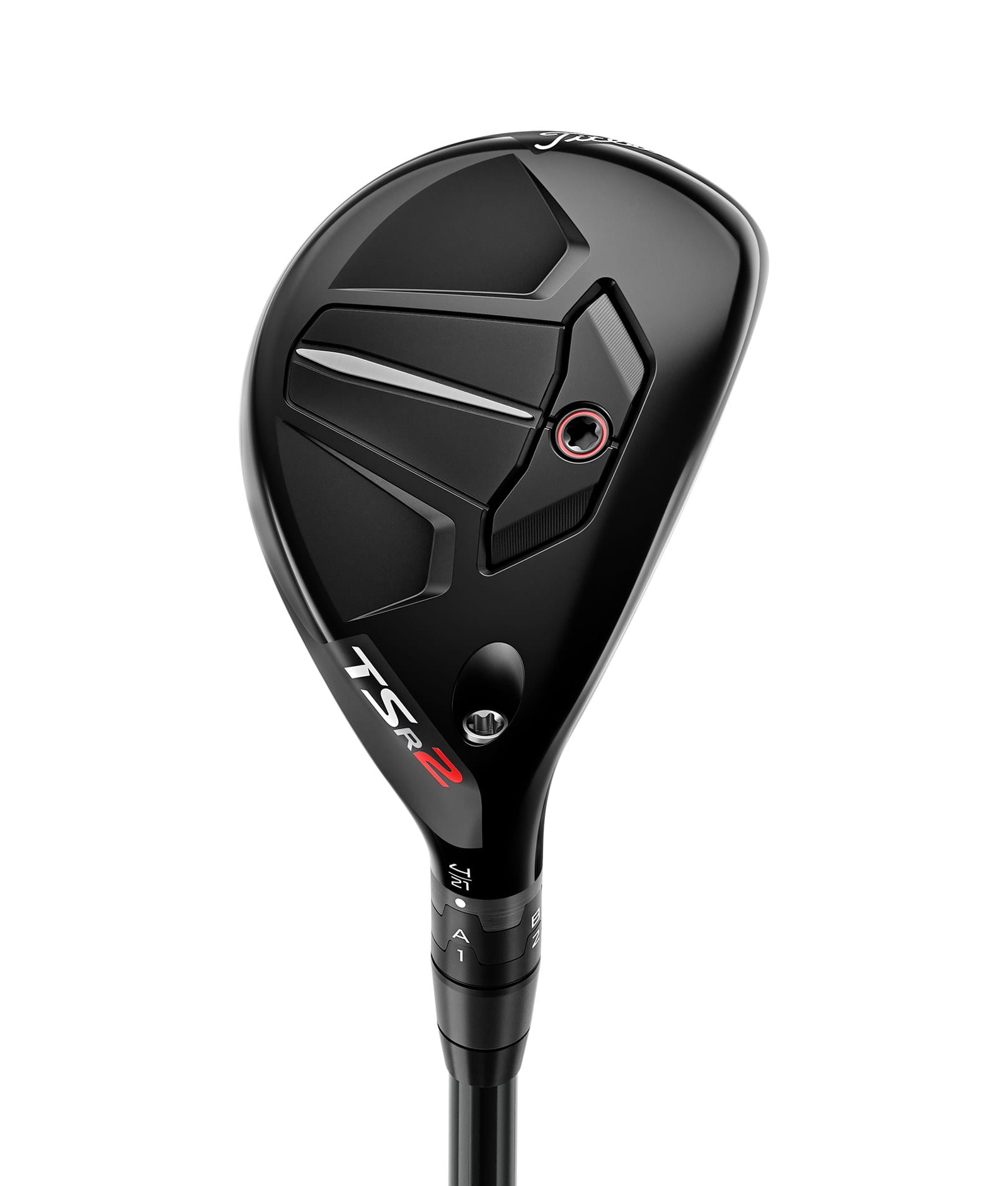
A sweeping swing brushes the ball off the grass with a shallow, level path. Hitting down means the club is still descending when it meets the ball, the way most people hit irons.
The 18° goes farther than my 4-iron. Again, that’s how it feels, and I haven’t measured the gap. I expect to keep the bag this way.
Carry a 3-hybrid if
- Your 4-iron is about 22-24°, or your set starts at the 5-iron. There’s a real hole under your 3-wood, and a 3-hybrid at 18-20° fills it.
- You’re around 17 handicap or higher and would otherwise carry a 3-iron. In Arccos’s data, the 3-hybrid went at least as far from there. For 20-25 handicaps, Arccos called it “the smart play for bogey golfers” (Arccos). A bogey golfer is someone who averages about one over par per hole.
- Your long shots often come from the rough. That’s where Shot Scope measured a clear edge, 11-14 yards, for 10-20 handicaps.
- You want one club for par-5 second shots from both the fairway and the rough. Off the grass, Arccos found the 3-hybrid much easier than a 3-wood to get airborne for 20-25 handicaps. A par 5 is a long hole where the standard score is five shots.
Wait on it if
- Your 4-iron is already 18.5-20°. A 3-hybrid would sit at the same loft. If the 4-iron is hard to hit, swapping it for a hybrid is the more useful change.
- You don’t carry any hybrid yet. In a Korean forum thread I read, most replies told a six-month golfer to start with a 4-hybrid and maybe add a 5-wood later (Clien, 2020). That’s a shared habit, not a measurement.
- What you really need is a safer tee club. That’s the 3-wood’s job.
How a 4-hybrid compares with a 7-wood at 21° is in 7-wood vs 4-hybrid.
3 hybrid or 5 wood?
At 18°, you can have either. Titleist sells both a 42-inch GTS2 5-wood and a 40.5-inch GT2 hybrid at that loft (table above).
A fairway wood is a wood with a smaller head than a driver, built to hit off the grass as well as a tee. Golf.com says fairway woods “launch higher, spin more and land softer than hybrids with the same loft.” It adds, “A 3-hybrid is designed to take the place of your 3-iron, not your 5-wood” (Golf.com, 2025). If the club’s main job is a high shot into a par-5 green from the fairway, I’d lean toward the 5-wood. If it has to handle the rough too, the shorter hybrid is my pick. The full comparison is in 5 wood loft and distance.
FAQ
What degree is a 3 hybrid?
Usually 18-20°. Cobra’s is 18°, Callaway’s and TaylorMade’s Qi4D are 19°, and PING’s is 20° (Cobra via Fairway Jockey, Callaway, GolfWRX on TaylorMade, PING). The loft on the sole tells you more than the number.
What is an 18 degree hybrid?
It’s the lowest-lofted 3-hybrid. Cobra’s OPTM 3-hybrid is 18°, and Titleist’s GT2 and TSR2 both come at 18°. Titleist lists its hybrid lofts by degree, and the hosel shows both the club number and the loft (Fairway Jockey, Titleist GT, Titleist TSR). Callaway’s and TaylorMade’s 3-hybrids are 19°, and PING’s is 20° (Callaway, GolfWRX, PING). It’s also the 5-wood loft at four of the five brands in the table above.
How far should a 3 hybrid go?
In Arccos’s 2020 data, it went 163 yards for 20-handicap golfers and 193 yards for scratch golfers (Arccos). Shot Scope’s figures run longer: 164 yards at 25 handicap, 193 at 15 and 211 at 5 (MyGolfSpy, reporting Shot Scope data, 2025). Compare yourself with one table, not a mix of both. I couldn’t find a measured chart by swing speed.
Is a 3 hybrid easier to hit than a 3 wood?
Off the fairway, for higher handicaps, yes. Arccos called the 3-hybrid a “much easier club to get airborne off the fairway” and found 20-25 handicaps lost only 5-7 yards against a 3-wood (Arccos).
Does a 3 hybrid replace a 3-iron or a 4-iron?
It depends on your set. In beginner-friendly sets, the 4-iron is already 18.5-20°, so a 3-hybrid lands on the 4-iron’s loft. In players’ sets, it takes the place of the 3-iron, or fills the gap above a 22-24° 4-iron.
Terms in this article
- Loft: how far the clubface tilts back from straight up, in degrees. More loft sends the ball higher and shorter.
- Hybrid: a club with a small, wood-shaped head on a shaft about as long as an iron’s.
- Standard loft: the loft a maker lists for a club as sold, before any adjustment.
- Game-improvement irons: iron sets built to forgive off-center hits, the kind most newer golfers play.
- Players’ irons: iron sets with smaller heads and more loft per number, usually aimed at stronger ball-strikers.
- Handicap: a number for roughly how many strokes over par you usually shoot. Lower means better.
- Scratch golfer: a golfer with a handicap of about zero.
- Bogey golfer: someone who averages about one over par per hole.
- Fairway wood: a wood with a smaller head than a driver, built to hit off the grass as well as a tee.
- Lie (lie angle): how upright the shaft sits when the sole rests flat on the ground.
- Rough: the longer grass beside the fairway.
- Long iron: a 3-, 4- or 5-iron.
- Carry: how far the ball flies before it lands, not counting the roll.
- Launch monitor: a device that measures each shot’s flight.
- Dispersion: how widely your shots spread around the target.
- Address: the moment you set the club behind the ball, just before you swing.
- Sweeping swing: brushing the ball off the grass with a shallow, level path.
- Hitting down: meeting the ball while the club is still descending, the way most people hit irons.
- Par 5: a long hole where the standard score is five shots.