
Golf club loft chart: read your clubs by degree, not number
Loft ranges for every wood, hybrid, iron and wedge label from published specs, where one loft wears three numbers, and how to fill a bag gap by degree.
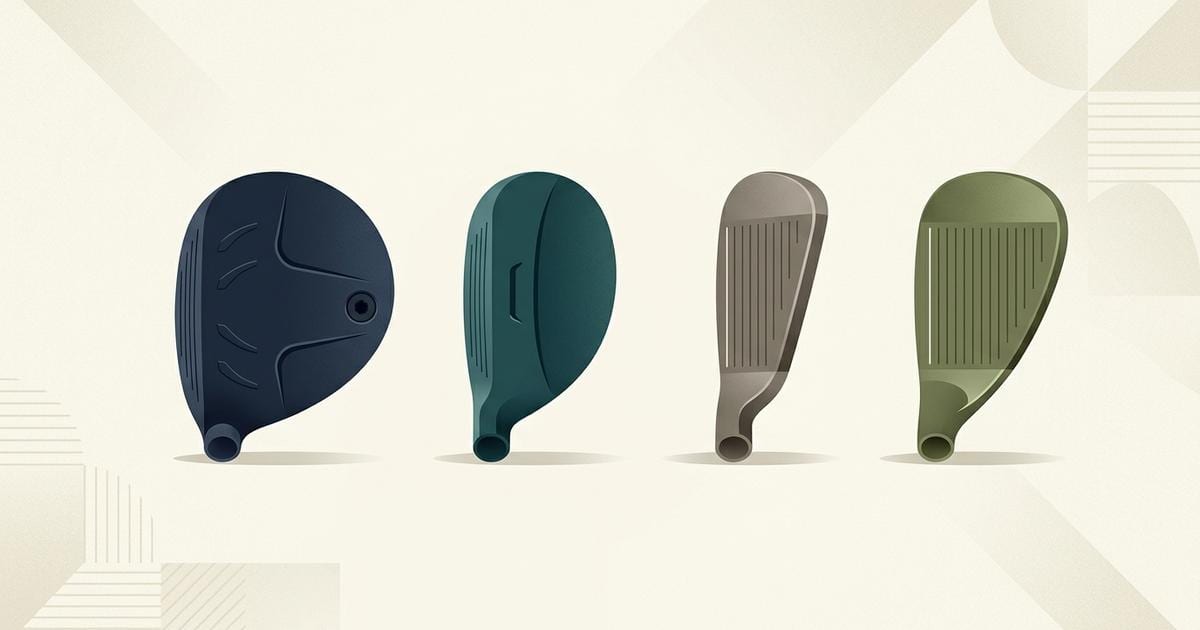
The number on a golf club is a name, not a measurement. What the club actually does comes from its loft.
Loft is how far the clubface tilts back from straight up, measured in degrees. More loft sends the ball higher and shorter.
Across ten current iron sets, a 7-iron runs from 28° to 34°. The pitching wedge, the club after the 9-iron, runs from 40° to 46°. PING’s G740 sits at the strong end of both (PING G740). In loft talk, a stronger loft is a lower number and a weaker loft a higher one. Callaway’s Apex CB sits at the weak end (Callaway Apex CB).
The 21-22° band is sold under four different names. One is a 7-wood, a small-headed wood you can hit off the grass. Another is a 4-hybrid, a wood-shaped club built to replace a long iron. The other two are a 4-iron and a 5-iron, depending on whose name is on the head.
So this chart doesn’t give you one loft per number. It gives you the range for each number, with the model that sets each end, from spec pages and launch coverage retrieved on 2026-09-26. Then I line my own bag up by degree to show where a gap hides once you stop reading the numbers.
The short answer
- A club’s number isn’t a loft. In ten current iron sets, a 7-iron runs 28-34° and a pitching wedge 40-46° (PING G740, Callaway Apex CB).
- One loft carries several numbers. 21° is a 7-wood at PING and Callaway, a 4-hybrid at Callaway, and a 5-iron in PING’s G740 (PING G440 Max, Callaway Quantum Max fairway, Callaway Quantum Max hybrid, PING G740).
- Near 21°, the 7-wood is the most predictable label: 21-21.5° at all four makers here that number one (Callaway, PING G440 Max, GolfWRX on TaylorMade, Today’s Golfer on Cobra). A “4-hybrid” spans 21-23° (Callaway, PING G440 hybrid).
- No current set in this sample puts a P stamp, the letter printed on the club head, on a 48° club. A 48° club is the one after the pitching wedge. Brands call it W, AW or GW, their letters for a gap wedge (Titleist, Today’s Golfer, Mizuno).
- To fill a gap, line your bag up by degree, find the biggest jump, and shop for the missing degree. In my bag the biggest jump below the 3-wood is 6°, from an 18° hybrid to a 24° 4-iron.
Golf club loft chart: every number as a range
Every loft below is a standard loft. That’s the loft the maker lists for the club as sold, before any fitting or adjustment. Where two current models disagree, you see both ends and who sets them. Nothing is averaged.
The iron sample is ten current sets from five makers. Half are game-improvement irons, the bigger, more forgiving heads most newer golfers buy. The other half are players irons, smaller heads aimed at better players. The woods and hybrids come from the current lines at PING, TaylorMade, Callaway and Cobra.
Look at the space between 17° and 26°. Three club types stack on top of each other there, which is why a number stops working as a guide.
7 wood loft and the other fairway woods
A fairway wood is a wood with a smaller head than a driver, built to hit off the grass as well as a tee.
| Fairway wood | Standard loft range | Strongest | Weakest |
|---|---|---|---|
| 3-wood | 14.5-15.5° | Cobra OPTM LS, 14.5° | Cobra OPTM Max, 15.5° |
| 4-wood | 17° | PING G440 Max (only maker here with one) | |
| 5-wood | 17.5-19° | Cobra OPTM LS, 17.5° | PING G440 Max, 19° |
| 7-wood | 21-21.5° | PING, TaylorMade, Callaway, Cobra OPTM X, 21° | Cobra OPTM Max, 21.5° |
| 9-wood | 24-24.5° | PING, TaylorMade, Callaway, Cobra OPTM X, 24° | Cobra OPTM Max, 24.5° |
| 11-wood | 27° | Callaway Quantum Max (only maker here with one) |
Sources: PING G440 Max, GolfWRX on TaylorMade Qi4D and Today’s Golfer, Callaway Quantum Max, Today’s Golfer on Cobra OPTM and Fairway Jockey, OPTM X. All retrieved 2026-09-26. TaylorMade and Cobra figures come from outlets, not the makers’ own pages, which didn’t load.
If you searched for the 7 wood loft, the answer is 21-21.5°. Among the numbers three or more makers sell, only the 9-wood is as tight.
4 hybrid loft and the other hybrids
A hybrid is a club with a small, wood-shaped head on a shaft about as long as an iron’s. It’s sold as an easier-to-hit swap for a long iron.
| Hybrid | Standard loft range | Strongest | Weakest |
|---|---|---|---|
| 2-hybrid | 17° | PING G440, TaylorMade Qi4D | |
| 3-hybrid | 18-20° | Cobra OPTM, 18° | PING G440, TaylorMade Qi4D Max, 20° |
| 4-hybrid | 21-23° | Callaway Quantum Max, Cobra OPTM, 21° | PING G440, TaylorMade Qi4D Max, 23° |
| 5-hybrid | 24-26° | Callaway Quantum Max, Cobra OPTM, 24° | PING G440, TaylorMade Qi4D Max, 26° |
| 6-hybrid | 27-30° | Callaway Quantum Max, 27° | PING G440, TaylorMade Qi4D Max, 30° |
| 7-hybrid | 30-34° | Callaway Quantum Max, 30° | PING G440, TaylorMade Qi4D Max, 34° |
Sources: PING G440, GolfWRX and Today’s Golfer on TaylorMade Qi4D, Callaway Quantum Max, Fairway Jockey, Cobra OPTM and Today’s Golfer. All retrieved 2026-09-26. TaylorMade and Cobra figures come from outlets, not the makers’ own pages, which didn’t load.
The 4 hybrid loft spreads over two full degrees, four times the 7-wood’s half degree. Why a hybrid flies farther than the iron with the same number is its own topic, covered in hybrid vs iron distance and lofts.
Iron lofts, down to pitching wedge loft
The pitching wedge (PW, or just P) is the club after the 9-iron.
| Iron | Standard loft range | Strongest | Weakest |
|---|---|---|---|
| 3-iron | 19-20.5° | PING Blueprint S, 19° | Callaway Apex CB, 20.5° |
| 4-iron | 18.5-23° | TaylorMade Qi Max, 18.5° | Titleist T100 (2025), Callaway Apex CB, 23° |
| 5-iron | 21-26° | PING G740, TaylorMade Qi Max, 21° | PING Blueprint S, Titleist T100 (2025), Callaway Apex CB, 26° |
| 6-iron | 24-30° | TaylorMade Qi Max, 24° | Callaway Apex CB, 30° |
| 7-iron | 28-34° | PING G740, TaylorMade Qi Max, Mizuno JPX925 Hot Metal, 28° | Callaway Apex CB, 34° |
| 8-iron | 32-38° | PING G740, 32° | Callaway Apex CB, 38° |
| 9-iron | 36-42° | PING G740, 36° | Callaway Apex CB, 42° |
| Pitching wedge | 40-46° | PING G740, 40° | Callaway Apex CB, 46° |
The ten sets: PING G740 and Blueprint S; Titleist T350 and T100 (2025); TaylorMade Qi Max and P790; Callaway Quantum Max and Apex CB; Mizuno JPX925 Hot Metal and Pro 243. Only Blueprint S, T100 and Apex CB offer a 3-iron. Sources: PING G740, PING Blueprint S, Titleist Newsroom, Today’s Golfer on Qi Max, Today’s Golfer on P790, Callaway Quantum Max, Callaway Apex CB, Mizuno JPX925 Hot Metal and Mizuno Pro 243. All retrieved 2026-09-26.
Why two 7-irons from one maker can sit far apart is in 7-iron loft in degrees. If you searched for a “traditional” or “standard” 7-iron loft, the one dated figure I found is from Golf.com in December 2025. True Spec fitter Eric Hickman said “in the 1980s, a standard 7-iron sat around 35 to 36 degrees of loft” (Golf.com, 2025-12-27). I found no dated full-set table of older lofts from a maker or major outlet. So there’s no old chart to hold your clubs up against.
Wedge labels after the pitching wedge
A gap wedge is the club that fills the loft gap between the pitching wedge and the sand wedge. Makers print it as W, AW, GW or UW. A sand wedge (SW) has more loft and comes next, and a lob wedge (LW) has the most.
| Label | Lofts found | Sets |
|---|---|---|
| UW | 45° | PING G740 |
| W | 48-53° | Titleist T350 (48° and 53°), Titleist T100 2025 (49°) |
| AW | 47-50° | Callaway Quantum Max 47°, TaylorMade Qi Max 48°, TaylorMade P790 49°, Callaway Apex CB 50° |
| GW | 48-51° | Mizuno JPX925 Hot Metal 48°, Mizuno Pro 243 48°, Callaway Quantum Max 51° |
| SW | 54-55° | TaylorMade Qi Max 54°, Mizuno JPX925 Hot Metal 54°, Callaway Quantum Max 55° |
| LW | 58° | TaylorMade Qi Max |
Same ten sets and sources as the iron table, retrieved 2026-09-26. PING’s G740 labels its two wedges after the UW with just “50” and “56” (PING G740). Callaway’s Quantum Max carries both an AW at 47° and a GW at 51° in one set (Callaway).
Where one loft wears several numbers
Put the tables side by side and four loft bands carry three or more different labels each. If you’re comparing clubs across brands, these are the places where the stamp tells you least.
| Loft | Sold as | Named examples |
|---|---|---|
| 18-19° | 5-wood, 3-hybrid, 2-, 3- or 4-iron | 5-wood at 18° (TaylorMade Qi4D, Callaway Quantum Max, Cobra OPTM X) and 19° (PING G440 Max). 3-hybrid at 18° (Cobra OPTM) and 19° (TaylorMade Qi4D, Callaway). 2-iron at 18° (Titleist T250). 3-iron at 19° (PING Blueprint S, Titleist T150). 4-iron at 18.5° (TaylorMade Qi Max) and 19° (Callaway Quantum Max, Mizuno JPX925 Hot Metal) |
| 21-22° | 7-wood, 4-hybrid, 4- or 5-iron | 7-wood at 21° (PING, TaylorMade, Callaway, Cobra OPTM X) and 21.5° (Cobra OPTM Max). 4-hybrid at 21° (Callaway, Cobra) and 22° (TaylorMade Qi4D). 4-iron at 22° (Mizuno Pro 243, Titleist T150 and T250). 5-iron at 21° (PING G740, TaylorMade Qi Max) and 22° (Callaway Quantum Max, Mizuno JPX925 Hot Metal) |
| 24-26° | 9-wood, 5-hybrid, 5- or 6-iron | 9-wood at 24° (PING, TaylorMade, Callaway, Cobra OPTM X) and 24.5° (Cobra OPTM Max). 5-hybrid at 24° (Callaway, Cobra), 25° (TaylorMade Qi4D) and 26° (PING, TaylorMade Qi4D Max). 5-iron at 25° (Mizuno Pro 243) and 26° (PING Blueprint S, Titleist T100 2025, Callaway Apex CB). 6-iron at 24° (TaylorMade Qi Max), 24.5° (PING G740), 25° (Callaway Quantum Max, Mizuno JPX925 Hot Metal) and 26° (Titleist T350) |
| 48° | W, AW or GW | W (Titleist T350, T150, T250), AW (TaylorMade Qi Max), GW (Mizuno JPX925 Hot Metal, Mizuno Pro 243) |
Sources: the fairway, hybrid and iron tables above, plus the Titleist T150 and T250 specs in the Titleist Newsroom. Titleist also sells unnumbered fairways and hybrids at 18°, 21° and 24° (GT hybrids, GT1 fairway, GTS fairways). All retrieved 2026-09-26.
Is a 21 degree hybrid a 3 or a 4?
It’s a 4 at the two brands here that put a number on a 21° hybrid. Callaway’s Quantum Max (Callaway) and Cobra’s OPTM (Fairway Jockey, Today’s Golfer) both stamp 21° as a 4.
PING and TaylorMade don’t make a 21° hybrid at all. Their 3-hybrids are 19-20° and their 4-hybrids 22-23° (PING G440, GolfWRX). Titleist sells it simply as “21°”, with no number (Titleist Newsroom).
What stays nearly constant is the 7-wood. All four makers here that number their fairway woods make a 21° 7-wood, and Cobra’s OPTM Max is only half a degree weaker. How the 7-wood and the 4-hybrid differ beyond loft is covered in 7-wood vs 4-hybrid.
Is there a 48 degree pitching wedge?
Not in any current set I checked. Pitching wedges in the ten sets run 40-46°. A 48° club is the one after the pitching wedge. Titleist calls it W, TaylorMade AW and Mizuno GW (Titleist Newsroom, Today’s Golfer, Mizuno).
Only two optional loft versions reach 47°: PING’s Blueprint S Retro PW and Titleist’s T250 Launch Spec P (PING Blueprint S, Titleist Newsroom). Even 45° is two different clubs. It’s the PW in PING’s Blueprint S and Titleist’s 2025 T100, and the UW in PING’s G740.
So if an older set or a used club says P on 48°, you’re holding a weaker loft than any PW in this sample. It fills the slot a W, AW or GW fills in a current set.
My bag, lined up by degree
Here’s my bag as it is today. I’ve listed it by loft, not by the order the clubs sit in the bag.
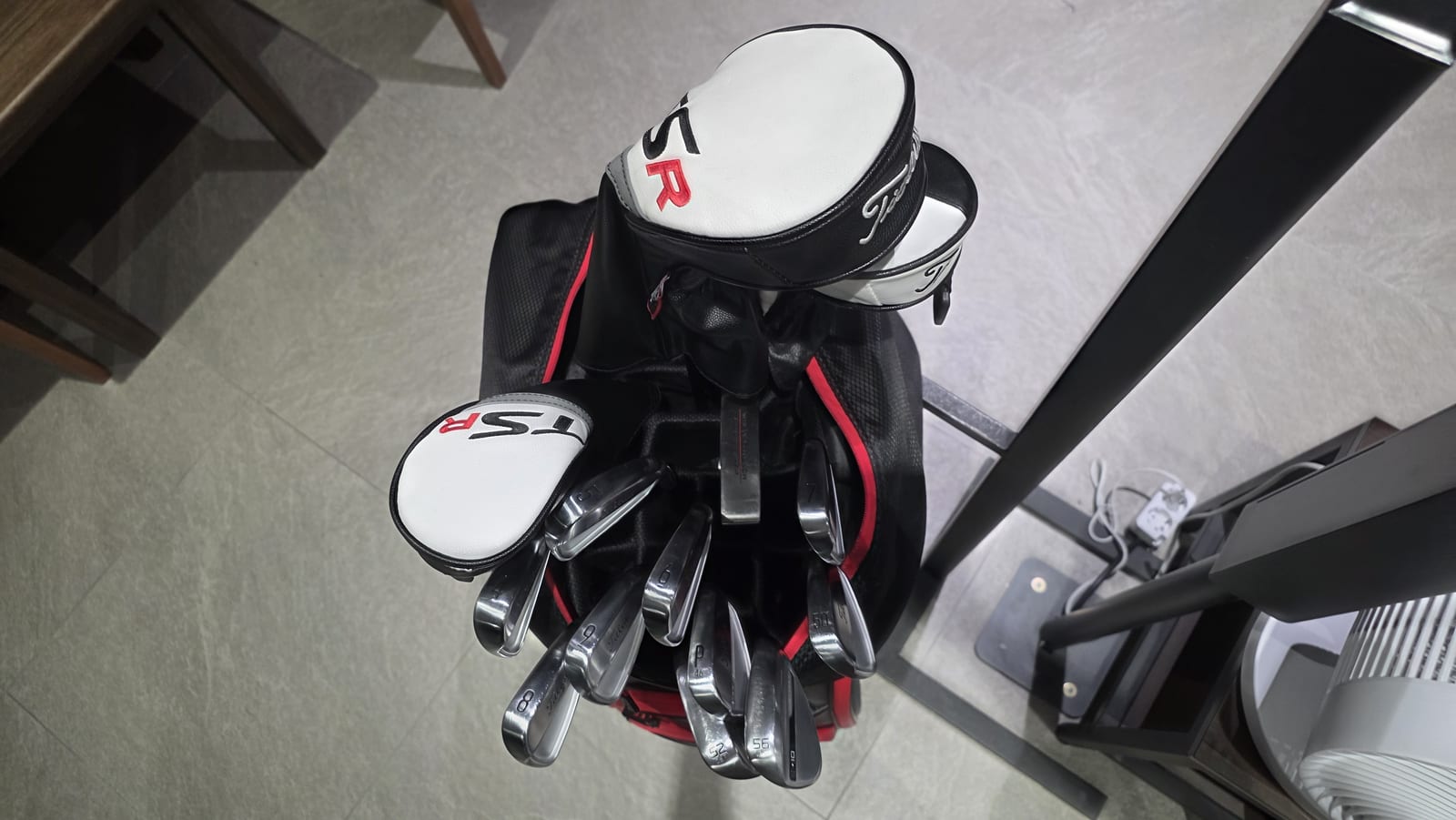
Photo: my bag. On the short end you can read the stamps P/46, 50, 52 and 56, which is where the 2° step between my W and my 52° wedge shows up.
| Club | Loft | Step from the club before |
|---|---|---|
| Driver (Titleist TSR) | 9° | |
| 3-wood | 15° | 6° |
| 3-hybrid | 18° | 3° |
| 4-iron | 24° | 6° |
| 5-iron | 27° | 3° |
| 6-iron | 30° | 3° |
| 7-iron | 34° | 4° |
| 8-iron | 38° | 4° |
| 9-iron | 42° | 4° |
| P | 46° | 4° |
| W | 50° | 4° |
| Wedge | 52° | 2° |
| Wedge | 56° | 4° |
Iron lofts are Titleist’s spec for the 2023 T100, the set I play; the full table by year is in Titleist T100 lofts by generation. The rest are the lofts on my own clubs.
Read down the last column and three things stand out.
- The biggest jump below the 3-wood is 6°, from the 18° hybrid to the 24° 4-iron. Everywhere else in the long and middle clubs the step is 3-4°.
- The irons step about 4° each. It’s 3° from the 4-iron to the 6-iron and 4° from there to the W.
- The wedges step unevenly. W 50° to 52° is 2°, then 52° to 56° is 4°.
The driver-to-3-wood step is 6° too. I’m leaving it out of the count because the driver is a tee club for most of us. This post is about what fills the space between the clubs you hit from the grass.
Notice also what the numbers alone would have hidden. My 18° 3-hybrid carries the same loft as the 5-wood from TaylorMade, Callaway and Cobra. My 24° 4-iron matches the 9-wood from all four fairway makers here. By number, my bag looks evenly spaced from the 3-hybrid to the 9-iron. By degree, it has a hole.
So how do you fill the gap in your bag?
The method is to line your clubs up by degree, find the biggest jump, and shop for the degree that sits in it. The number on the new club comes last, because across brands it doesn’t tell you the loft.
Find the biggest step in your own bag
Wedges, hybrids and fairway woods often carry the loft on the head. For irons, you’ll usually need the maker’s spec page for your model and year. From there, you’d sort the lofts from lowest to highest, like my table above, and subtract each from the next.
In my bag the biggest step is 18° to 24°, so the missing loft sits around 21°. Your hole may be somewhere else. The lofts will show you where, and the numbers won’t.
Shop for the degree, then check the label
Once you know the degree, the chart tells you which labels land there. Around 21° that’s a 7-wood, a 4-hybrid, or a 4- or 5-iron, depending on the maker.
A 7-wood is 21-21.5° at all four makers here that number one (Callaway, PING, GolfWRX on TaylorMade, Today’s Golfer on Cobra). A 4-hybrid runs 21-23°, so the same “4” can land 2° apart. If you want the number on the head to mean what you think it means, the 7-wood is the label that holds still.
You don’t even need the number at Titleist. Its GT and GTS fairways and hybrids are listed by degree only, such as GT2 hybrids at 18°, 21° and 24° (Titleist Newsroom). The maker is already asking you to shop by degree.
One more thing to check: many woods and hybrids have an adjustable hosel, the sleeve where the shaft meets the head, which changes the loft. PING lists ±1.5° on the G440 Max fairway and G440 hybrid (PING fairway, PING hybrid). So a club a degree off your target may reach it on paper. The sleeve also turns the face, which is covered in driver loft sleeve and face angle.
Below the pitching wedge, start from your PW’s degree
The wedge you buy after your PW depends on your PW’s loft, not on its letter. PWs in current sets run 40-46°, and the next label means anything from 45° to 53° depending on the brand (tables above). So read your PW’s degree first, then pick the next wedge by degree.
Mine shows the logic. My P is 46° and my W is 50°, so the next two wedges at 52° and 56° make steps of 2° and 4°. Someone with a 40° PW would be starting 6° lower, with a different hole to fill. How the 52° and 56° pair works as a setup is in the 52 and 56 wedge setup.
Wedges sold on their own already work this way. Titleist’s Vokey SM11 comes in 27 loft-and-sole configurations from 44° to 60°. Titleist says it added the 44° for players who “require a stronger loft than 46 degrees to properly gap their set” (Titleist Newsroom, 2026-01-19).
Terms in this article
- Loft: how far the clubface tilts back from straight up, in degrees. More loft sends the ball higher and shorter.
- Standard loft: the loft a maker lists for a club as sold, before any fitting or adjustment.
- Strong and weak loft: a stronger loft is a lower number of degrees, a weaker loft a higher one.
- Fairway wood: a wood with a smaller head than a driver, built to hit off the grass as well as a tee.
- Hybrid: a club with a small, wood-shaped head on a shaft about as long as an iron’s, sold as an easier swap for a long iron.
- Game-improvement iron: a bigger, more forgiving iron head, the kind most newer golfers buy.
- Players iron: a smaller iron head aimed at better players.
- Pitching wedge (PW or P): the club after the 9-iron.
- Gap wedge (W, AW, GW or UW): the wedge that fills the loft gap between the pitching wedge and the sand wedge. Each maker picks its own letter.
- Sand wedge (SW): the wedge after the gap wedge, with more loft.
- Lob wedge (LW): the wedge with the most loft in a set.
- Adjustable hosel: the sleeve where the shaft meets the head on many woods and hybrids. Turning it changes the loft.
- Stamp: the number or letter printed on a club’s head or sole.