
52 and 56 wedges were built for a 48-degree pitching wedge
The 52 and 56 pair steps evenly under a 48-degree pitching wedge. Current sets publish 40 to 45 degrees, so the first step can be nine. How to pick from your own number.
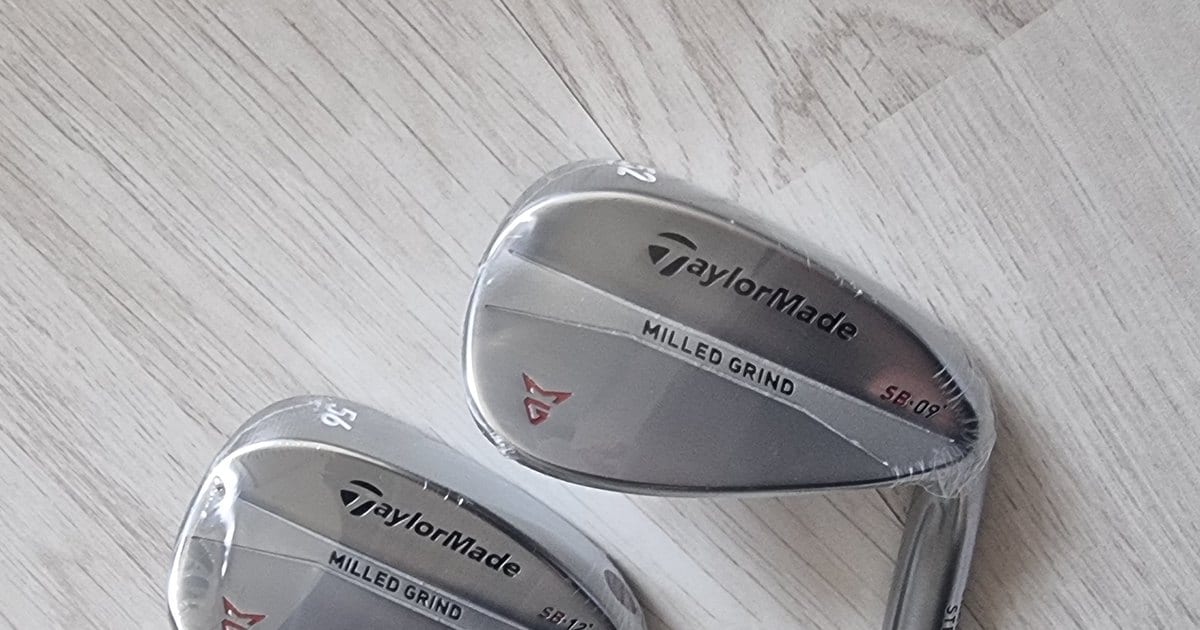
Walk into a shop and ask which wedges to buy, and you’ll hear 52 and 56. It’s the pair everyone starts with, and it’s usually sold as a pair.
Those two numbers do fit together. What they fit under is a pitching wedge of 48 degrees, and that’s the part nobody says out loud. Your set probably doesn’t have one.
So this is about reading the number on your own pitching wedge first, and counting from there. It takes about two minutes and it changes which two wedges you should be looking at.
The short answer
- 52 and 56 sit four degrees apart, and four degrees below 48. The pair was spaced for a 48-degree pitching wedge, as a rule of thumb rather than a published standard.
- Current sets don’t publish 48. PING’s G740 pitching wedge is 40.0° and its Blueprint S is 45.0°, both on sale in 2026 (PING G740, PING Blueprint S, both retrieved 2026-09-11).
- Titleist splits three ways inside one family: 45° in the T100, 44° in the T150, 43° in the T250 and T350 (Titleist, retrieved 2026-08-29).
- Put a 52 under a 43° pitching wedge and the step is nine degrees. The spacing golf media and Korean golf press both work from is four to six.
- 52 and 56 keep every step inside that range only when your pitching wedge is 46 to 48 degrees. Read yours before you buy anything.
Loft is the angle of the club face, in degrees. More loft sends the ball higher and shorter. A gap wedge is whatever club you put between your pitching wedge and your sand wedge, and it exists only because that gap opened up.
Where the 52 and 56 pair comes from
Line the three numbers up and the spacing is obvious. A 48-degree pitching wedge, then 52, then 56. Four degrees, then four degrees.
That’s the bag the shop’s answer assumes. It’s a rule of thumb, not a published standard, and Korean golf media still writes it in exactly that shape. If you have a 48-degree pitching wedge and a 56-degree sand wedge, add a 52 (GolfJournal, June 28, 2023).
Read that sentence carefully. The 52 is being added to a bag that already has a 48 at the top. It’s the middle rung, not the first one.
Your pitching wedge is probably not 48 degrees
Here’s the part that surprised me. PING sells two iron sets right now whose pitching wedges are five degrees apart.
The G740 pitching wedge is 40.0 degrees. The Blueprint S pitching wedge is 45.0 degrees (PING G740, PING Blueprint S, both retrieved 2026-09-11). Same maker, same year, same two letters stamped on the sole.
Titleist splits three ways inside one family. The T100 pitching wedge is 45 degrees, the T150 is 44, and the T250 and T350 are both 43 (Titleist, retrieved 2026-08-29). The T100 moved from 46 to 45 in 2025, so a 46 on that badge is the 2023 generation.
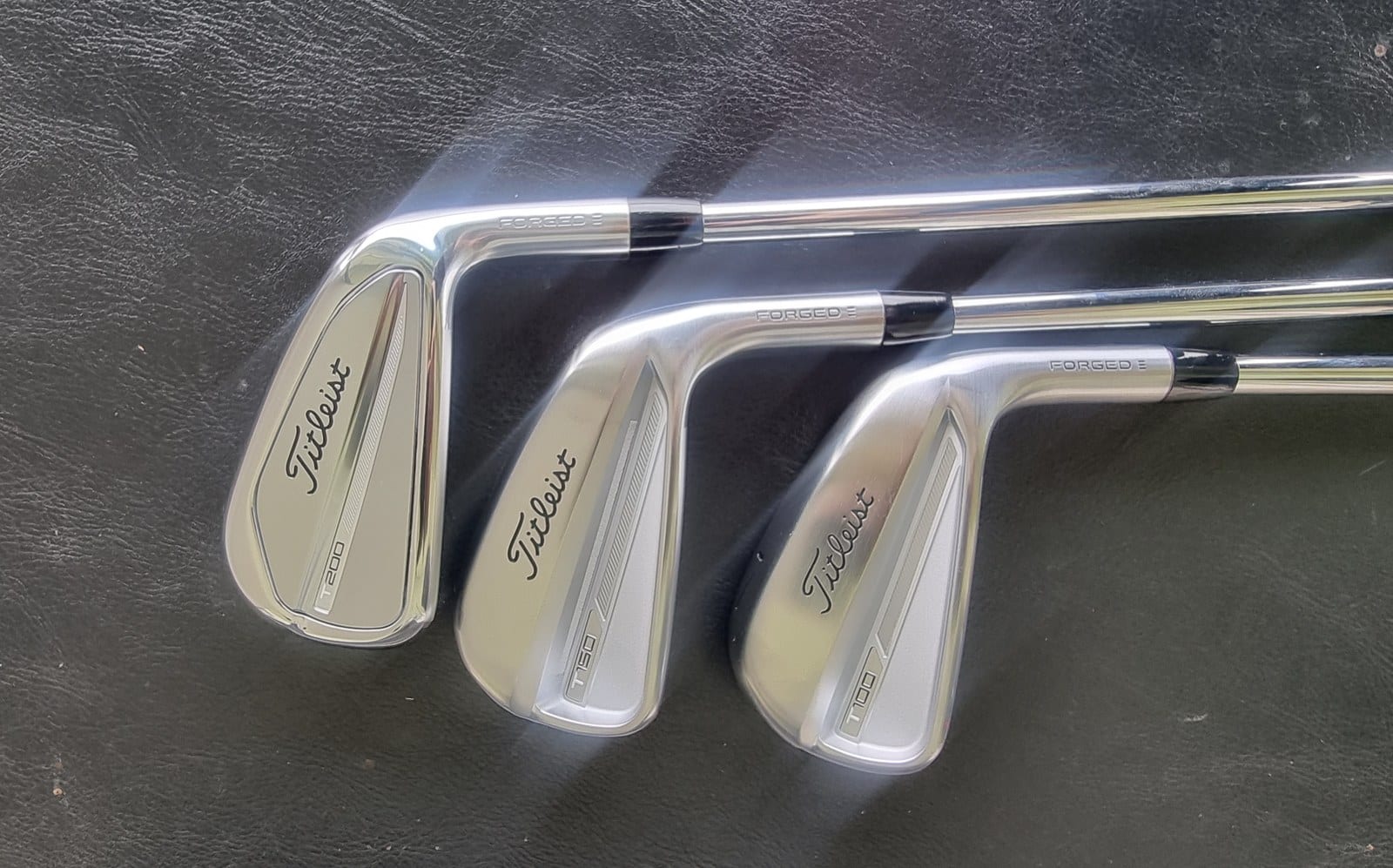
Photo: three Titleist irons from the 2023 T-Series, T200, T150 and T100 from left. The badge is what tells you which pitching wedge loft you’re getting, because the sole just says P. T250 replaced T200 in 2025.
None of those six numbers is 48. That’s not a criticism of any of them. It’s just the arithmetic that the shop’s answer was built on, and the arithmetic moved.
This already happened one club up. The same thing happened to the 7-iron, and it happened there first.
What a nine-degree step actually costs
Golf media works from four to six degrees between wedges. Korean golf press puts the same range in print and tells amateurs to treat it as a band rather than a fixed four (GolfJournal, June 28, 2023).
You can see the same range used as a worked example in English. Starting from a 44-degree pitching wedge, GOLF.com puts the next wedge at 48 or 50, then 54 or 56 (GOLF.com, August 5, 2022). It never reaches for 52 first.
Now put 52 under each published pitching wedge and measure the step.
Only the bottom two rows land inside the range. Everything above them is a club and a half of yardage with nothing in it, sitting right where approach shots come from.
The makers already sell a different answer
This is the part that convinced me the shop answer is just old, not wrong on purpose.
PING publishes the G740 wedges alongside the irons. The set runs 40 degrees at the pitching wedge, 45 at the utility wedge, then 50, then 56 (PING, retrieved 2026-09-11). Utility wedge is PING’s name for the gap wedge.
Five, five, six. PING never puts a 52 there.
The pitching wedge and the utility wedge are both 35.5 inches long. Length isn’t what separates them. Loft is the only thing that changes, which is the whole reason you have to read it.
Titleist went further and built a club for the problem. Vokey released a 44-degree wedge through WedgeWorks because the strong-lofted T sets left a gap their existing wedges couldn’t reach without bending them (GOLF.com, March 4, 2025).
Korean and Japanese sets solved it a different way, by shipping the club in the box. My own 2011 Tourstage set came as nine clubs: 4-iron through a 45-degree pitching wedge, then a PS, then a sand wedge. PS stands for pitching sand, the Japanese and Korean name for the club a US set calls a gap wedge. If your set came that way, you may already own the club this article is about.
So which wedges do you actually buy?
The first thing you’ll want is the number on your own pitching wedge. If the sole only says P, look up your model on the maker’s spec page. That number is the first rung, and every other choice hangs off it.
| Your pitching wedge | 52 and 56 leaves you | Wedges that stay inside 4 to 6 |
|---|---|---|
| 40° | 12°, then 4° | none reach 56; go 45, 50 and 56 |
| 43° | 9°, then 4° | 48 and 54 (this one moves your sand wedge off 56) |
| 44° | 8°, then 4° | 50 and 56 |
| 45° | 7°, then 4° | 50 and 56 |
| 46° | 6°, then 4° | 50 and 56, or the 52 and 56 |
| 48° | 4°, then 4° | 52 and 56 |
Steps calculated from the four-to-six degree spacing above. Your carry numbers decide whether the setup actually works, and a launch monitor will tell you faster than arithmetic will. Carry is how far the ball flies before it lands, and a launch monitor is the machine that measures it.
Two rows of that table are the whole answer to the question in the title. A 52 and a 56 keep every step inside the range when your pitching wedge is 46 to 48, and not below that. If yours reads 42 to 44 and you’re weighing a 48 as the first wedge under it, I worked through that case separately.
Sources disagree about which end to count from, and it’s worth knowing. The approach above starts at the pitching wedge and works up. GOLF.com also publishes the opposite method: pick your highest-lofted wedge from how far you drive the ball. On that method a 200-yard driver means starting at 56, then coming down through 52 and 48 (GOLF.com, August 29, 2025).
If I had to pick one, I’d start at the pitching wedge. Someone one to three years into golf usually can’t tell you their real driving distance. The pitching wedge is already in the bag, and the loft can be read today. That’s where the evidence already is.
I got this wrong myself, in the ordinary way. I bought a 52 and a 56 before I knew what my P was, then had to buy a 50 later to close the step. That story sits next to the T100 loft chart that caused it.
Frequently asked questions
Is 52 and 56 a bad wedge setup?
No. It’s a well-spaced pair under a 46 to 48-degree pitching wedge, and it’s still the right answer for plenty of bags. It stops being well spaced the moment the club above it is 45 degrees or stronger, which most current sets are.
What loft should my gap wedge be?
Four to six degrees above your pitching wedge, then keep the same spacing to your sand wedge. With a 44-degree pitching wedge that puts the gap wedge near 48 or 50 (GOLF.com, August 5, 2022).
Can I just bend my 52 stronger instead of buying another wedge?
Bending changes more than the loft. Titleist’s stated reason for building a 44-degree wedge from scratch was that bending an existing one to reach that loft costs bounce and adds offset (GOLF.com, March 4, 2025). Bounce is the angle of the sole that keeps the leading edge from digging, and offset sets the head back from the shaft. A couple of degrees is routine club work; a five-degree bend is not.
Terms in this article
- Loft: the angle of the club face, in degrees. More loft, higher and shorter.
- Gap wedge: whatever club sits between your pitching wedge and your sand wedge. Also stamped A, AW, U or UW depending on the maker.
- PS (pitching sand): the Japanese and Korean name for the same club.
- Carry: how far the ball flies through the air before it lands. A launch monitor measures it.
- Bounce: the angle of the sole that keeps the leading edge from digging. Bending a wedge’s loft changes it.
- Offset: how far the head sits back from the shaft. Bending a wedge stronger adds it.