
48 Degree Wedge: You Need One Only If Your PW Is 42-44°
A 48 degree wedge is the first wedge under a 42-44° pitching wedge. At 45-46°, a 50 fits better. At 47-48°, a 48 is your PW. How to check your set first.
Before you pay for a 48 degree wedge, turn your pitching wedge over and find its loft. That one number decides what a 48 would be in your bag. It could fill a real hole, sit two degrees from a club you already carry, or simply be your pitching wedge.
The 48 sits in an odd spot on the rack. Titleist calls its Vokey 44 to 52 “pitching and gap wedge lofts” in one breath. It even added a 44 for golfers who want a Vokey pitching wedge stronger than 46 (Titleist SM11 release, January 19, 2026). So a 48 can be either club. Which one depends on the pitching wedge above it.
If the sole only says P, your maker’s spec page has the number. Titleist, PING, Mizuno, Callaway and Srixon all publish it.
Quick rule
- A 48 is the first wedge under a 42-44° pitching wedge. Titleist’s T150 (44°), T250 and T350 (43°) sets all come with a 48° W (Titleist, July 10, 2025).
- Check your bag before the rack. If those sets are yours, you already own this club.
- Under a 45-46° pitching wedge, a 48 is only two or three degrees away. A 50 fits the usual spacing better from either one, and from a 45 a 49 does too. A 50 is what I added under my 46.
- Under a 47-48° pitching wedge, a 48 is basically your PW.
- Under a 40-41° pitching wedge, start at 45-46 instead. PING’s G740 goes from a 40° PW to a 45° wedge (PING G740).
- A specialty 48 hasn’t been shown to beat the set wedge on full swings. It usually comes in one sole shape, with mid bounce, at the same length or a little longer.
If you’d like to see where wedges sit among the rest of your clubs first, the golf club loft chart lays them out by number.
Your PW loft decides whether a 48 degree wedge fits
Loft is the angle of the clubface, in degrees. More loft sends the ball higher and shorter. The pitching wedge (PW) is the strongest wedge in an iron set, the club after the 9-iron. A gap wedge is whatever you put between the PW and the sand wedge.
The usual spacing between wedges is four to six degrees. It’s a habit, not a spec, but the makers’ own sets follow it. Titleist’s T150 goes 44 to 48. Callaway’s Elyte goes 42 to 47 to 51, and PING’s G740 goes 40 to 45 to 50 to 56 (links below). GOLF.com works an example from a 44° PW: a 48 or 50 next, then a 54 or 56 (GOLF.com, August 5, 2022).
Now find your row.
| Your set | What to look at first | What the makers do |
|---|---|---|
| Already has a 48 stamped W, GW or AW | Nothing. You own a 48 | Titleist T150, T250, T350: W 48. Mizuno JPX925 Hot Metal, Hot Metal Pro, Forged: GW 48 |
| PW 40-41° | A 45-46 | PING G740: 40, then UW 45 |
| PW 42-44° | A 48 (at 44, a 50 works too) | Mizuno Hot Metal 42 → 48. T250, T350, JPX925 Forged 43 → 48. T150 44 → 48 |
| PW 45-46° | A 50 (from a 45, a 49 works too) | Titleist T100 (2025) 45 → W 49. Mizuno Hot Metal HL 45 → GW 50 |
| PW 47-48° | No 48. It’s your PW, or a degree off | Titleist T250 Launch Spec 47 → W 52 |
Lofts from Titleist’s 2025 T-Series release, Mizuno JPX925 Hot Metal specs, Mizuno JPX925 Forged and PING G740, all read 2026-10-06. You won’t find your carry in these pages. They publish lofts, not distances.
Your set already came with a 48
Look in your bag before you look at the rack. If the club after your PW is stamped W, GW or AW, look up its loft. On the sets in the first row, it’s 48.
Other sets land close by. Callaway’s Elyte goes from a 42° PW to a 47° AW (Callaway Elyte), and Srixon’s ZXi5 goes from 44 to a 50° AW (Srixon ZXi5). A set wedge at 47 or 50 does the job a 48 would.
Skipping a new 48 costs you nothing on loft. A specialty 48 would change the sole and shaft, covered below, not your gaps.
PW 40-41°: a 48 is too far down
A 48 under a 40° PW is an eight-degree step, past the usual range. PING’s own G740 set puts a 45 there, then a 50 and a 56 (PING G740).
What you give up is a slot. That’s three wedges under the PW, so something else has to leave the bag.
PW 42-44°: this is where a 48 belongs
Most maker sets I found in this range put their first wedge at 47 or 48. Srixon’s ZXi5, going from 44 to 50, is the exception, and at 44 a 50 still sits inside the usual range. If your set didn’t come with a wedge here, this is the row where buying a 48 makes the most sense.
What you give up is the shop’s usual 52 as your first wedge. Under a 48, the next club can still be a 52 or a 54. The 52 and 56 article shows why that pair was spaced for a 48° PW in the first place.
PW 45-46°: a 50 fits better than a 48
From a 46, a 48 is a two-degree step. From a 45, it’s three. Both sit under the four-to-six range, and the makers selling 45° PWs go to 49 or 50.
There’s a fair counterpoint. Matt Saternus at Plugged In Golf found he needs a first wedge only two or three degrees weaker than his PW, and says to gap by distance, not loft (Plugged In Golf). That’s one golfer’s experience, and he says it’s very personal. If you already know your carry numbers and there’s a hole right under your PW, a 48 isn’t wrong. If you don’t know them yet, a 50 is the safer start, or a 49 from a 45 as Titleist’s 2025 T100 does. Check your carry on a launch monitor if you can get on one. Carry is how far the ball flies before it lands. A launch monitor is a device that measures it.
The trade is the 48 itself, and often the 52 below it.
PW 47-48°: a 48 is a second pitching wedge
This is the weak-lofted end. Titleist’s T250 Launch Spec has a 47° PW, and the next wedge in the set is a 52 (Titleist). Under a 47 or 48, a 52 and 56 already step four or five degrees at a time.
You give up nothing by skipping the 48. Buying one would put two clubs at the same loft.
What a specialty 48 changes, and what it doesn’t
A specialty 48 is a wedge sold on its own, outside an iron set. In the current lines I checked, the 48 comes in exactly one sole shape, with mid bounce.
Bounce is the angle of the sole that keeps the leading edge from digging into the turf. A grind is the shape of the sole, cut by the maker.
| Wedge | 48° option | Length |
|---|---|---|
| Vokey SM11 | 48.10F only (F grind, 10° bounce) | not confirmed |
| PING s259 | 48 S-12 only (12° bounce) | 35.5” |
| Cleveland RTZ 2 | MID only (10° bounce) | 36” |
| Callaway Opus SP | S grind, 10° bounce | 35.75” |
Sources: Titleist SM11 release, January 19, 2026; PING s259; Cleveland RTZ 2; Callaway Opus SP. All read 2026-10-06.
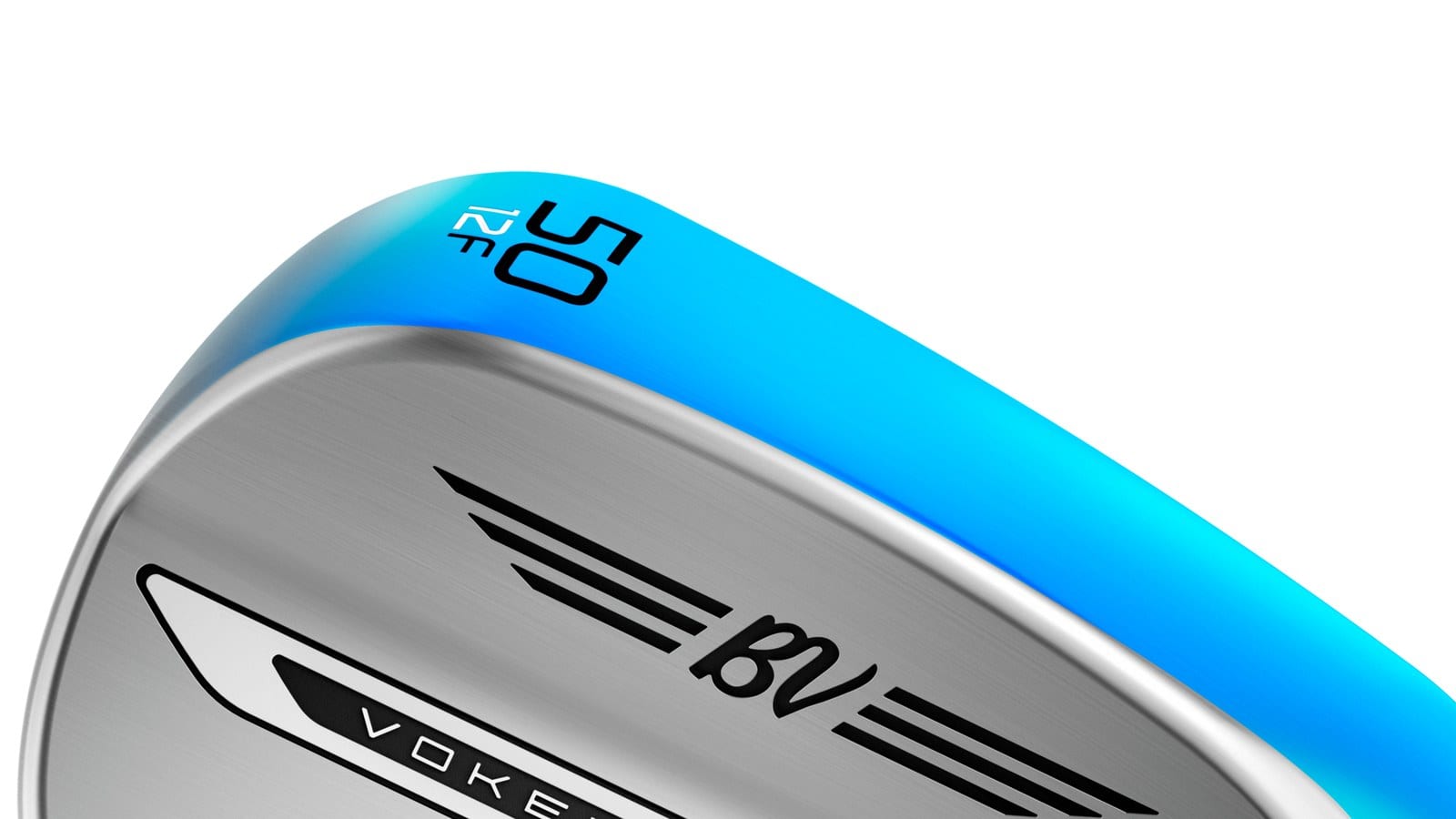
So at 48, you don’t get to choose. The options start opening at 50, where Vokey already sells two bounces, 50.08F and 50.12F. The wedge at the top of this page is Titleist’s own image of that 50.12F. It’s not a 48, and it’s not my club.
Length is the other surprise. Set gap wedges run 35.5 inches on PING’s G740 UW, Mizuno’s JPX925 Hot Metal GW and Callaway’s Elyte AW, and 35.75 on Srixon’s ZXi5 AW (set links above). A specialty 48 is the same length or up to half an inch longer. The shaft can be heavier too: PING’s s259 ships at 111 grams, against 105 for the G740’s stock steel shaft.
Does the specialty head hit it better? For full swings, the one small test I found doesn’t say so. Plugged In Golf had five golfers, from scratch (zero handicap) to 12, hit seven full shots each. They used a set gap wedge, a cavity wedge and a blade wedge, all matched for loft, lie, length and shaft. A cavity wedge has a hollowed-out back like a game-improvement iron. A blade wedge has a solid back. Lie is the angle between the shaft and the ground when the club sits flat. The set wedge had the tightest distance spread, 9.2 yards on average. The blade was 2.5 yards wider and the cavity 3.7 wider (Plugged In Golf, updated January 26, 2020).
The authors call their own result hazy, and it covers full shots only. If most of your 48 shots would be full swings, that test gives you no reason to swap out a set wedge you already have. If you’d use it around the green, the sole matters more, and bounce is chosen by your divot, not your handicap.
One more wedge means one club leaves the bag
The rules cap you at 14 clubs (how many clubs go in a golf bag). If your bag is already full, a new 48 doesn’t join it. It replaces something.
Count before you buy. Under a 42-44° PW, a 48 plus the usual 52 and 56 is three wedges under the PW. Under a 40-41° PW, the G740 pattern is also three. Either way, the candidates to leave are a long iron, a hybrid or a fairway wood, whichever you hit least.
The other way out is to drop a wedge you have. That’s the choice I’m stuck on.
My 46° PW, a 50, and a choice I haven’t made
My set is the 2023 Titleist T100, and its PW is 46° (Titleist 2023 T100, retrieved 2026-08-29). The 2025 T100 moved to 45°, so a 46 on that badge is the older generation (T100 lofts by generation).
I played a 52 and a 56 under it, and the gap from my PW to the 52 felt too wide. So I added a 50. I’ve never carried a 48, so I can’t tell you how one plays.
Here’s what the bag looks like on paper now, with the two options I’m weighing and the 48 route for comparison.
The first ladder is why I’d point a 46 toward a 50, not a 48. The 48 lands two degrees from the PW, then leaves the same four-degree steps I’d get anyway.
The arithmetic also shows something awkward about my own bag. With 50, 52 and 56 all in it, the 50 and 52 sit two degrees apart. That’s the same closeness I’d steer you away from between a 46 and a 48.
So one wedge has to go, and I haven’t picked which way.
- 50, 54, 58. Three even four-degree steps. It means replacing both the 52 and the 56, so two new wedges to buy.
- 50, 56. Drop only the 52. It costs nothing and frees a slot in the bag, but the step from 50 to 56 is six degrees, the top of the usual range.
Loft arithmetic can’t settle it. My carry with each wedge would, and that’s the same thing I’d want from you before you buy a 48.
FAQ
Is a 48 degree wedge a pitching wedge or a gap wedge?
Either, depending on your set. Under a 47-48° PW, it’s a second pitching wedge. Under a 42-44° PW, it’s your gap wedge, and many of those sets already include one.
Can I bend my 52 to a 50 instead of buying a new wedge?
Two degrees is about the limit. GOLF.com advises against bending a wedge more than 2° (GOLF.com, February 21, 2020). Bending a wedge stronger also adds offset and takes away bounce, which is why Vokey built a separate 44° head rather than bend a 46 (GOLF.com, March 4, 2025). Offset is how far the head sits back from the shaft (offset explained).
Terms in this article
- Loft: the angle of the clubface, in degrees. More loft, higher and shorter.
- Pitching wedge (PW): the strongest wedge in an iron set, after the 9-iron.
- Gap wedge: the club between the PW and the sand wedge. Makers stamp it W, GW, AW or UW.
- Specialty wedge: a wedge sold on its own, outside an iron set, like a Vokey, PING s259 or Cleveland RTZ 2.
- Bounce: the angle of the sole that keeps the leading edge from digging.
- Grind: the shape of the sole, cut by the maker. At 48°, the lines checked here offer only one.
- Lie: the angle between the shaft and the ground when the club sits flat.
- Cavity wedge: a wedge with a hollowed-out back, like a game-improvement iron.
- Blade wedge: a wedge with a solid back.
- Offset: how far the head sits back from the shaft. Bending a wedge stronger adds it.
- Carry: how far the ball flies before it lands. A launch monitor measures it.
- Launch monitor: a device that measures ball flight, including carry.