
Wedge bounce is picked by your divot, not your handicap
Vokey, PING, Callaway and Cleveland all fit bounce from divot depth and turf firmness. None asks your handicap. What each line offers at 56 degrees.
You go in to buy a 52 and a 56, and the person behind the counter asks which bounce you want. That’s a second number, and nobody told you there was one.
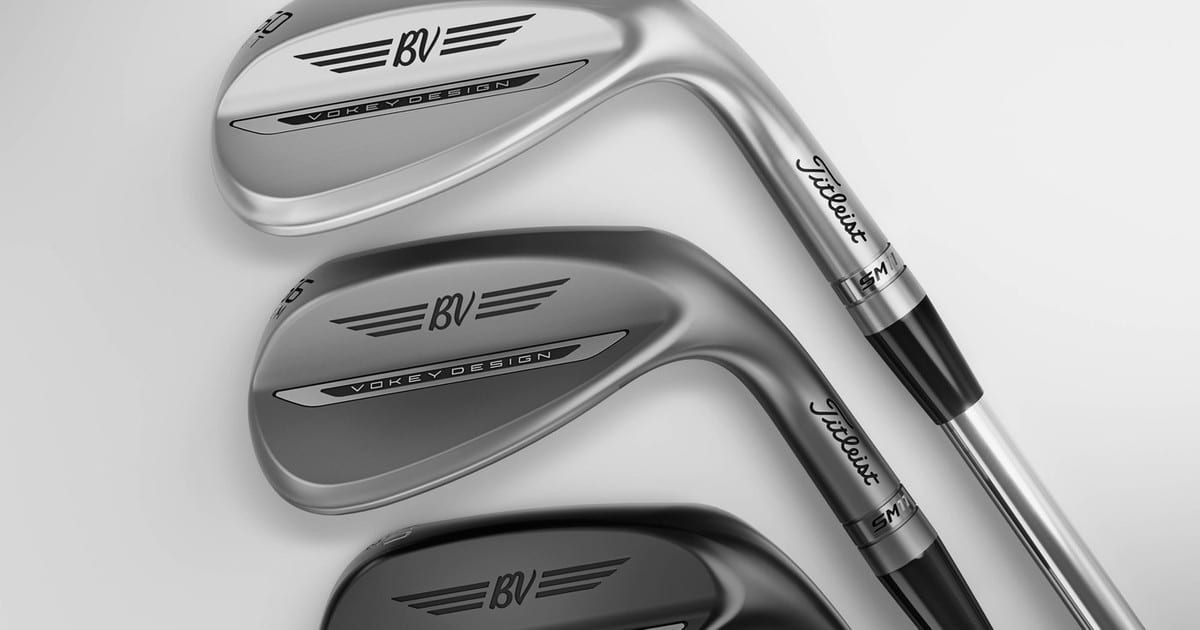
It’s already stamped on the wedges you own, right under the loft. Mine reads 56, then 10S underneath.
Here’s the part that surprised me. All four of the 2026 wedge lines I checked pick that number the same way, and it isn’t the way the shop floor picks it. They ask how deep your divot is and how firm your course plays. Not how long you’ve been playing.
The short answer
- Bounce is the angle between the leading edge and the sole. Titleist publishes three bands: low is 4 to 6 degrees, mid is about 7 to 10, high is anything over 10 (Vokey, retrieved 2026-09-20).
- Every published selector I could find runs on two inputs: how deep your divot is, and how firm your turf and sand are. None of the four lines below sorts by handicap or by years played.
- At 56 degrees the four lines land differently. Cleveland RTZ 2 offers 8, 10 and 12, Vokey SM11 offers 8, 10, 12 and 14, Callaway Opus SP+ offers 8, 10 and 12, and PING s259 offers 10, 12 and 14.
- Two bounces are offered by all four at 56: 10 and 12. Only 10 of those sits inside Titleist’s mid band, so that’s where to stand if you can’t answer the divot question yet.
- Buy a cavity-back 56 off the wall and you don’t pick the bounce, you pick a model. Cleveland’s CBZ 56 is 14 degrees, or 12 in the full-face version (Cleveland, retrieved 2026-09-20).
Bounce is the angle between the leading edge and the sole, and its job is to stop the club digging. The leading edge is the sharp front edge of the face, the line that meets the ground first. The sole is the bottom of the head.
What the second number on your sole is measuring
Titleist puts it in one sentence. Wedge bounce is “the angle between the leading edge and the sole that helps prevent the club from digging, allowing you to make cleaner contact around the green” (Vokey, retrieved 2026-09-20).
Set a wedge down with the shaft straight up. The sole rests on the ground and the leading edge sits a little above it. The angle in that gap is the number.
Vokey stamps it as loft, then bounce, then grind. A 56.10S is a 56 degree face with 10 degrees of bounce and an S grind. Grind is the shape ground into the sole, which changes how much of that bounce actually touches the turf when you open the face.
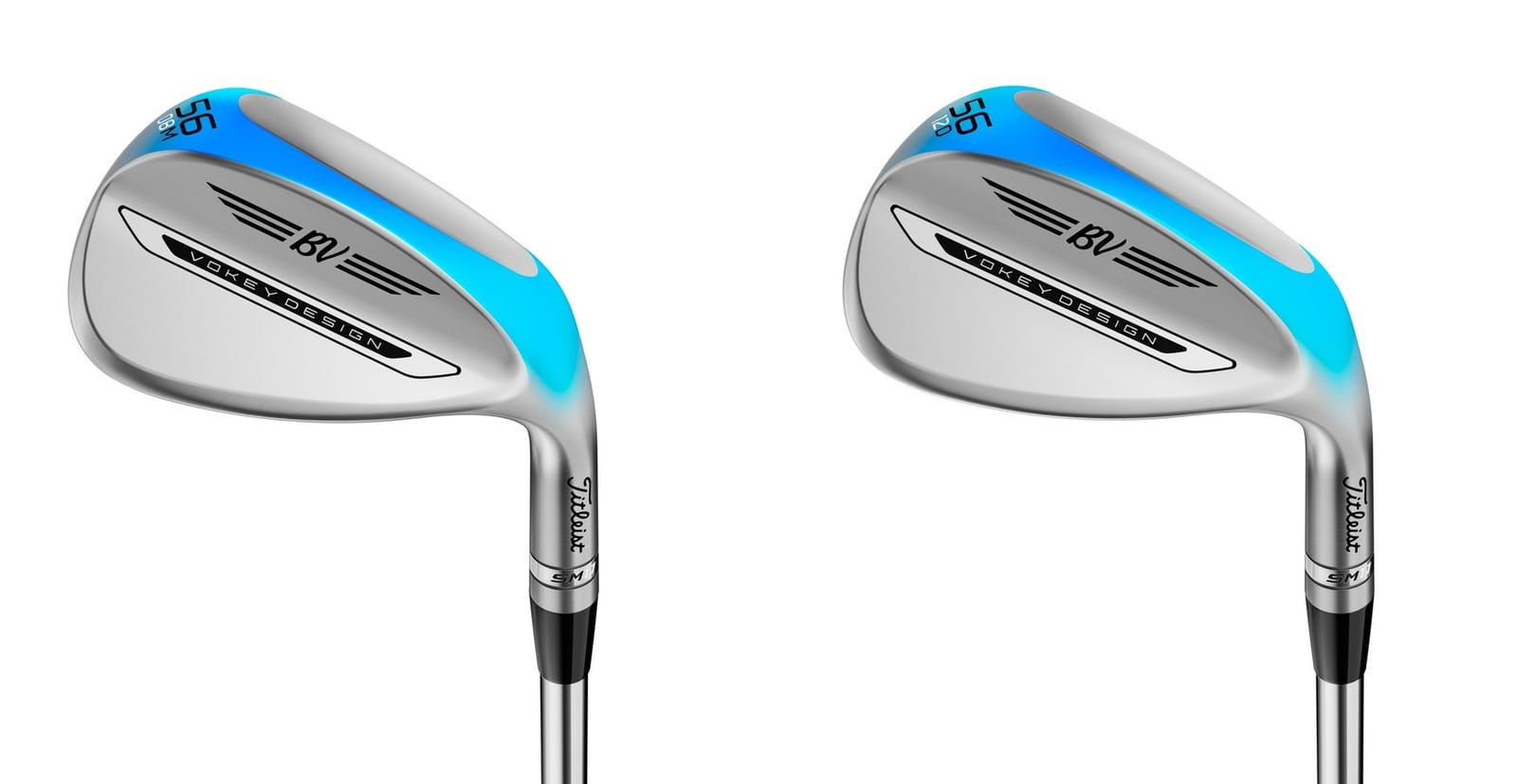
This is the same trap the number on an iron sole sets, one club up. A 7 stamped on two different sets can mean lofts eight and a half degrees apart. Here the loft is honest and it’s the second number that carries the difference.
The shop sorts by experience. These four lines sort by your divot.
Ask in a shop and the answer usually runs on how long you’ve played. You’re new, so take the higher one, because a high bounce sole is harder to chunk. That’s the working rule on the floor. It isn’t a specification, and none of the four prints it.
What they print instead is a divot and a weather report. Here are Titleist’s three bands, in their own words.
| Titleist’s band | Bounce | Who and where it’s for |
|---|---|---|
| Low | 4 to 6 degrees | “[Low bounce wedges are] typically between 4°-6°, ideal for firm turf conditions and bunkers with harder or coarse sand … also useful to players with a sweeper swing style, with shallower attack angles and minimal divots” |
| Mid | about 7 to 10 degrees | “[Mid bounce wedges] range between about 7°-10°, and are most played on firm to normal turf … they most favor a neutral swing style with a moderate attack angle” |
| High | more than 10 degrees | “[High bounce wedges are] those with more than 10° of bounce, designed for softer turf, fluffy lies, and bunkers with soft sand … beneficial to those who take deep divots with a digger swing style and steep attack angle” |
Quoted from Vokey, retrieved 2026-09-20.
Attack angle is how steeply the clubhead is traveling down when it reaches the ball. You don’t need a launch monitor to know yours. The divot carries the same information, which is why all four ask about the divot instead.
The other three ask the same two questions in their own layouts.
- Cleveland prints two sliders on every RTZ 2 grind card. One is labeled COURSE CONDITIONS and runs firm to soft. The other is labeled DIVOT SIZE and runs shallow to deep (Cleveland, retrieved 2026-09-20).
- Callaway’s Opus SP+ grind chart has a DIVOT TYPE row reading shallow to moderate, moderate, or deep. Under it sits a CONDITION TYPE row reading firmer, neutral, or softer (Callaway, retrieved 2026-09-20).
- PING describes each s259 grind by attack angle and turf. The H grind is “for players with steeper angles of attack” and “performs best in softer conditions” (PING, retrieved 2026-09-20).
Aaron Dill runs Vokey’s tour wedge fitting. Writing for National Club Golfer, he listed what a fitting actually asks: “we ask about the conditions you play in. We ask about your technique, we ask about mistakes and misses you might have and more importantly we try to educate you” (National Club Golfer, June 2, 2020, updated October 3, 2023). Handicap isn’t in the part he chose to describe. In the same piece he calls bounce “your insurance policy for when you’re making mistakes.”
That’s worth reading twice if you’re one to three years in. The variable that sounds like it’s for better players is built for the shots you’re currently missing.
The 56 on the shelf has already picked one for you
On a premium wedge there’s no default to fall back on. Bounce is part of the product code, not an option on top of it. Vokey lists 27 configurations across six grinds, and a 56 doesn’t exist until you choose one of 56.08M, 56.10S, 56.12D or 56.14F (Titleist, January 19, 2026).
That’s why the question ambushes you at the counter. It’s the one spec you can’t leave blank.
Two things fall out of that chart. Every line gives you 10 at 56, so 10 is available whichever of the four you walk out with. And PING’s floor at 56 is 10. The other three reach down to 8, which by Titleist’s own bands is still mid, not low.
Now the other shelf. A cavity-back wedge, the kind sold as easier to hit, often doesn’t offer the choice at all.
Cleveland’s CBZ ties the sole to the loft. The 52 comes as a V-shaped sole with 12 degrees. The 56 comes as an S-shaped sole with 14, or a full-face version with 12 (Cleveland, retrieved 2026-09-20). There’s no bounce dropdown, because bounce isn’t a separate choice on that club.
So the off-the-shelf 56 arrives at 14, or at 12 if you take the full-face model. By Titleist’s own published line, anything over 10 is high bounce and 10 is the top of mid. Both CBZ options sit at or above that line. The decision was made before you got there, and it was made the way the shop floor would have made it.
So which bounce do you actually buy?
Start with the turf, not the club. Go stand on the fairway you play most often, hit a wedge, and look down.
| What your wedge does to the turf | Where you play | The band | What that is at 56 |
|---|---|---|---|
| Digs, and leaves a deep divot | Soft or heavily watered turf, soft powdery bunkers | High, over 10 | 12 or 14 |
| Leaves a real but shallow divot | Normal turf, normal sand | Mid, 7 to 10 | 10 |
| Barely marks the ground, you pick it clean | Firm summer turf, hard or coarse sand | Low to mid, 4 to 10 | 8, which is as low as any of the four goes |
Bands and conditions from Vokey, retrieved 2026-09-20. The last row merges Vokey’s low and mid bands, because nothing in the four lines lands below 8. The right-hand column is read off the four 2026 lineups above.
One thing that table can’t give you is a true low-bounce 56. None of the four makes one. Eight is the floor, and by Titleist’s own bands 8 is already mid.
If you can’t answer that first column yet, take the 10. That’s not a hedge. All four lines carry it at 56. Of the two bounces they all carry, it’s the one inside Titleist’s mid band, which Titleist describes as “most versatile for most players.”
The 52 is a much shorter conversation, and that’s the last thing worth knowing before you order a pair.
Cleveland’s RTZ 2 52 comes one way only, as a MID grind with 10 degrees. Vokey gives you two, 52.08F and 52.12F, and PING gives you two, S-12 and W-14. Callaway’s Opus SP+ doesn’t make a 52 at all. So when you buy the pair that everyone starts with, you’re really making one bounce decision, and it’s on the 56.
Two good sources disagree about why any of this works. Titleist’s rule runs through attack angle: steep and digging means more bounce.
Plugged In Golf tested that with five players, from scratch, meaning a zero handicap, up to an 18. Three bounce levels of one wedge model and loft, seven shots each, across full swings, half swings and chips, measured on Trackman at Club Champion. Their result was “our data did not show a correlation between angle of attack and better performance with more bounce” (Plugged In Golf, last updated January 26, 2020).
The same test cut the other way twice. Bounce did change strike quality. And “Overall, our test group was playing too little bounce in their personal wedges.” The players also couldn’t tell which was which: “in only two of fifteen trials did our testers identify which wedge performed the best. In fact, four times out of fifteen they selected the wedge that performed the worst!”
If I had to pick one, I’d take the divot rule and treat it as a starting guess rather than a verdict. The test that undercuts the mechanism had five players and is six years old. Its own answer was to go and get fit, and that is the better answer if you can. The divot rule is the version you can run for free, standing on your own course, when you can’t.
I own a Vokey SM10 52 and 56, stamped 52.08F and 56.10S. Both of those land in Titleist’s mid band, which I found out while writing this and not while buying them. I’ve already written about the part of that same purchase I got wrong, which was the loft. I didn’t look at the second number at all.
Frequently asked questions
What bounce should I get on a 56 degree wedge?
Ten degrees, unless your divot tells you otherwise. All four of the 2026 lines checked here offer it at 56. It sits in the band Titleist describes as “most versatile for most players” (Vokey, retrieved 2026-09-20). Twelve is the other bounce all four carry, but 12 is already past Titleist’s high-bounce line.
Deep divots on soft turf point higher. Firm turf and no divot point lower.
Is high bounce always the safe choice for a beginner?
No, and none of the four lines here says it is. Titleist defines its high band by conditions rather than by skill: soft turf, fluffy lies, and bunkers with soft sand. On firm summer turf that same sole is working against the ground it was built for. Titleist’s own published answer is that “there is not a one-size-fits-all wedge bounce” (Vokey, retrieved 2026-09-20).
My wedge only has one number on the sole. What now?
That’s normal on cavity-back wedges, where bounce is set by the model rather than chosen. Look the loft up on the maker’s spec table. Cleveland publishes the CBZ 52 as 12 degrees, and the 56 as 14 with the standard sole or 12 in the full-face version (Cleveland, retrieved 2026-09-20). Knowing the number still tells you which band you’ve been playing, which is the point.
Terms in this article
- Bounce: the angle between the leading edge and the sole. It keeps the leading edge from digging into turf or sand.
- Leading edge: the sharp front edge of the clubface, the line that reaches the ground first.
- Sole: the bottom of the clubhead, the part that slides along the ground.
- Grind: the shape ground into the sole. It changes how much of the bounce touches the turf, especially when the face is open.
- Full-face: a wedge whose grooves run all the way out to the toe. Cleveland sells the CBZ 56 with a standard sole and in a full-face version, and the two carry different bounce.
- Attack angle: how steeply the clubhead is traveling down at the ball. Your divot is the readable version of it.
- Scratch: a zero handicap. A scratch player is expected to shoot about level par.
- Divot: the strip of turf the club takes out after the ball. Deep, shallow or none is the input these bounce charts ask for.