
5 wood loft and distance: 18°, and when it beats a 3-wood
Most 5-woods are 18°, and a solid one goes 167 to 232 yards by handicap in Shot Scope's data. See when it can replace your 3-wood and how it compares with a 3 hybrid.
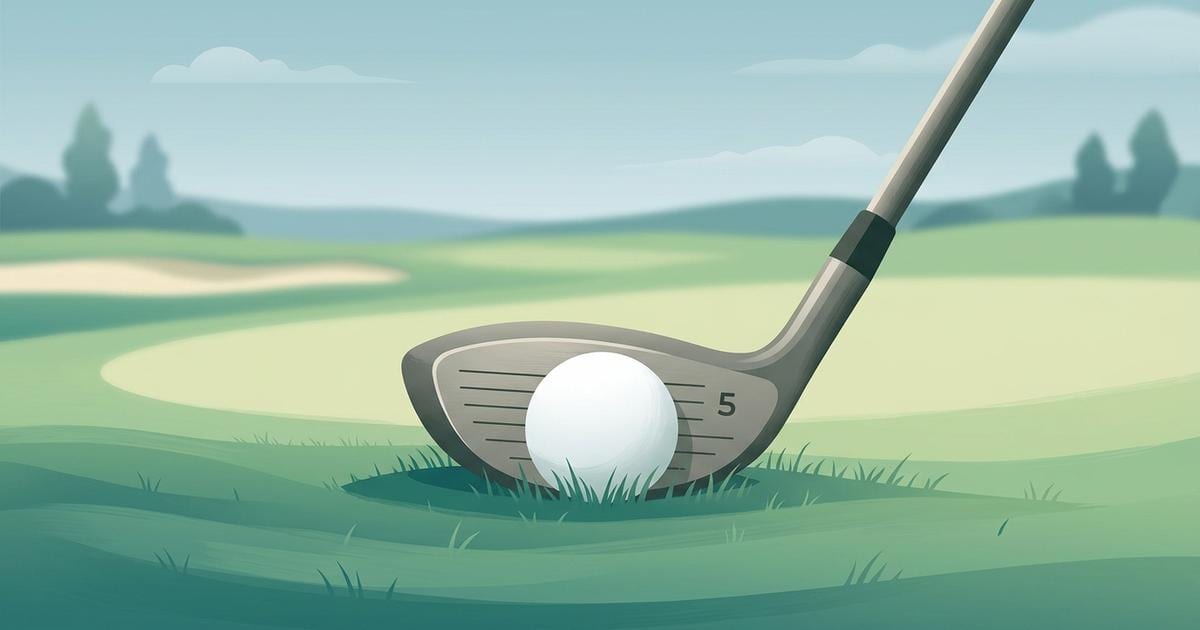
A 5-wood has 18° of loft at most makers and 19° at PING. Counting the low and high versions, current 5-woods run from 17.5° to 19° (PING, Callaway, Today’s Golfer on Cobra).
Loft is how far the clubface tilts back from straight up, in degrees. More loft sends the ball higher and shorter.
On a solid strike, a 25-handicap in Shot Scope’s data hits a 5-wood 167 yards, and a 15-handicap hits it 190 (MyGolfSpy). A solid 3-wood goes 12 to 22 yards farther for those golfers, by our subtraction from the same table.
A handicap is a number that estimates how many strokes over par a golfer usually shoots. Lower means a better player.
What nobody publishes is how often your 3-wood comes off solid. That’s why I still think about the 5-wood, even though I don’t own one. If your fairway wood mostly plays off the grass, the 5-wood is often the easier pick. If it has a tee-shot job, keep the 3-wood.
The short answer
- Most current 5-woods are 18°, PING’s are 19°, and the full range is 17.5-19° (PING, Today’s Golfer on Cobra). They’re 42-42.75” long, shorter than a 3-wood’s 43-43.25” (details below).
- On a solid strike, Shot Scope’s golfers hit a 5-wood 167 yards at a 25 handicap and 215 at a 5 handicap (MyGolfSpy). The 3-wood is 12-24 yards longer in the same table, by our subtraction.
- That table leaves out mishits. I found no tracked data on how often a 3-wood comes off clean from the grass compared with a 5-wood.
- In one Golf Digest test, a 9-handicap averaged 221 yards of carry with his 5-wood and 216 with his 3-wood. He was also “far more consistent” with the 5-wood (Golf Digest).
- A 5-wood and a 3-hybrid fill the same slot. In Shot Scope’s data the 5-wood went 3 yards farther at a 25 handicap and 20 yards farther at a 5 handicap (MyGolfSpy).
- If your 3-wood mostly plays off the grass and comes off clean only some of the time, a 5-wood is the easier club. If it stays in the bag for tee shots, keep it.
5 wood loft: 18° at most makers, 19° at PING
Every loft below is a standard loft, the loft a maker lists for the club as sold.
| Model | 5-wood loft | Length | Head size |
|---|---|---|---|
| PING G440 Max | 19° | 42.5” | 174cc |
| PING G440 LST | 19° | 42.5” | 176cc |
| PING G440 SFT | 19° | 42.5” | 185cc |
| Callaway Quantum Max | 18° | 42.75” | 140cc |
| Titleist GTS2 | 18° | 42” | not published |
| TaylorMade Qi4D | 18° | 42.25” | not confirmed |
| Cobra OPTM X | 18° | 42.5” | not found |
Sources: PING G440 Max, PING G440 LST, PING G440 SFT, Callaway Quantum Max, Titleist Newsroom for GTS2 loft and Fairway Jockey for length, GolfWRX and Fairway Jockey for TaylorMade, and Fairway Jockey for Cobra. Retrieved 2026-09-26. Titleist and TaylorMade lengths come from a retailer because the makers’ own sites didn’t load.
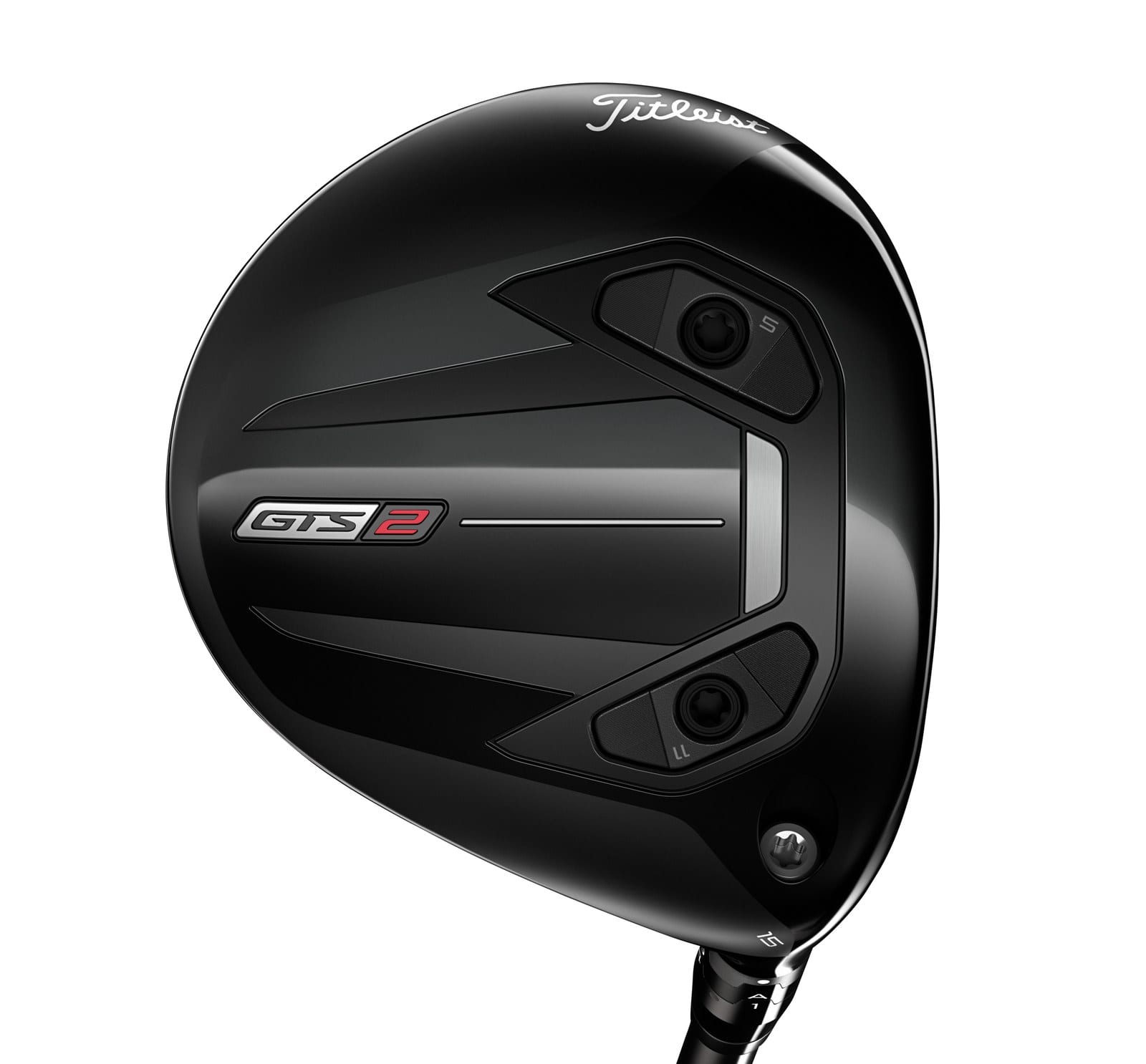
Head size is the volume of the clubhead in cc, cubic centimeters. A smaller number means a smaller head.
The “5” on the sole doesn’t always mean 18°. PING’s are 19°, and Cobra’s OPTM line alone covers three lofts: 17.5° in the LS, 18° in the X and 18.5° in the Max (Today’s Golfer). So you’ll want to read the loft number, not just the club number.
Callaway’s buying guide puts the range a little wider. It says a 5-wood is “typically between 18-20 degrees” (Callaway guide).
Next to a 3-wood, the 5-wood is shorter and smaller. Current 3-woods are 43-43.25” long (sources in the table of 3 wood loft and distance), and the 5-woods above are 42-42.75”. In the same model line, PING’s Max head drops from 186cc to 174cc and Callaway’s from 160cc to 140cc (PING, Callaway).
Those are the same two things Golf.com’s Ryan Barath points to when a 3-wood struggles off the grass: less loft and a longer shaft (Golf.com). The 3-wood post quotes him on both. The golf club loft chart shows where the 5-wood sits among every other club in your bag.
5 wood distance, and how much a 3-wood adds
A solid 5-wood goes 167 yards for a 25-handicap and 232 for a scratch golfer in Shot Scope’s data, published by MyGolfSpy. The chart puts the 3-wood next to it, so you can see what the longer club adds at your level.
Each bar is Shot Scope’s P-avg, which “filters out mishits and shows you what kind of yardage you can expect on a solid strike” (MyGolfSpy). So read your row as your distance on a good swing, not your average over a round.
Find your handicap. The number on the right is what a clean 3-wood adds over a clean 5-wood: 12 yards at 25, 22 at 15, 24 at 5. If you’re a 20-handicap, that’s 17 yards.
I couldn’t find 5-wood averages from Arccos, the other big shot tracker, in a source I could read. Charts by swing speed are out too. None I found said how they were measured.
Can a 5-wood replace your 3-wood?
It can if your 3-wood doesn’t come off clean often enough to earn those extra yards. The chart can’t tell you that, and this is the question I still have.
I don’t own a 5-wood. When I was hitting 3-woods before buying my Titleist TSi2, I thought about one. I didn’t buy it, because I already had a 4-hybrid.
What I kept thinking in the hitting bay was this. The 3-wood was hard to hit solid, and I don’t hit it many times a round. If only half of those come off, wouldn’t a 5-wood I strike more often be the better club? I’d give up distance, but I’d have a better chance of getting on the green.
That “half” was a feeling from those test swings, not something I counted. I bought the 3-wood for the distance anyway, and I still think about that trade sometimes.
Here’s the gap in the data. P-avg drops your mishits, so it shows what a clean 3-wood gains, not how often you’ll get one. I found no tracked data from Shot Scope, Arccos or MyGolfSpy that compares 3-wood and 5-wood contact off the grass.
The closest is Shot Scope’s mishit rate for all fairway woods together. A mishit there means a shot that flies “30 percent shorter than a golfer’s average.” If you’re a 15-handicap, golfers at your level mishit 19% of their fairway-wood shots from the fairway, and the same 19% with a hybrid (MyGolfSpy). It doesn’t split the 3-wood from the 5-wood, so it can’t settle the question.
What does exist is one golfer’s test. In 2023, Golf Digest put a 9-handicap with a 105 mph driver swing on a Rapsodo launch monitor. His 5-wood averaged 221 yards of carry, and his 3-wood 216 (Golf Digest).
A launch monitor is a device that measures each shot’s speed, launch and distance. Carry is how far the ball flies in the air before it lands, not counting the roll.
“His longest hits were slightly longer with 3-wood, but he was far more consistent with the 5-wood,” the magazine wrote. His worst shots, “including a couple of cold tops, were magnified with the 3-wood.” A topped shot is one where the club catches only the top of the ball, so it runs along the ground.
Your swing isn’t his, so treat his result as a test worth repeating, not your answer. The fitter in the same piece, Chris Marchini, said he routinely sees “the 5-wood carrying longer with almost all types of players.” That’s what he sees in fittings, not a dataset.
A bigger Golf Digest panel found the same for some players: 8 of 22 did as well or better with a 4-wood or 5-wood (Golf Digest). I went through that test in 3 wood loft and distance.
So the fair test for you is your average, bad shots included. You’ll want to hit the same number of balls with each club, from grass if you can, and compare the average carry. The best shot tells you almost nothing. That’s the lesson of the Golf Digest test: the 3-wood won on best shots, the 5-wood on average.
5 wood vs 3 hybrid: same slot, different flight
A 5-wood and a 3-hybrid do the same job, so you’ll usually want one or the other, not both. A hybrid is a club with a small, wood-shaped head on a shaft about as long as an iron’s.
My own bag shows the overlap. My long clubs go 3-wood at 15°, 3-hybrid at 18° and 4-iron at 24°. The 18° hybrid fills the slot an 18-19° 5-wood would take.
What tracked golfers got from each
If you’re around a 25-handicap, the 5-wood went only 3 yards farther than the 3-hybrid for golfers like you. At a 5-handicap the gap was 20 yards (MyGolfSpy).
| Handicap | 5-wood distance | 3-hybrid distance | 5-wood green hit | 3-hybrid green hit |
|---|---|---|---|---|
| 25 | 167 yd | 164 yd | 4.9% | 5.9% |
| 15 | 208 yd | 193 yd | 5.2% | 10% |
| 5 | 231 yd | 211 yd | 5.5% | 13.7% |
Source: MyGolfSpy, “5-Wood Versus 3-Hybrid,” 2025-01-24, Shot Scope data. Retrieved 2026-09-27.
At a 15-handicap, that’s a 15-yard gap by our subtraction. The hybrid hit 10% of greens there against 5.2% for the 5-wood. Shot Scope says it “saves .3 strokes compared to a 5-wood.”
Its advice is the 3-hybrid for higher handicaps. The 5-wood gets better “the lower your handicap is, and the more you value distance.”
Switching to a hybrid won’t double your greens or save you .3 strokes on its own, though. The article gives no sample size and doesn’t say which shots count. Hit rates this low suggest it includes shots that were never going to reach the green. Golfers also likely reach for the 5-wood on the longer ones. So part of the gap is where each club gets used, not the club.
If you’re a 15-handicap, you’ll see two different 5-wood numbers here: 190 yards in the chart above and 208 in this table. Neither article says which shots it counts. For how far your 5-wood goes, I’d use the chart. I’d use this table only to compare the two clubs, since it counts both the same way.
5 wood vs hybrid at 18°: launch and landing
In one test at the same loft, the 5-wood flew higher and came down steeper. That’s from a 2014 GolfWRX test by instructor Tom Stickney, a scratch player. He hit 30 shots each with an 18° 5-wood and an 18° hybrid off a mat, measured on a TrackMan launch monitor.
The 5-wood peaked at 90.4 feet and the hybrid at 64.2 feet. The 5-wood landed at 33.3° and the hybrid at 28.6° (GolfWRX).
Peak height is the highest point of the ball’s flight. Landing angle is how steeply the ball comes down; a bigger number means a steeper drop.
He found the 5-wood gave “the best consistency as it pertains to carry distance.” The hybrid gave “the best overall dispersion pattern around the target.” Dispersion is how widely your shots scatter around where you aimed.
A year later he tested 19° clubs out of deep rough. His 5-wood carried “around 192 yards,” and his hybrid averaged 186.5. He said the 5-wood came out “almost as easily as the hybrid did,” but he felt he “could not ‘get down to it’” as easily (GolfWRX).
His verdict from the rough: “a golfer’s best bet is usually a hybrid, as it will go almost as far as a similar lofted fairway wood, except much straighter.”
Both tests are one scratch player with clubs from 2014 and 2015. If your swing is slower, read them as a direction to check, not a promise. How a steeper landing plays at 21° is covered in 7-wood vs 4-hybrid. Why hybrids and irons with the same number fly differently is in hybrid vs iron distance and lofts.
So should you carry a 5-wood?
It comes down to the shot you need the club for, and how often your 3-wood comes off clean. Here’s how I’d sort it.
Swap the 3-wood for a 5-wood if
- Its main job is the long second shot off the grass. That’s the shot the 5-wood’s extra loft and shorter shaft are built for.
- Your 3-wood comes off clean only some of the time. The 12-24 yards in the chart only count on the swings that come off.
- Your average 3-wood carry isn’t clearly longer than your 5-wood’s. Compare them the Golf Digest way, average against average.
Keep the 3-wood if
- It has a tee-shot job. On holes where your driver would reach water or a bunker, a 3-wood that stays short has a job of its own. The 3-wood post covers that job.
- You hit it clean off the grass most of the time. Then the extra yards in the chart are really yours.
5-wood or 3-hybrid: pick one for the slot
- Carry one, not both, at the same loft. An 18° 5-wood and an 18° hybrid are one gap in your bag, not two.
- Around a 25-handicap, distance barely separates them. In Shot Scope’s data it was 3 yards. Pick by where you play from and which one feels easier to you.
- If you often play from the rough, lean hybrid. The only rough test I found went that way, though it’s one tester.
- If you’re already comfortable with fairway woods, lean 5-wood. MyGolfSpy’s buying guide points those golfers to the 5-wood, and golfers “comfortable with irons” to the 3-hybrid (MyGolfSpy). That’s guidance, not a measurement.
- As your handicap drops, the 5-wood’s extra distance grows. It was 15 yards at a 15-handicap (our subtraction) and 20 yards at a 5-handicap in Shot Scope’s data.
My own setup is the 3-wood for distance and tee shots, with the 18° hybrid in the 5-wood slot. The 5-wood thought still comes back to me sometimes.
FAQ
What degree is a 5 wood?
Usually 18°. PING’s current 5-woods are 19°, and Cobra’s OPTM line runs from 17.5° to 18.5° (PING, Today’s Golfer). The loft number on the sole tells you more than the “5.”
How far should a 5 wood go?
On a solid strike, 167 yards at a 25 handicap, 190 at 15 and 215 at 5 in Shot Scope’s data (MyGolfSpy). Those numbers leave out mishits, so your round average will be shorter.
Is a 5 wood easier to hit than a 3 wood?
For many golfers off the grass, yes. It has more loft and a shorter shaft. In one Golf Digest test, a 9-handicap was “far more consistent” with the 5-wood and averaged more carry with it (Golf Digest). That’s one golfer, so compare your own averages.
Should I carry a 5 wood or a 3 hybrid?
One or the other, since they fill the same slot. Shot Scope’s data favors the hybrid for higher handicaps and the 5-wood as your handicap drops and distance matters more (MyGolfSpy).
Terms in this article
- Loft: how far the clubface tilts back from straight up, in degrees. More loft sends the ball higher and shorter.
- Standard loft: the loft a maker lists for a club as sold, before any adjustment.
- Handicap: a number that estimates how many strokes over par a golfer usually shoots. Lower means a better player.
- Head size: the volume of the clubhead in cc, cubic centimeters.
- P-avg: Shot Scope’s distance on a solid strike, with mishits left out.
- Mishit: in Shot Scope’s data, a shot that flies 30 percent shorter than the golfer’s average.
- Launch monitor: a device that measures each shot’s speed, launch and distance.
- Carry: how far the ball flies in the air before it lands, not counting the roll.
- Topped shot: a shot where the club catches only the top of the ball, so it runs along the ground.
- Hybrid: a club with a small, wood-shaped head on a shaft about as long as an iron’s.
- Peak height: the highest point of the ball’s flight.
- Landing angle: how steeply the ball comes down. A bigger number means a steeper drop.
- Dispersion: how widely your shots scatter around where you aimed.