
Callaway Hybrid Adjustment Chart: Elyte Has 7 Settings, Not 8
Callaway hybrids use two charts. Read your hosel: -1, S, +1, +2 with N or D is the older 8-way chart; plus and minus marks mean Elyte and Quantum's 7 settings.
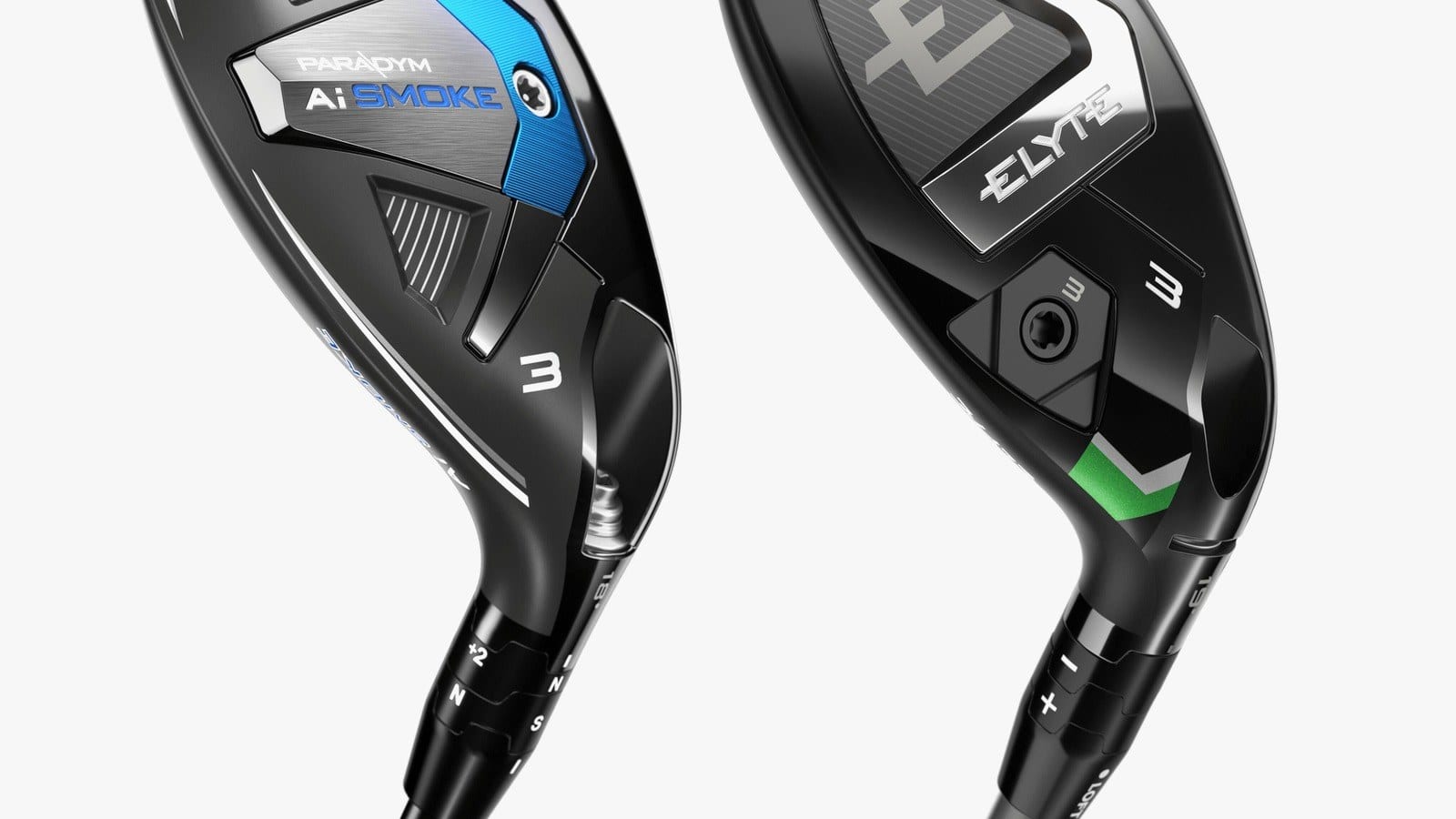
You type “Callaway hybrid adjustment chart” and get two charts back. One has a ring marked -1, S, +1 and +2, and a second ring marked N and D. The other has nothing but plus and minus signs, and it lists seven settings instead of eight.
Both come from Callaway. They can’t both be right for your club.
The fastest way to settle it is on the club itself, not in the model name or the year. Look at the hosel, the collar where the shaft meets the head. Whatever is printed there tells you which chart is yours.
Quick rule
- Numbers and letters on the hosel (-1, S, +1, +2 and N, D) mean the older 8-way chart. Only plus and minus signs, with LOFT and LIE printed on the adapter, mean OptiFit 4 and its seven settings.
- OptiFit 4 arrived with the 2025 Elyte hybrids and carries on in the 2026 Quantum hybrids. Adjustable Callaway hybrids from 2019 to 2024, such as the Apex 21 and Paradym Ai Smoke, use the older hosel.
- Some Callaway hybrids don’t adjust at all: Mavrik, Big Bertha B21, Rogue ST Max and, per launch reports, Paradym Ai Smoke Max Fast.
- OptiFit 4 moves loft 1 degree either way and lie up to 2 degrees either way. The older hosel moves loft from -1 to +2 degrees, and Callaway doesn’t publish how far D moves the lie.
- Ball going left: flatter on OptiFit 4 (setting 3). On the older hosel, N helps only if your club is on D now. Slicing: upright (setting 2), or D. Callaway gives no yards per setting and no torque number. Tighten until the wrench clicks.
Find your chart by what’s printed on the hosel
The generation names won’t help you, because nobody agrees on them. Callaway’s own pages mostly just say “OptiFit.” Plugged In Golf called the Epic Flash hybrid’s hosel “a new OptiFit 3 hosel” (Plugged In Golf, 2020-01-26). One clubmaker labels the older adapters two ways: OptiFit 2 for Quantum and Elyte drivers, and OptiFit 3 for the Elyte fairway wood (704 Clubworks, 2026-09-12). And Callaway’s first Elyte hybrid sheet titled the new chart “OptiFit Connect” (Callaway, retrieved 2026-10-04).
So this article calls them what you can see: the older hosel and OptiFit 4.
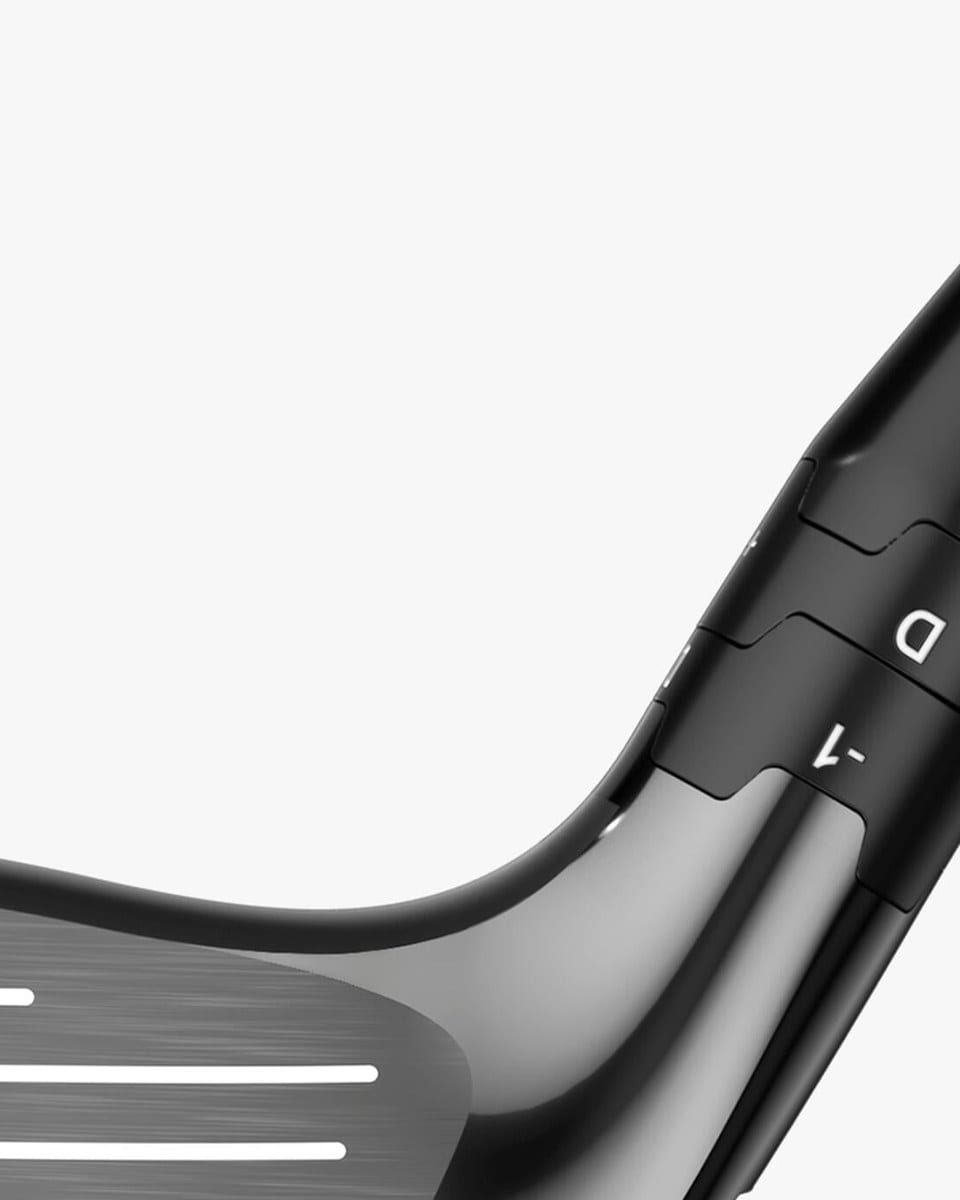
On the older hosel, two rings carry letters and numbers. Each ring is a cog, a toothed collar you turn to a new position. Callaway’s instructions show a loft cog with -1, S, +1 and +2, and a lie cog with N or D (Callaway OptiFit instructions, retrieved 2026-10-04). S means the loft stamped on the head.
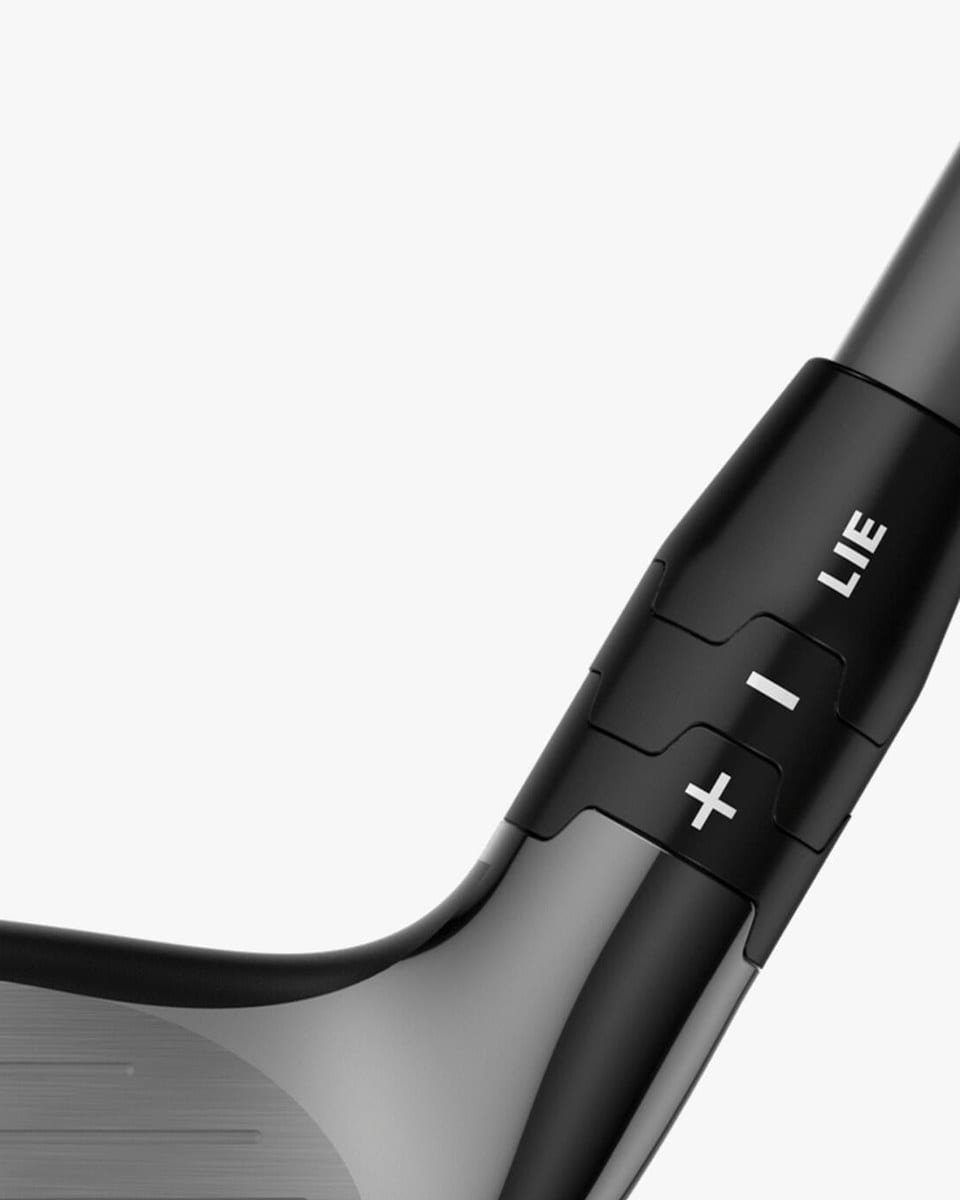
On OptiFit 4, there are no numbers or letters on the cogs. Each cog carries plus, minus and blank positions, and you line them up against the words LOFT and LIE printed on the adapter (Callaway OptiFit 4 instruction sheet, retrieved 2026-10-04). The adapter is the piece glued to the end of the shaft that slides into the hosel.
Here’s how the two compare.
| Older hosel | OptiFit 4 | |
|---|---|---|
| What you see | Loft cog: -1, S, +1, +2. Lie cog: N, D | Two cogs with +, - or blank. LOFT and LIE on the adapter |
| Settings | 8 | 7 |
| Loft range | 1 degree less to 2 degrees more than stamped | 1 degree less or 1 degree more |
| Lie range | N or D. Degrees not published | Up to 2 degrees upright or flat |
| Loft and lie move independently | Yes, every loft with every lie | No, only seven pairings |
| Hybrids | Big Bertha (2019), Epic Flash, Epic Super, Apex 21, Paradym Ai Smoke | Elyte, Elyte X, Elyte Max Fast, Quantum Max, Max OS, Max Fast |
| Also on | Callaway drivers | Quantum fairway woods |
Older-hosel values come from Callaway’s OptiFit instructions, which are written for drivers. OptiFit 4 values come from Callaway’s 2026 fairway and hybrid guide (both retrieved 2026-10-04).
Which Callaway hybrids use which hosel
Callaway doesn’t publish a model list, so the table below is pieced together. Where a row rests on a reviewer or clubmaker instead of Callaway, it says so.
| Hybrid | Adjustable? | Chart | Source |
|---|---|---|---|
| Big Bertha (2019) | Yes | Older | Reported by Plugged In Golf, 2020-11-25 |
| Epic Flash | Yes | Older | Reported by Plugged In Golf, 2020-01-26 |
| Epic Super | Yes | Older | Reported by Plugged In Golf |
| Mavrik, Big Bertha B21 | No | None | Reported by Plugged In Golf, 2021-11-17 |
| Apex 21 | Yes | Older | Callaway fitting protocol |
| Rogue ST Max | No | None | Reported by Golf Monthly, 2022-02-03 |
| Paradym (2023) | Not confirmed | Not confirmed | No source we could open |
| Paradym Ai Smoke | Yes | Older | Callaway’s product images show D, N, S, +2 and -1 on the hosel |
| Paradym Ai Smoke Max Fast | No | None | Golf Digest and National Club Golfer launch coverage. I could read only search previews, so check your hosel for cogs |
| Elyte, Elyte X, Elyte Max Fast | Yes | OptiFit 4 | Callaway Elyte press release, 2025-01-02 |
| Quantum Max, Max OS, Max Fast | Yes, up to the 8 hybrid | OptiFit 4 | Callaway Quantum hybrids |
Callaway’s sources retrieved 2026-10-04. If your model isn’t here, or the table and your hosel disagree, trust the hosel. Golf Monthly’s review says the Rogue ST Max is “Non adjustable for loft,” and it’s unclear whether the Rogue ST Pro differs.
One more caution if your club was rebuilt with a different shaft. Callaway doesn’t say whether older adapters fit OptiFit 4 heads. A retailer sells the two as separate hybrid adapters, the older one for 2019 through Paradym Ai Smoke and OptiFit 4 from Elyte on (Shaftopia, retrieved 2026-10-04). Since the marks you read are on the adapter, the hosel check still applies.
Fairway woods, briefly. Callaway’s 2026 guide uses the same seven settings for Quantum fairway woods and hybrids (Callaway, retrieved 2026-10-04). One Quantum Max Fast fairway spec sheet says “eight total configurations,” likely reused driver copy. I’d go with the guide’s seven. The 2025 Elyte fairway reportedly kept the older hosel (704 Clubworks, 2026-09-12), though Callaway doesn’t say so.
The OptiFit 4 chart: seven settings on Elyte and Quantum hybrids
This chart moves only two angles. Loft is how far the clubface tilts back from vertical, and it sets most of how high the ball launches. Lie is how upright the shaft stands when the sole rests flat on the ground.
Callaway’s chart uses its own words for both. Weak means more loft and Strong means less. Up is upright, which stands the shaft up more, and Flat lays it down.
| Setting | Marks at LIE | Marks at LOFT | Loft | Lie |
|---|---|---|---|---|
| 1 | + - | blank | Standard | Standard |
| 2 | + + | blank | Standard | 2 Up |
| 3 | - - | blank | Standard | 2 Flat |
| 4 | + | + | 1 Weak | 1 Up |
| 5 | - | + | 1 Weak | 1 Flat |
| 6 | + | - | 1 Strong | 1 Up |
| 7 | - | - | 1 Strong | 1 Flat |
Values from Callaway’s OptiFit 4 hybrid instruction sheet, 2025 hybrid instruction guide and 2026 fairway and hybrid guide (retrieved 2026-10-04). Each plus or minus is 1 degree. Callaway notes that a plus and a minus together cancel out, which is why setting 1 shows + and - yet stays standard.
The two cogs sit one on top of the other, and each word printed on the adapter is an indicator. So read each row as the marks you should see beside LIE and beside LOFT. In settings 1 to 3, both marks line up at LIE and LOFT shows a blank. In settings 4 to 7, one mark sits at each.
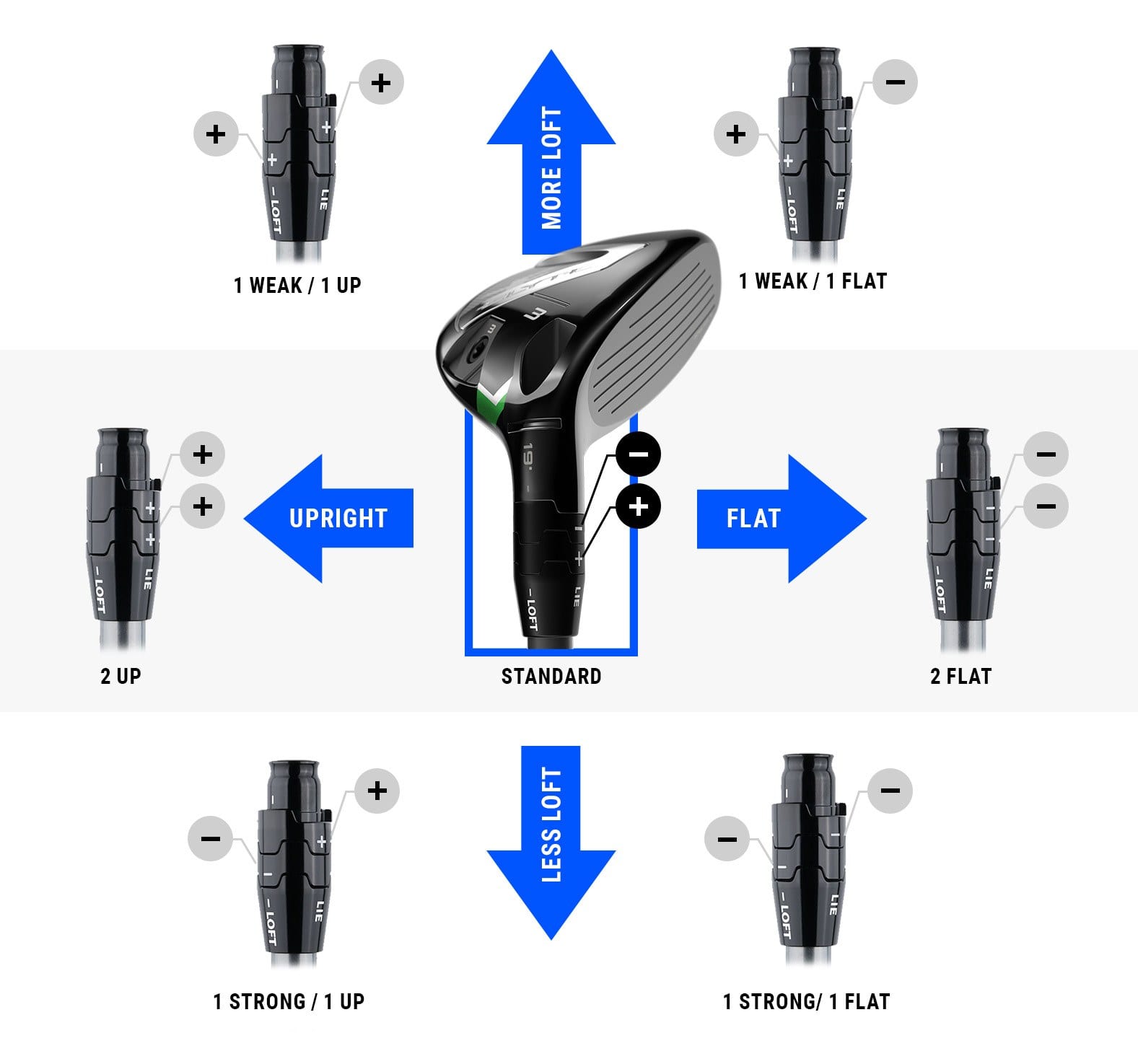
Look at what the seven cells leave out. You can’t change loft alone, because every loft move also shifts lie 1 degree. And the full 2 degrees of upright or flat only comes at standard loft. If you’re used to an 8-way or 16-way grid, this one is smaller on purpose.
If you’re left-handed
Left-handed clubs have their own adapter with mirrored marks. On a lefty head with a lefty shaft, the chart reads the same as above.
The trap is a right-handed shaft in a left-handed head. Every OptiFit 4 sheet carries a fitter note for this: lie stays correct, but loft flips. Settings 4 and 5 become 1 Strong, and 6 and 7 become 1 Weak.
Turning the cogs
Callaway’s 2026 guide has a pro tip for this. If you need a loft change, start by turning the bottom cog to the loft setting you want, then adjust lie (Callaway, retrieved 2026-10-04). Line up the marks with the LOFT and LIE indicators, and line up the white dash on the adapter with the white dash on the hosel.
Then tighten “until you feel and hear the wrench ‘click’,” and stop if the screw binds (Callaway, retrieved 2026-10-04). Callaway publishes no torque value and no bit size. The click is your stop, so use the Callaway wrench rather than a screwdriver.
The older 8-way chart on Apex 21, Epic and Paradym Ai Smoke hybrids
This hosel works like a grid. Any of the four loft marks can pair with either lie mark, which gives eight settings.
| Loft cog | Change from stamped loft | With N | With D |
|---|---|---|---|
| +2 | 2 degrees more | +2 N | +2 D |
| +1 | 1 degree more | +1 N | +1 D |
| S | Stamped loft | S N | S D |
| -1 | 1 degree less | -1 N | -1 D |
Marks from Callaway’s OptiFit instructions (retrieved 2026-10-04). If you own one of these hybrids, you’re reading a chart Callaway wrote for drivers. Callaway has no one-page chart for your club. You can still use this one, because the Apex 21 fitting protocol uses D, and the Paradym Ai Smoke product images show the same D, N, S, +2 and -1 marks.
D is the draw setting. Callaway’s Apex 21 protocol reaches for it when a player has too much fade or slice spin (Callaway). How many degrees D moves the lie isn’t published. You’ll see a specific number quoted on forums, but we couldn’t trace it to a source, so it’s not in this table.
Left-handed note. If a right-handed adapter ends up in a left-handed head, Callaway says “Loft is opposite; Lie stays the same.” +1 reads as S, +2 as -1, S as +1, and -1 as +2 (Callaway RH/LH guide, retrieved 2026-10-04). That guide is also written for drivers. On the cogs, a line under a letter or number marks the left-handed position.
If you also own a recent Callaway driver, through the 2026 Quantum, it uses this same older system. Its settings are covered in the Callaway driver OptiFit article.
A setting gives you a direction, not yards
Neither chart puts a number on ball flight. Callaway’s diagram labels only MORE LOFT, LESS LOFT, UPRIGHT and FLAT. Its guides say the settings affect “trajectory and distance” and stop there.
The clearest line from Callaway came at the Elyte launch, from senior product manager Zack Oakley. Setting the Elyte hybrid 2 degrees flat, he said, “will really neutralize that ball flight and reduce the left miss” (The Hackers Paradise, 2025-01-02). He also said older adapters mainly offered upright, while the new one goes both ways. That’s the real difference for a player who hooks: the older hosel had little to offer you, and OptiFit 4 does.
You may also see a yardage in the Elyte launch release: “up to 13 yards of shot shaping” (Callaway). Its footnote ties that to swapping the heel and toe weights as well as using the lie extremes. It isn’t what the hosel does by itself, so you won’t get 13 yards from turning the cogs.
Here’s where the evidence in this article comes from, split three ways.
| What it covers | |
|---|---|
| What I checked | The marks on each hosel in Callaway’s own product images, and the charts in Callaway’s PDFs and web pages, read side by side |
| What comes from Callaway | Every setting, loft and lie value above, the wrench instructions, and the Oakley quote |
| What nobody publishes | How many degrees D moves the lie. Whether either hosel changes face angle. Launch or curve change per setting on any Callaway hybrid. Torque value and bit size |
I haven’t hit a Callaway hybrid at any setting, so nothing here is an on-course report. My own 3-hybrid is a Titleist TSR2 18-degree head on the shaft from my older TS3, which I swapped myself with the wrench. It has sat at the default setting ever since. I haven’t felt a setting change my trajectory, because I’ve never moved it. If you’re coming from Titleist, its grid works differently, and the Titleist hybrid adjustment chart covers it.
Your miss, translated to a setting on each hosel
Nothing on either Callaway chart mentions a hook, a slice or a ball that flies too low. So the table below is my reading of the arrows, written for a right-handed player. The lie directions come from Callaway’s diagram, Oakley’s quote and the Apex 21 protocol. The high and low rows rest on loft: more loft usually starts the ball higher.
| Your miss | OptiFit 4 (Elyte, Quantum) | Older hosel |
|---|---|---|
| Goes left (hooks) | 3 (2 Flat) | N |
| Goes right (slices) | 2 (2 Up) | D |
| Too low | 4 or 5 (1 Weak) | +1, then +2 |
| Too high | 6 or 7 (1 Strong) | -1 |
| Low and left | 5 (1 Weak, 1 Flat) | +1 with N |
| Low and right | 4 (1 Weak, 1 Up) | +1 with D |
| High and left | 7 (1 Strong, 1 Flat) | -1 with N |
| High and right | 6 (1 Strong, 1 Up) | -1 with D |
The rows assume a right-handed swing. A draw bends left and a fade bends right, and a hook and a slice are the stronger versions of each. If you play left-handed, swap left and right in the miss column. On OptiFit 4 the setting numbers stay the same; on the older hosel, read the underlined left-handed marks.
Two rows need a word. On OptiFit 4, there’s no setting that changes only loft. If your ball is just too low, settings 4 and 5 both add a degree. I’d pick 4 if your usual miss is right and 5 if it’s left, because each also moves the lie 1 degree.
On the older hosel, N is only a fix if you’re currently on D. If your club is already on N and still goes left, this hosel has no flatter mark to offer. Oakley’s comment about older adapters points the same way.
I’d change one thing per range session. Before you touch the wrench, note the marks your club shows now, because a secondhand hybrid may not be on standard. Hit a handful of balls, switch, and hit the same number again. Keep the change only if the ball moved the way the arrow promised.
Standard is also a perfectly good answer. Both charts are built around it, and Callaway never says you have to leave it. If you’re still deciding whether a 3-hybrid earns a spot in your bag, 3-hybrid loft and distance looks at that first.
Terms in this article
- Hosel: the collar where the shaft joins the clubhead. When this article says marks are “on the hosel,” it means what you see there: the cogs and printed words belong to the adapter sitting in it.
- Adapter: the piece fixed to the tip of the shaft that slides into the hosel. It carries the cogs, and on OptiFit 4 it has LOFT and LIE printed on it.
- Cog: a toothed ring on the adapter, visible at the hosel, that you turn to pick a setting. Both Callaway systems have two.
- Older hosel: Callaway’s 8-way system with a loft cog (-1, S, +1, +2) and a lie cog (N, D). Sources call it OptiFit, OptiFit 2 or OptiFit 3.
- OptiFit 4: Callaway’s 7-setting hybrid and fairway hosel, marked with plus and minus signs. Early Elyte sheets call it OptiFit Connect.
- Loft: the angle of the clubface. More loft usually means a higher launch.
- Lie angle: the angle between the shaft and the ground with the club soled. Upright stands the shaft up; flat lays it down.
- Weak, Strong: Callaway’s words on the OptiFit 4 chart. Weak is more loft, Strong is less.
- S, N, D: on the older hosel, S is the loft stamped on the head, and N and D are the two lie marks. D is the draw setting.
- Draw, fade, hook, slice: for a right-hander, a draw curves left and a fade curves right. A hook is a big draw and a slice is a big fade.
- Face angle: the direction the clubface points at address. Callaway doesn’t say whether either hosel changes it.