Irons & Loft Charts
Mizuno Irons: Hot Metal for Help, Mizuno Pro for Control
Mizuno's US iron page shows two names: JPX925, which carries handicap labels, and Mizuno Pro, which doesn't. Here's which fits, and where a 245, 243 or JPX923 sits now.
The short answer
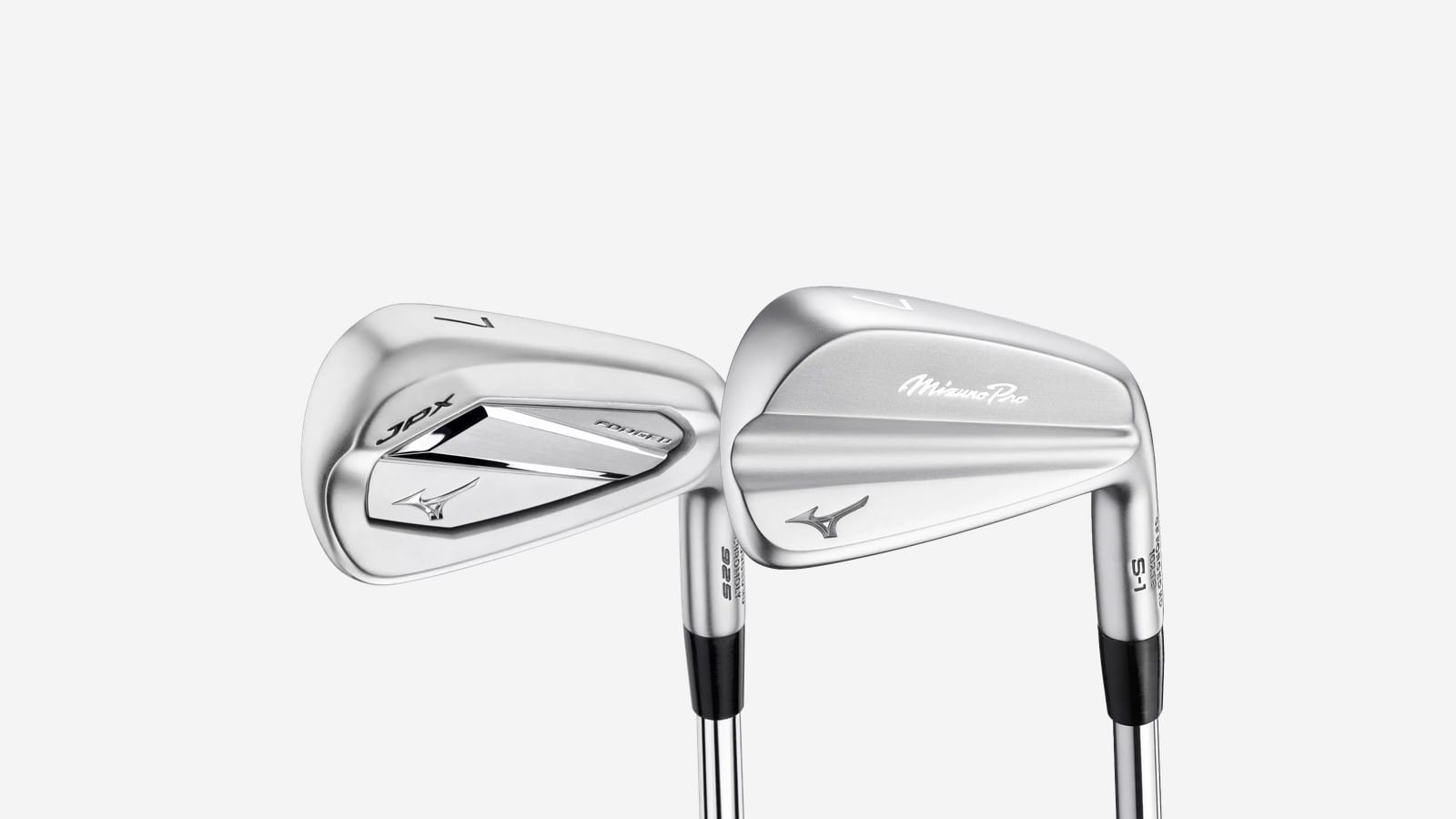
Mizuno's US iron page shows two names. Every JPX925 model carries a handicap label, with Hot Metal and HL marked MID to HIGH HCP, while the five Mizuno Pro irons carry none. For the most help, start with JPX925 Hot Metal. For a compact, workable head, look at Mizuno Pro S-1, S-3 or M-13. JPX925 Forged, M-15 and S-4 sit between.
- 9
- current irons on Mizuno's US irons page, under two names: JPX925 and Mizuno Pro Mizuno Golf US irons page, checked 2026-11-29
- 4 of 9
- models with a "Suitable for" handicap label, all of them JPX925 Mizuno US JPX925 and Mizuno Pro product pages, checked 2026-11-29
- 0.138 in vs 0.126 in
- 7-iron offset on the Mizuno Pro S-4 vs the JPX925 Forged, so the Pro name doesn't always mean less offset Mizuno US spec tables, checked 2026-11-29
If you came here with an older name, like a Pro 245 or a JPX923, it hasn’t vanished. Each one sits on a row of Mizuno’s own timeline, and the second-to-last section shows which current model ends that row.
Two names on the clubhead: JPX925 and Mizuno Pro
The Mizuno irons page lists nine current irons (checked 2026-11-29). Four are JPX925: Forged, Hot Metal Pro, Hot Metal and Hot Metal HL. Five are Mizuno Pro: S-4, S-1, S-3, M-13 and M-15. There’s no JPX925 Tour on the list. The Fli-Hi utility irons that share the page are left out here.
Each JPX925 model has a “Suitable for” line with a handicap range. None of the five Mizuno Pro pages has one. A handicap (HCP) rates a golfer’s scoring ability. The higher it is, the more strokes over par that golfer tends to shoot, so HIGH HCP points at higher scorers. My handicap calculation guide shows how it’s worked out.
| Model | Name | What Mizuno calls it | Suitable for | 7-iron loft |
|---|---|---|---|---|
| Hot Metal | JPX925 | “FORGIVING SPEED CAVITY” | MID to HIGH HCP | 28° |
| Hot Metal HL | JPX925 | “MAX FORGIVENESS SPEED CAVITY” | MID to HIGH HCP | 31° |
| Hot Metal Pro | JPX925 | “PLAYERS SPEED CAVITY” | LOW to MID HCP | 28° |
| Forged | JPX925 | “MIDSIZE CAVITY” | Pro to MID HCP | 30° |
| M-15 | Mizuno Pro | “successor to the Mizuno Pro 245” | Not listed | 29° |
| S-4 | Mizuno Pro | “engineered for accomplished golfers” | Not listed | 34° |
| M-13 | Mizuno Pro | “successor to the Mizuno Pro 243” | Not listed | 32° |
| S-3 | Mizuno Pro | “a sleek, compact profile” | Not listed | 34° |
| S-1 | Mizuno Pro | “pure muscle backs” | Not listed | 34° |
I copied these lines from Mizuno’s seven product pages, checked 2026-11-29. The three Hot Metal models share one page. Mizuno’s comparison page loads its values by script, so this table is mine.
Loft is how far the face tilts back. The 7-iron runs from 28° on Hot Metal and HM Pro to 34° on all three S models. If a 6° spread between two 7-irons looks odd, my guide to 7-iron loft explains where it comes from.
When you want the most help: JPX925 Hot Metal or HL
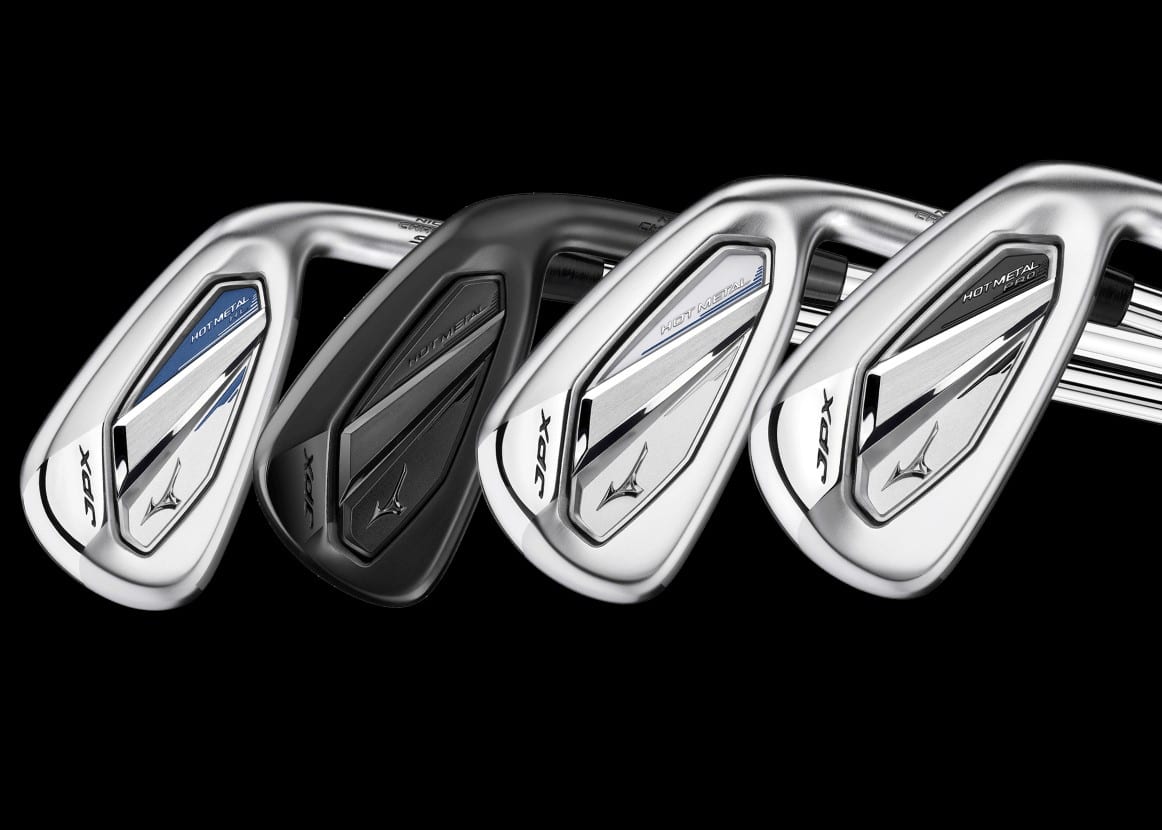
Mizuno points two models at higher handicaps. The Hot Metal page calls Hot Metal a “FORGIVING SPEED CAVITY” and HL a “MAX FORGIVENESS SPEED CAVITY.” Both read “MID to HIGH HCP.”
Forgiveness here means how well a head holds speed and line when contact drifts off the sweet spot. A cavity back is hollowed out behind the face.
The HL is “designed for golfers seeking a maximum launch and spin” in a “wider” package. Its 7-iron is 31°, three degrees weaker than Hot Metal’s 28°, and the spec table lists it for right-handers only. The third model on that page, HM Pro, is a “PLAYERS SPEED CAVITY” for “LOW to MID HCP,” aimed at golfers “seeking a more compact profile.”
Mizuno’s own wording tops out at “MAX FORGIVENESS” on the HL. Mizuno doesn’t name a model for beginners.
You give up two things here. The first is the word forged: the Hot Metal page lists the material as Nickel Chromoly 4335 and never calls these heads forged. The second is head size. Only the JPX925 pages give head length: 79.5 mm on the Forged, 80.9 mm on HM Pro, 85.4 mm on Hot Metal and 86.6 mm on HL. The Mizuno Pro pages don’t list it, so this comparison stops at the four JPX925 models.
When you want forged, but not a blade: JPX925 Forged, M-15, S-4
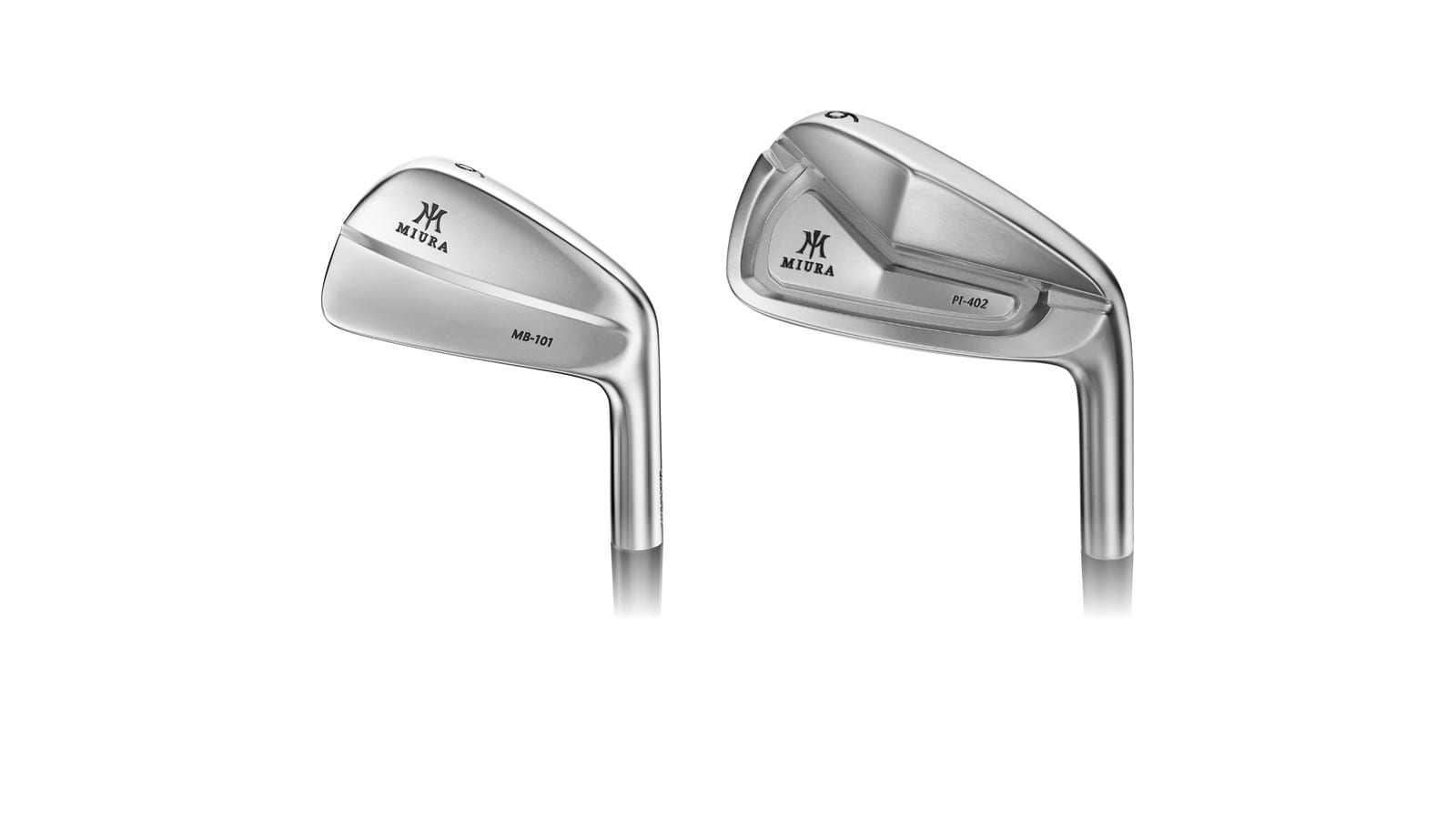
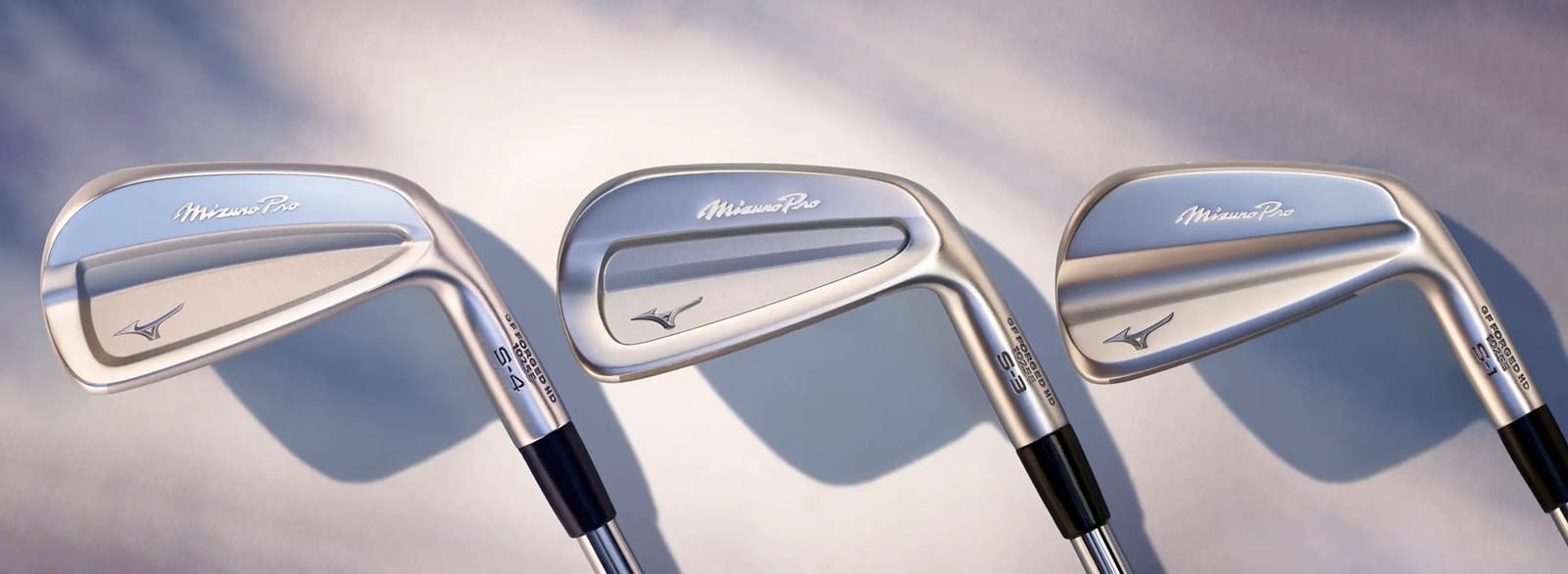
The S-4 announcement puts the split plainly: “Some players seek the ultimate feedback and shot-making precision of a muscle back. Others prefer the added versatility and stability of a player’s cavity.” Of the nine, the S-1 is the one solid-backed head.
Mizuno describes the S-1 and S-4 heads as forged “from a single billet” of steel. A billet is one bar of steel before it’s shaped. A forged head isn’t always one piece, as the JPX925 Forged and M-15 below show.
JPX925 Forged. The JPX925 Forged page calls it a “MIDSIZE CAVITY” for “Pro to MID HCP,” the only one of these three with a handicap label. The spec line reads “Material Grain Flow Forged HD.” Further down, the same page says the 4- through 7-irons join a forged chromoly face and neck to a stainless steel back. Both lines are Mizuno’s, and I’m quoting both rather than picking one.
M-15. The M-15 page opens with “The M-15, successor to the Mizuno Pro 245.” Its tungsten weighting “increases forgiveness,” and the 4- through 8-irons are hollow, under what Mizuno calls a “Multi-Material Hollow Construction.” The 7-iron is 29°, the lowest loft in the Mizuno Pro line.
S-4. Mizuno’s S-4 announcement calls it “the newest addition to its growing Signature Series” and “the most forgiving model in the series to date.” That series is S-1, S-3 and S-4; Mizuno doesn’t compare the S-4 with the M-15. The help comes from “increased offset, a wider sole, a lower sweet spot height, and a deeper center of gravity.” The announcement listed an MSRP of $215 per club.
Offset is how far the clubface sits behind the front of the hosel. On Mizuno’s spec tables, the S-4 7-iron has 0.138 inches, more than the JPX925 Forged and HM Pro at 0.126. So the Mizuno Pro name doesn’t promise less offset. That comparison covers the seven models whose tables have an offset column; the M-13 and M-15 tables don’t. What the number does at address is in my iron offset article.
When you want a compact, workable head: S-1, S-3, M-13
Workability means you can bend a shot left or right when you choose to. Mizuno’s pages use “workability” or “compact” for each of these three, but they don’t give Mizuno Pro head lengths, so there’s no size ranking here.
S-1. The S-1 page calls these irons “pure muscle backs, designed for players who demand ultimate precision and workability.” Each head is “forged from a single billet of 1025E Pure Select Mild Carbon Steel.” Its 7-iron offset is 0.087 inches, the least of the seven models with that column.
S-3. The S-3 page describes “a sleek, compact profile” for “players who demand finesse and versatility.” Its 7-iron offset is 0.114. The S-4 announcement says the series began with the S-3 and “then expanded with the Mizuno Pro S-1.”
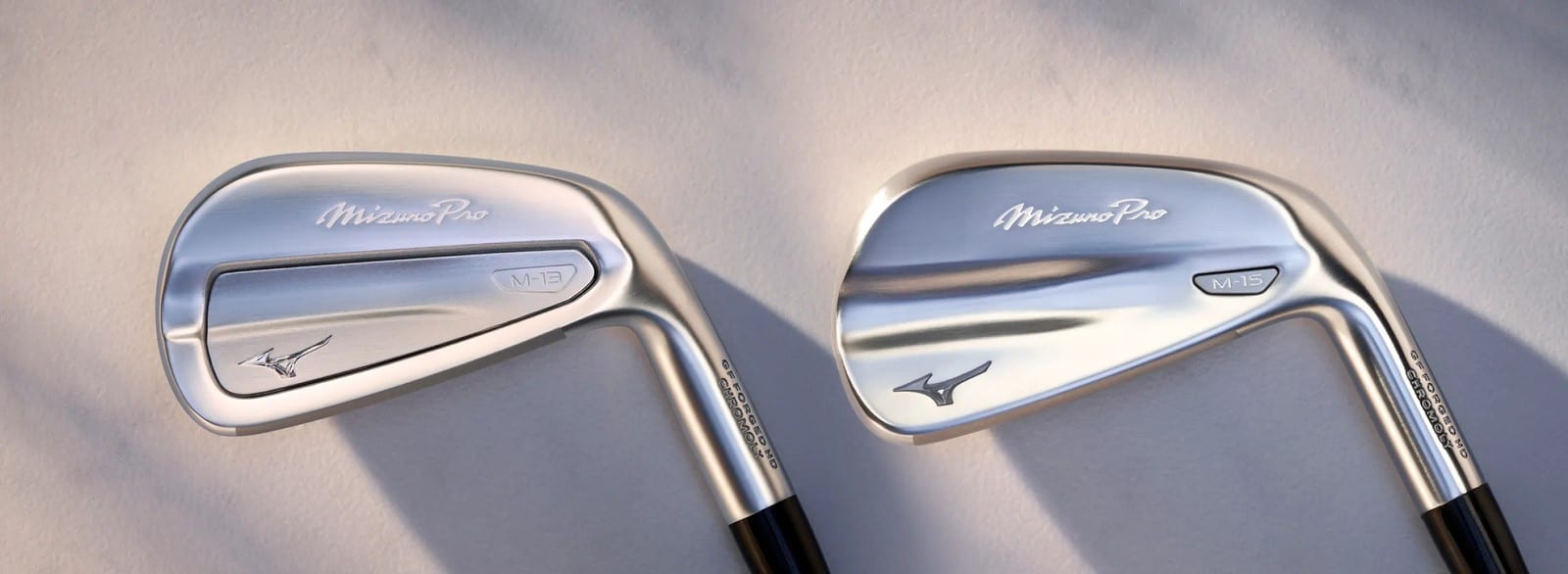
M-13. The M-13 page calls it the “successor to the Mizuno Pro 243,” with “a maneuverable and compact head size.” Its 7-iron is 32°, two degrees lower than the S models. Mizuno calls the build a “three-part forging story.”
Own a 245, 243 or JPX923? Find its row on Mizuno’s timeline
Mizuno’s iron timeline, “Mizuno Iron Models, past and present,” puts each line on one row. Older models carry years, but recent ones don’t, so the useful answer is by row. Each row below starts partway along, runs oldest to newest, and ends in a current model. The M-13 and M-15 pages also say it outright: each is the “successor” to a 243 or 245. The other rows rest on the timeline alone.
- MP-18 SC, Pro 223, Pro 243: Mizuno Pro M-13
- MP-20 HMB, Pro 225, Pro 245: Mizuno Pro M-15
- MP-18, MP-20 MB, Pro 221, Pro 241: Mizuno Pro S-1
- MP-18 MMC, MP-20 MMC: Mizuno Pro S-4
- JPX900 Tour, JPX919 Tour, JPX921 Tour, JPX923 Tour: Mizuno Pro S-3
- JPX900 Forged, JPX919 Forged, JPX921 Forged, JPX923 Forged: JPX925 Forged
- JPX900 Hot Metal, JPX919 Hot Metal, JPX921 Hot Metal, JPX923 Hot Metal: JPX925 HM
- JPX919 Hot Metal Pro, JPX921 Hot Metal Pro, JPX923 HM Pro: JPX925 HM Pro
- JPX EZ, JPX923 HM HL: JPX925 HM HL
Note that the JPX Tour row ends in a Mizuno Pro, the S-3, not a JPX925.
The order I’d try them in
I’d follow Mizuno’s own wording. If help came first, I’d start with Hot Metal, then try the HL for more height if I were right-handed, or the HM Pro for a slimmer look. If I wanted forged with some help, I’d move to the JPX925 Forged, the one forged model Mizuno gives a handicap label, then the M-15 and S-4. Mizuno doesn’t rank those three for forgiveness, so I wouldn’t assume an order among them. If I wanted a compact head, I’d finish with S-3 and then S-1, since Mizuno calls the S-3 a “modern player’s cavity back” and the S-1 “a pure muscle back,” or the M-13 if I wanted a lower-lofted 7-iron, at 32°.
If you’re looking at a used M-13, there’s one more step. A June 2026 Mizuno notice says the 6-, 7- and 8-irons “may develop dents or deformation on the clubface after repeated use,” and Mizuno says it has seen no face damage on the rest of the set. Check those three faces for dents, as Mizuno asks owners to do, then look for a small ”●” laser mark to the right of “CHROMOLY” on the hosel, which marks Mizuno’s updated head.