Irons & Loft Charts
Miura Irons by Handicap: Seven Models on Miura's Own Ladder
Miura rates its seven iron models from 1 to 5 handicap stars. Three get four or more, and the one-material soft carbon steel story ends at the CB-302.
The short answer
Miura isn't only a blade maker for low handicappers. Its own combo set builder gives its seven current iron models 1 to 5 handicap stars, and three of them get four or more: the CB-302, IC-602 and PI-402. The PI-402 sits at the top of that scale. If you want a set made only from S20C soft carbon steel, the CB-302 is as far up as that goes.
- 1 to 5
- handicap stars Miura gives its seven iron models, from MB-101 to PI-402 Miura Iron Combo Set Builder, checked 2026-11-19
- 5 of 7
- models with Premium S20C Soft Carbon Steel as the only listed material Miura product pages, checked 2026-11-19
- 37.00 in, 62.5°
- 7-iron length and lie on all seven models Miura product page spec tables, checked 2026-11-19
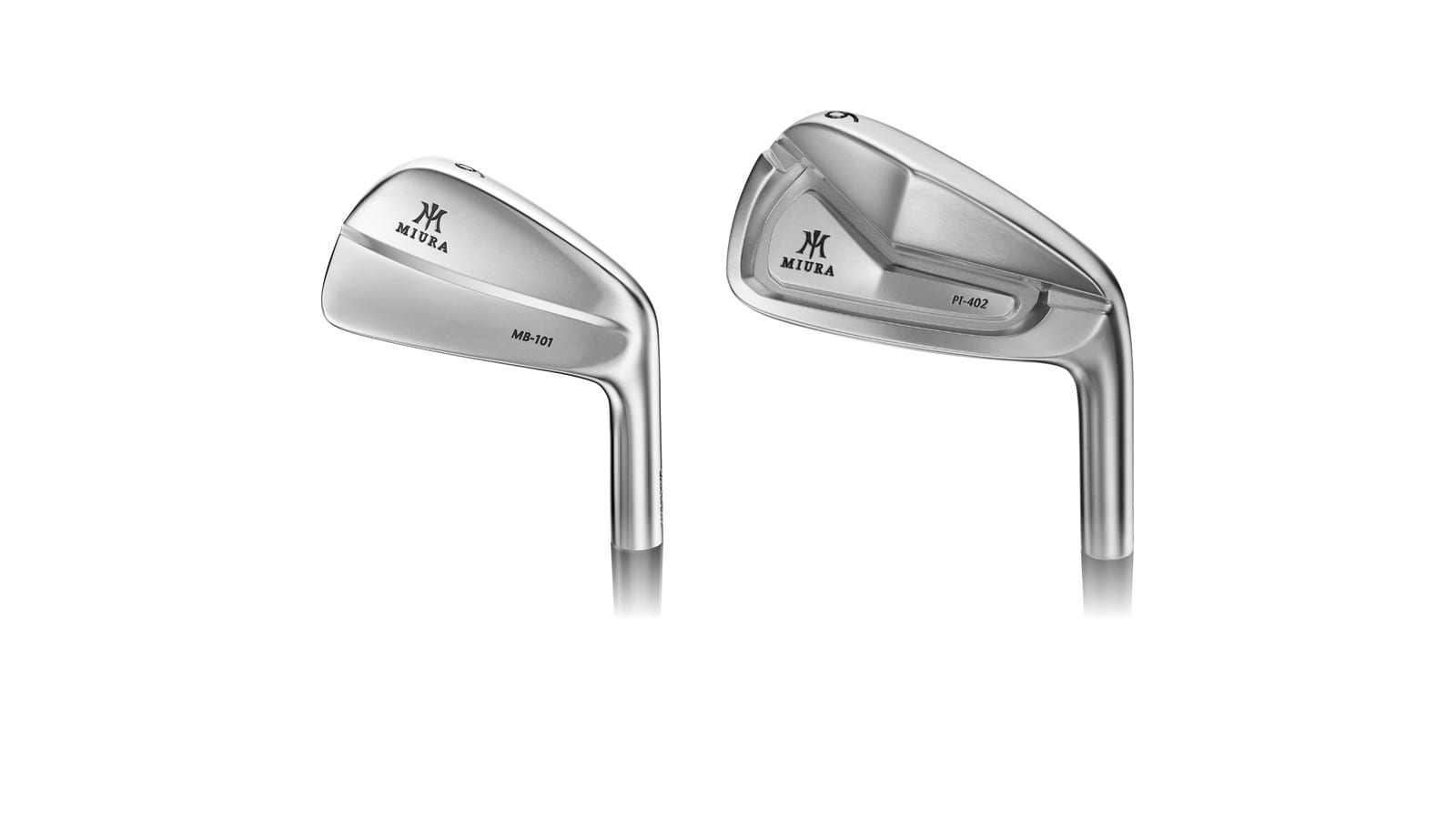
Miura rates its own irons by handicap. On its combo set builder, each of the seven current models gets 1 to 5 handicap stars. Three of them get four or more.
The PI-402 sits at the top of Miura’s scale. The CB-302 is the highest-rated model made only from S20C, the soft carbon steel Miura is known for. Everything below comes from Miura’s own pages, checked 2026-11-19.
“Miura only makes irons for low handicappers”
That reputation has a source, and Miura knows it. Its own blog put it this way in 2023: “Although Miura may have been originally considered the manufacturer of the most premium blade irons in the game, we have since expanded to making irons for any player” (Miura blog).
The combo set builder shows how far that expansion goes. Here are its star ratings next to the iron type Miura files each model under in its irons collection.
| Model | Miura’s iron type | Handicap stars | Forgiveness stars | Workability stars | Material (product page) |
|---|---|---|---|---|---|
| MB-101 | Blade | 1 | 1 | 5 | S20C soft carbon steel |
| MC-502 | Blade, Player’s Cavity | 1 | 2 | 5 | S20C soft carbon steel |
| KM-700 | Blade, Player’s Cavity | 2 | 2 | 5 | S20C soft carbon steel |
| TC-202 | Forged Cavity | 3 | 3 | 4 | S20C soft carbon steel |
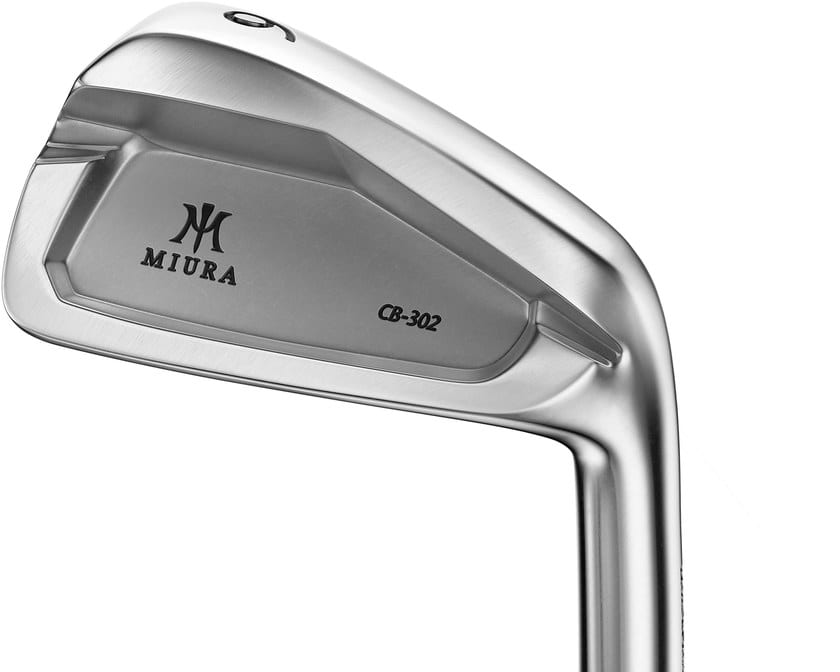
| CB-302 | Forged Cavity | 4 | 4 | 3 | S20C soft carbon steel |
| IC-602 | Player’s Distance | 4 | 4 | 2 | Chromoly face, 8620 body |
| PI-402 | Player’s Distance | 5 | 5 | 2 | Chromoly face, 8620 body |
Stars are out of five, in the order the builder lists the models. I left out finish variants and left-handed models. The MC-502 and KM-700 show up under two of Miura’s filters, so Miura files them as both a blade and a player’s cavity.
Miura doesn’t define what more handicap stars mean. Its one-line descriptions point the direction, though. The one-star MB-101 gets “Tour-preferred looks, pro-level feel, and precision workability.” The five-star PI-402 gets “Exceptional forgiveness & distance combined with the signature Miura feel.”
Forgiveness climbs with the handicap stars, and workability falls.
One caution if you click around. Some Miura product pages carry their own comparison stars, and those may not match the builder’s. I used only the builder because it rates all seven models on one screen.
“Every Miura is S20C soft carbon steel, forged in Himeji”
The S20C part holds for five models and then stops.
S20C is a carbon steel grade, and Miura lists it as “Premium S20C Soft Carbon Steel” or “Premium (S20C) Soft Carbon Steel.” The MB-101, MC-502, KM-700, TC-202 and CB-302 list it as their only material, and each of those pages says “Forged in Himeji, Japan.”
The two models above it split the head into parts. The IC-602 page lists a chrome molybdenum face on the 3-9 irons, S35C steel on the PW and GW, and an “8620 Soft Carbon Steel” body with a tungsten insert and injected polymer. The PI-402 page lists a chrome molybdenum face and an “8620 Mild Carbon Steel” body.
Chrome molybdenum, often shortened to chromoly, is a different steel alloy. The PI-402 page calls its face “3mm hot-rolled Chromoly steel.”
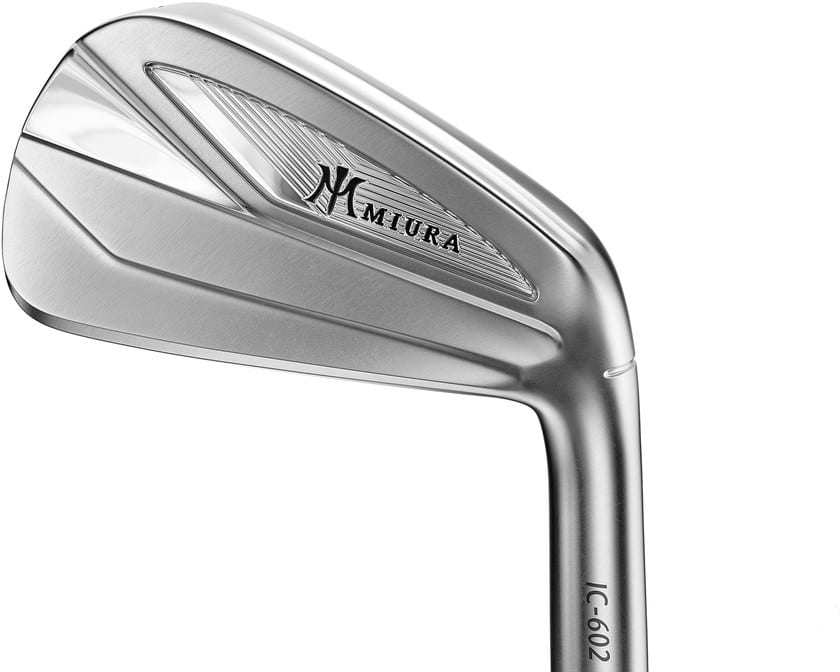
Both pages also change one word. They read “Designed in Himeji, Japan,” not “Forged.” Miura doesn’t say more than that, so I won’t guess how those heads are made.
That gives the question “what are the most forgiving Miura irons?” two answers. By Miura’s stars, it’s the PI-402. If S20C through the whole head matters to you, it’s the CB-302.
“You have to buy one model for the whole set”
Miura sells mixed sets on purpose. Its irons page invites you to mix and match models, “adding forgiveness where you need it and precision where you want it.” The combo set builder warns that “not all irons/finishes are available to combo.”
The 2023 blog gives an example: “a 2 handicap that wants a forgiving 4 and 5 iron.” Miura’s design principles aim at “an entire set of 8 to 10 well-designed clubs that work together effortlessly.”
The spec tables line up in one useful way. On all seven models, the 7-iron is 37.00 inches long with a 62.5° lie. Head weight runs from 267 g (IC-602, PI-402) to 272 g (MB-101, KM-700).
Loft is what moves. The 7-iron goes from 34° on the MB-101 to 30° on the PI-402, with the CB-302 at 32°. My 7-iron loft guide shows where that range sits among other brands.
Miura model names on used listings: 501, 201, 401
On used listings, you’ll see older Miura names next to today’s models. Miura’s pages name an earlier model for four of the seven: MC-501, TC-201, PI-401 and MB-001.
| Current model | Earlier model the page names | What Miura’s page says |
|---|---|---|
| MC-502 | MC-501 | “The MC-501 was one of Miura’s best-selling models” |
| TC-202 | TC-201 | “refines the success of its predecessor, the TC-201” |
| PI-402 | PI-401 | “Compared to the PI-401, the PI-402 features a more compact face length and taller heel” |
| MB-101 | MB-001 | “Inspired by the MB-001” |
The PI-401 still shows on Miura’s US irons page, marked sold out. Miura’s current CB-302 and IC-602 pages don’t name an earlier model, so check a used CB or IC set’s specs on their own.
If you’re shopping used Miura irons and see a 501, 201 or 401, Miura’s current pages compare the MC-502, TC-202 and PI-402 with those earlier models. Check the older model’s own specs before you buy. If it’s an MC-501, my iron offset guide covers a small one-tester launch test that included an MC-501 6-iron. Other brands work the same way; my PXG 0311 irons guide walks through dating a used PXG set by generation.
Where I’d start on the ladder
Miura has its own Iron Recommender, and it never asks your handicap. It asks five things: preferred iron shape, what matters most, ideal ball flight, turf condition, and divot size with a 7-iron.
I’d take those questions in the same order.
- Shape. The shape options are “Tour Caliber Muscle Back,” “Compact Cavity” and “Confidence Inspiring.” If a thin blade looks hard to hit when you set it down, start from the cavity rows.
- What matters most. “Direction & Forgiveness” points up the star ladder. “Control & Workability” points down it.
- Divot. If you take deep divots, sole width is where I’d look. Miura ties sole width to forgiveness on both the CB-302 and PI-402 pages. It gives the CB-302 a 19 mm sole on the 7-iron and the PI-402 “up to 22mm” of sole width. Those are measured on different terms, so I wouldn’t compare them directly.
If I were picking a Miura set, I’d find my row on that star table first, then decide whether S20C through every head is worth a star of forgiveness to me.