Irons & Loft Charts
PXG Irons: 0311 T, P or XP, and Gen6 and Gen7 Have No T
PXG 0311 irons come as T, P and XP. Gen8 specs by head, which generations made a T (not Gen6 or Gen7), and how to date a used set by hosel and back weights.
The short answer
PXG's 0311 irons come in three heads: XP if you want distance first, T if you're a skilled player who shapes shots, and P in between. The current line is Gen8, released in January 2026. Gen6 and Gen7 came as P and XP only, so a listing for a Gen6 T names a head PXG didn't release for that generation.
- 32°, 30°, 27°
- 7-iron loft of the 0311 T, P and XP GEN8 PXG 0311 GEN8 Irons spec table, checked 2026-11-09
- P and XP only
- heads PXG lists for 0311 GEN6 and GEN7 PXG Golf Irons Guide, checked 2026-11-09
- 2-12 g
- range of the GEN8 heel and toe weights, swapped by PXG fitters in 1 g steps PXG 0311 GEN8 Irons product page, checked 2026-11-09
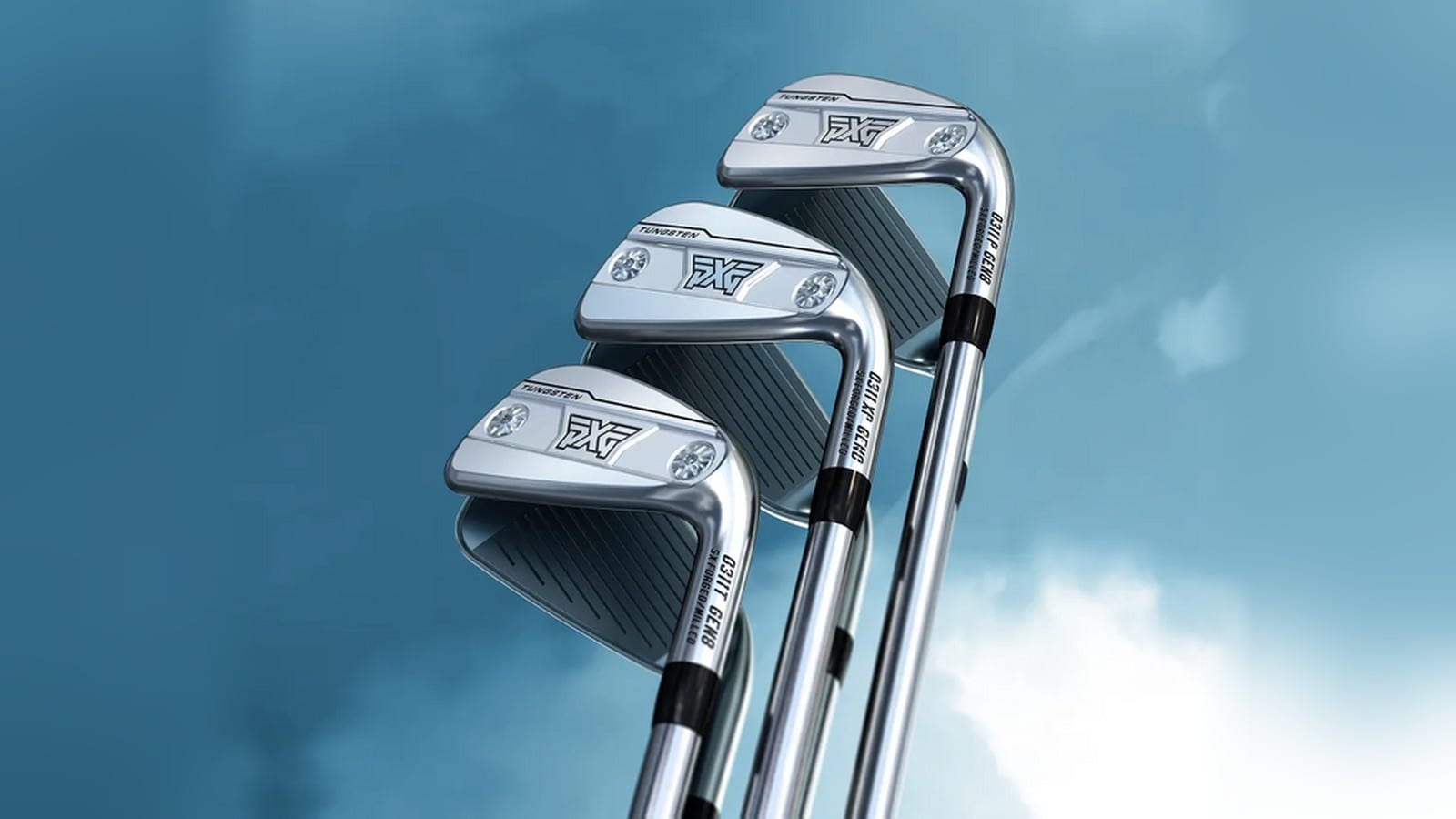
PXG’s 0311 irons come in three heads. The XP is for golfers who want distance first, the T is for skilled players who shape shots, and the P sits between them. That split comes from PXG’s own descriptions.
The current 0311 line is Gen8, released in January 2026 (PXG Golf Irons Guide). Older generations are where the names get messy.
I haven’t hit any of these irons. What follows comes from PXG’s spec tables, guide and press releases, checked 2026-11-09.
Before you shop
- Three heads, one line. Gen8 comes as T, P and XP, with 7-iron lofts of 32°, 30° and 27°.
- Not every generation made a T. Gen3, Gen4, Gen5 and Gen8 did. Gen6 and Gen7 didn’t.
- Read the hosel (the neck where the shaft enters), then the back. The spec tables barely change between Gen6, Gen7 and Gen8. Gen7 and Gen8 letter the generation on the hosel, and the back weights differ.
0311 T vs P vs XP: what changes between the three heads
Within Gen8, the heads differ in who PXG builds them for, in offset, and in where the set ends. These are the 7-iron rows from PXG’s spec tables.
| Gen8 head | PXG’s target golfer | 7-iron loft | Length | Lie | Offset | Set |
|---|---|---|---|---|---|---|
| 0311 T | “skilled players who want workability and control” | 32° | 37” | 62.5° | .075” | 3-G |
| 0311 P | “a wide range of players” | 30° | 37” | 62.5° | .125” | 4-G |
| 0311 XP | “mid-to-high-handicap golfers” | 27° | 37.5” | 62° | .165” | 4-L |
Specs come from the PXG 0311 GEN8 Irons product page, checked 2026-11-09. Target-golfer wording comes from PXG’s guide (T, XP) and the Gen8 launch release (P). Bounce is 9° on all three 7-irons.
PXG’s guide gives the T a “compact head, minimal offset, thinner topline, narrower sole.” The Gen8 launch release calls the P a “mid-size profile” and gives the XP “increased offset, a wider sole, and strong loft.”
The XP 7-iron is 3° stronger than the P and half an inch longer. So the 7 on the sole isn’t the same club across the three heads, and that’s part of PXG’s distance pitch for the XP. PXG publishes no yardage gap, so I won’t guess one. The golf club loft chart shows where 27-32° sits among other 7-irons.
Offset is how far the leading edge sits behind the hosel line. On Gen8 it more than doubles from the T to the XP. My iron offset guide explains why I’d compare it in a fitting rather than count on it to fix a slice.
The set ends differ too. The T runs from a 3-iron to the gap wedge, marked G, and the P from a 4-iron to G. The XP runs from a 4-iron to the lob wedge, marked L, with a sand wedge, S, before it. All three come right- and left-handed.
PXG 0311 generations: which ones have a T
P and XP run through every recent generation. The T doesn’t.
| Generation | Released | Heads | Back weighting | Polymer fill |
|---|---|---|---|---|
| Gen5 | 2022 | T, P, XP | Five heel and toe weights, plus one large weight | XCOR2 |
| Gen6 | March 2023 | P, XP | One large weight | XCOR2 |
| Gen7 | August 2024 | P, XP | One large weight inside a titanium ring | QuantumCOR |
| Gen8 | January 2026 | T, P, XP | Two weights, heel and toe | QuantumCOR |
Heads and fill, plus the Gen5 and Gen8 dates and weighting, come from PXG’s guide and the Gen8 product page. Gen6 and Gen7 dates and weighting come from the Gen6 release, the Gen7 release and the Gen7 product page, all checked 2026-11-09. The Gen7 release says “GEN7 presents two clubhead options.”
Gen3 (2020) and Gen4 (2021) also came as T, P and XP. PXG’s guide still lists Gen7 as a current option next to Gen8, and files Gen3 through Gen5 under legacy irons.
When Gen8 brought the T back, the launch release said so: “Back by popular demand, the GEN8 T Iron features a compact head shape and minimal offset.”
If you want a T, look at Gen8, or Gen3 through Gen5. A listing titled “Gen6 T” or “Gen7 T” names a head PXG’s guide doesn’t list for that generation. That alone doesn’t make it fake. The seller may have mislabeled it, or it may be a 0317 T, which is a different PXG iron. Ask for photos of the hosel and the back, and compare them with the next section.
How to tell Gen6, Gen7 and Gen8 apart on a used set
Start at the hosel. In PXG’s official photos, it carries both the head and the generation: “0311P GEN8” on the Gen8 P, “0311P GEN7” on the Gen7 P.
If the listing photos don’t show the hosel, turn the club over. Gen8 has two round weights on the back, one at the heel and one at the toe.
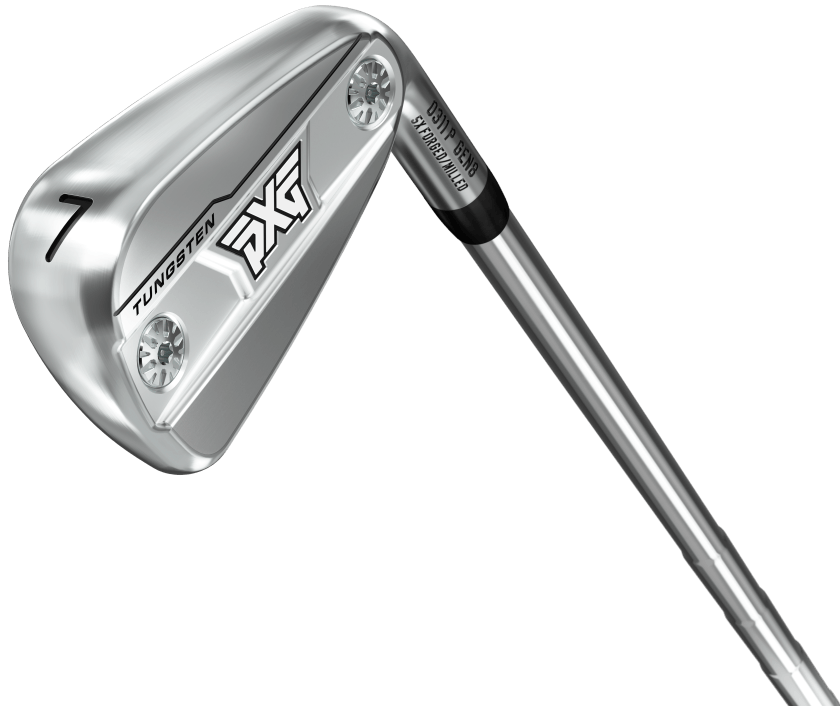
PXG fitters set each of those weights from 2 to 12 grams, in 1-gram steps. PXG says that changes shot shape “without altering lie or loft.” The heavy weight goes heel-side for “a draw bias” and toe-side for “fade control.” The numbers on the weights, in PXG’s words, “represent how much weight sits in each position.”
On a used Gen8, I’d ask the seller which side carries the heavier weight. The last owner may have been fitted for their own ball flight, not yours.
Gen7 has one large weight inside a ring lettered TITANIUM. That ring is the Titanium Bezel Technology PXG introduced with Gen7.
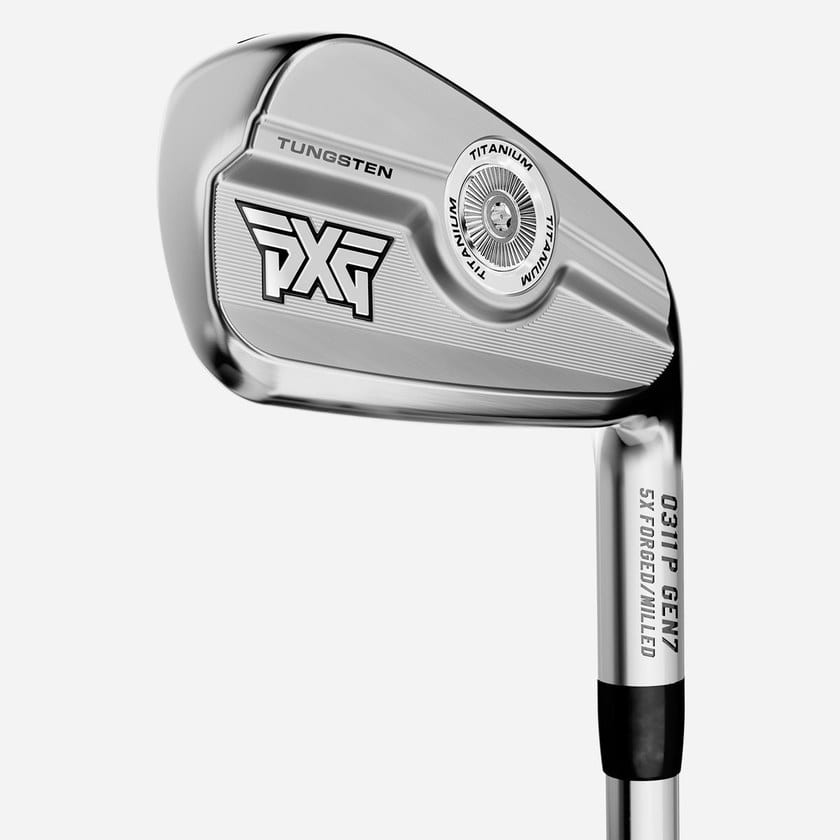
Gen6 also has one large weight near the center of gravity, but no titanium ring. Gen5 has five heel and toe weights plus one large one. For Gen6 and Gen7, PXG says the weighting “is not intended to be adjusted after purchase.”
I couldn’t find an official Gen6 photo sharp enough to read its hosel. So for Gen6, I’d go by the back, with one catch: PXG’s guide gives Gen4 “the sizeable adjustable weight located near the CG” too, and Gen4 came as a T. One large weight without a ring doesn’t prove Gen6 by itself.
The spec sheet won’t help much. On the P and XP 7-irons, loft, length, lie and bounce match across Gen6, Gen7 and Gen8. Only offset moves, by .005 inch: the P goes from .130 to .125 on Gen8, and the XP from .160 to .165. The Gen6 figures come from a 2024 archived copy of PXG’s Gen6 comparison page. A “30° 7-iron” in a listing fits a P from any of the three. Same-loft generations aren’t only a PXG thing; my T100 loft chart by generation tracks the same question for Titleist.
Where 0311 sits in the PXG iron lineup
If you searched for PXG golf irons and found other numbers, those are separate families, not 0311 generations. PXG’s guide gives each one a line.
- 0317 (T, CB, ST): PXG’s “tour-inspired players lineup,” with three heads you can blend into one set. The 0317 T is not the 0311 T.
- Black Ops: launched alongside Gen7 in August 2024. PXG’s senior director of irons R&D, Mike Nicolette, called it “our first true game-improvement iron.”
- 0211 (ST, XCOR2, DC): PXG’s value family. The guide calls the XCOR2 “rich performance at a remarkable price” and the DC “serious bang for the buck.” All three now sit under legacy irons, “no longer part of PXG’s current production lineup.”
- Wildcat: PXG’s “easiest-to-hit, most forgiving irons,” built for golfers “just starting out, returning to the game.” Wildcat irons start at $149.99.
One more name trap: the 0311 ST is a legacy blade. It isn’t one of the three 0311 heads above.
Terms in this article
- Hosel: the neck where the shaft enters the head. PXG letters the head and generation on it.
- Offset: how far the leading edge sits behind the hosel line. On Gen8 7-irons it runs from .075 inch (T) to .165 inch (XP).
- Precision Weighting Technology: PXG’s back weighting on Gen4 through Gen7, built around one large weight.
- Lie: the angle between the shaft and the ground when the sole sits flat.
- Bounce: the angle between the ground and a line from the leading edge to the lowest point of the sole. More bounce helps the sole glide through turf instead of digging.
- Dual Perimeter Weighting System: Gen8’s heel and toe weights, 2-12 g each, which PXG fitters swap to change shot shape.
- XCOR2 / QuantumCOR: the polymers that fill the inside of the head. XCOR2 in Gen5 and Gen6, QuantumCOR from Gen7 on.
Head first, then generation
Pick the head before the year. Distance and forgiveness point to the XP. Shot shaping and the smallest head point to the T, which means Gen8, or Gen3 through Gen5. If neither fits cleanly, the P is the middle.
If I were shopping used 0311s, I’d settle distance versus shot shaping first, then only open listings from generations that made that head.