Wedges & Putting
TaylorMade Spider Tour Putters: The Neck Sets the Toe Hang
On a TaylorMade Spider Tour putter, the neck sets the toe hang, not the model name. Toe hang for Tour, X, F and V by neck, and where Spider ZT fits.
The short answer
On a TaylorMade Spider Tour putter, the neck sets the toe hang, not the model name. The same L-Neck reads 21° on the Tour X, 23° on the Tour and 33° on the Tour F and V, so check model and neck together. Spider ZT has no neck to choose: TaylorMade lists it toe up.
- 21°, 30°, face-balanced
- toe hang of the three 2026 Spider Tour X necks: L-Neck, Small Slant, Double Bend TaylorMade US, Spider Tour X L-Neck page, checked 2026-11-17
- 21° to 33°
- toe hang of the L-Neck across Tour X, Tour, Tour F and Tour V TaylorMade US product pages, checked 2026-11-17
- Toe Up
- toe hang TaylorMade lists for the Spider ZT (standard, Counterbalance, Long) and ZT Max TaylorMade US, Spider ZT page, checked 2026-11-17
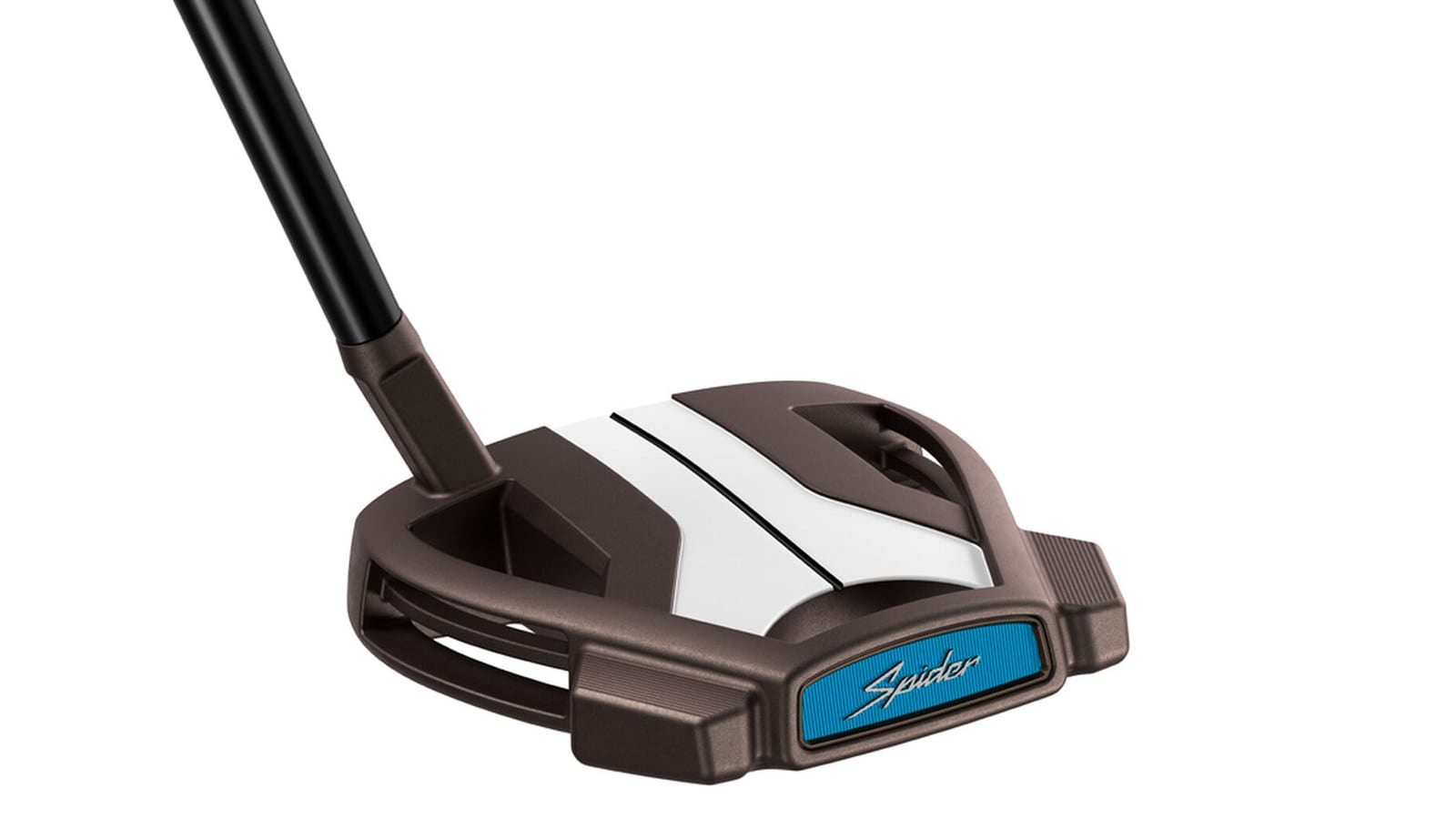
Open TaylorMade’s US pages for the 2026 Spider Tour X and you’ll find one name selling three different balance points. The L-Neck version hangs its toe 21°. The Small Slant hangs it 30°. The Double Bend doesn’t hang at all: it’s face-balanced.
Same head, same name. So the model name tells you the head shape, and the neck tells you the toe hang.
Even that isn’t the whole story. An L-Neck is 21° on the Tour X, 23° on the Tour, and 33° on the Tour F and Tour V. You need the model and the neck together before you get a number.
Neck before name
- Toe hang comes from the neck. Small Slant, L-Neck and Double Bend put the same Spider head at three different balance points.
- One neck name isn’t one number. The L-Neck runs from 21° to 33° depending on the head.
- Spider ZT isn’t a neck choice. TaylorMade lists the ZT toe up, so there’s no toe-hang row to pick.
Spider Tour toe hang by model and neck
Find your model, then read across to your neck.
| Model | Neck | Toe hang | Offset | CG behind leading edge | Stroke TaylorMade names |
|---|---|---|---|---|---|
| Spider Tour | Small Slant | 29° | Half shaft | 36 mm (KR) | Arched |
| Spider Tour | L-Neck | 23° | Full shaft | 36 mm (KR) | Slight arc |
| Spider Tour Counterbalance | Double Bend | Face-balanced | Half shaft | 36 mm (KR) | Straight back, straight through |
| Spider Tour X | Small Slant | 30° | Half shaft | 34 mm (KR) | Arched |
| Spider Tour X | L-Neck | 21° | Full shaft | 36 mm (KR) | Slight arc |
| Spider Tour X | Double Bend | Face-balanced | Half shaft | 36 mm (KR) | Straight back, straight through |
| Spider Tour F | L-Neck | 33° | Full shaft | 22 mm | Arched |
| Spider Tour F | Double Bend | Face-balanced | Half shaft | 22 mm | Straight back, straight through |
| Spider Tour V | L-Neck | 33° | Not listed | 21 mm | Natural arc |
Toe hang, offset and stroke labels come from TaylorMade’s US product pages, retrieved 2026-11-17: the compare tables on the Spider Tour Counterbalance and Spider Tour X L-Neck pages, plus the F and V pages linked below. The US pages give CG distance only for the F and V. The figures marked KR come from TaylorMade Korea’s spec rows, checked 2026-11-09 (for example its Tour X Small Slant page). The Tour V page doesn’t list offset, and its stroke label comes from its description because it has no compare table.
The Tour X Small Slant comes in two alignment versions in the US, Single Sight Line and True Path. Both list 30°.
Everything else is shared. Every 2026 Tour, X, F and V page lists 3° of loft and a 70° lie. Most come in 34 and 35 inches, and the Tour Small Slant and Tour X L-Neck add 33. If you’re not sure which length fits, here’s how to measure putter length. Most rows also come left-handed. The Tour F L-Neck and Tour V L-Neck are right-handed only.
Toe hang: what the neck changes
Toe hang is how far the toe drops when you balance the shaft on one finger. A face-balanced putter does the opposite: its face points at the sky. My zero-torque putter guide walks through that finger test and the labels in between.
TaylorMade pairs each neck with a stroke, in its own words. The Double Bend is for “Straight Back Straight Through.” The L-Neck on the Tour and Tour X is for a “Slight Arched Putting Stroke.” The Small Slant, sometimes called a short slant, is for an “Arched Putting Stroke.” Read down those labels and the pattern is simple: the more your stroke arcs, the more toe hang TaylorMade pairs with it.
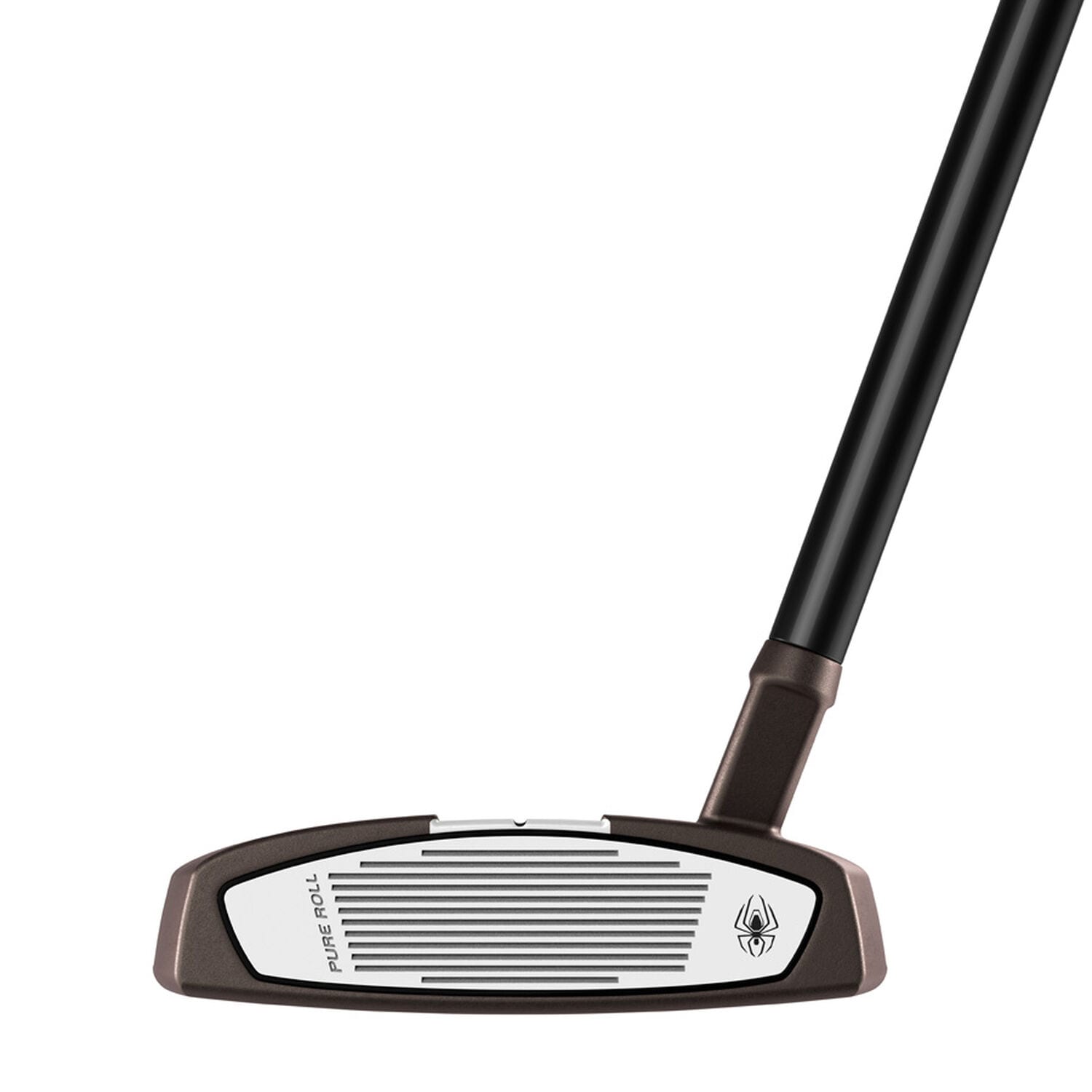
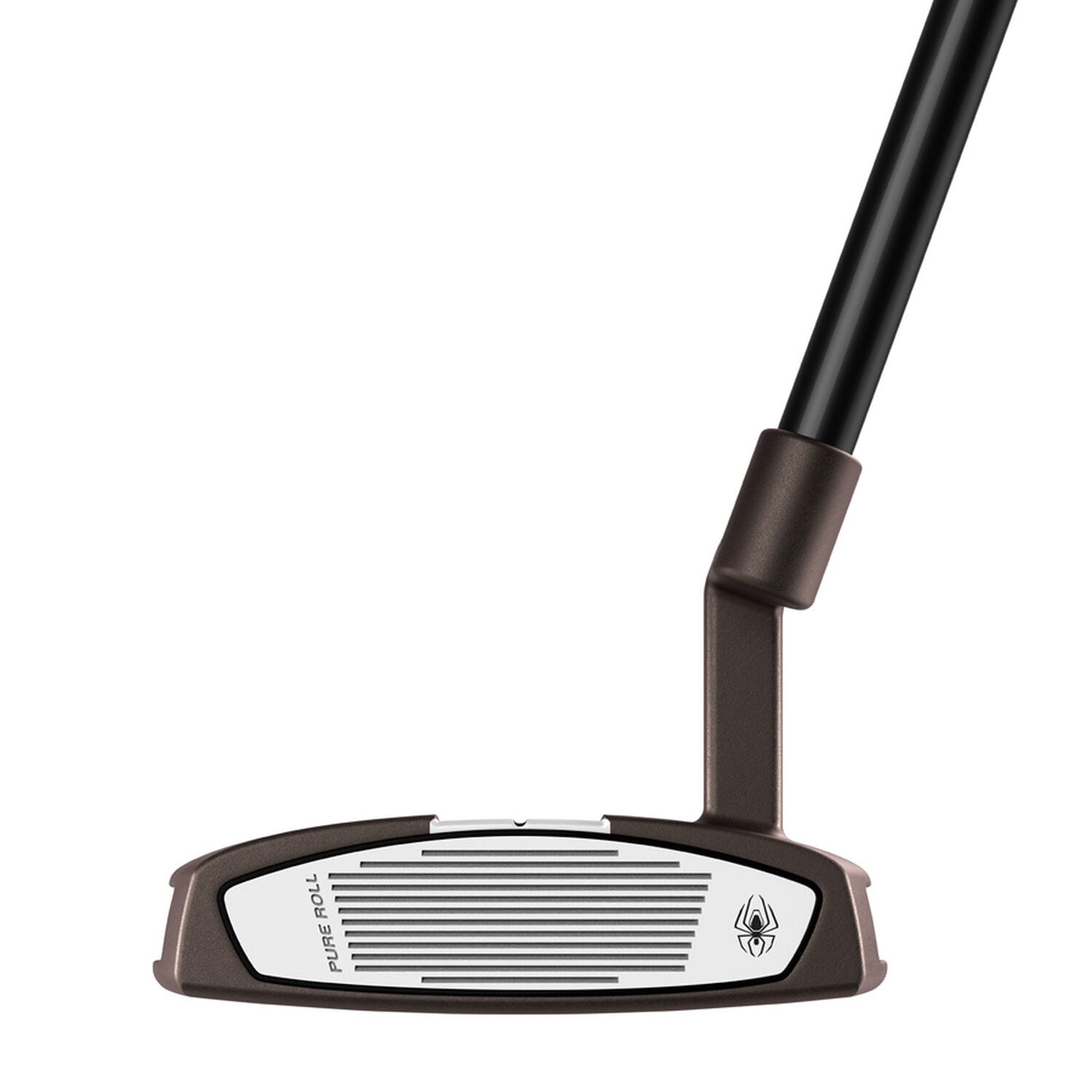
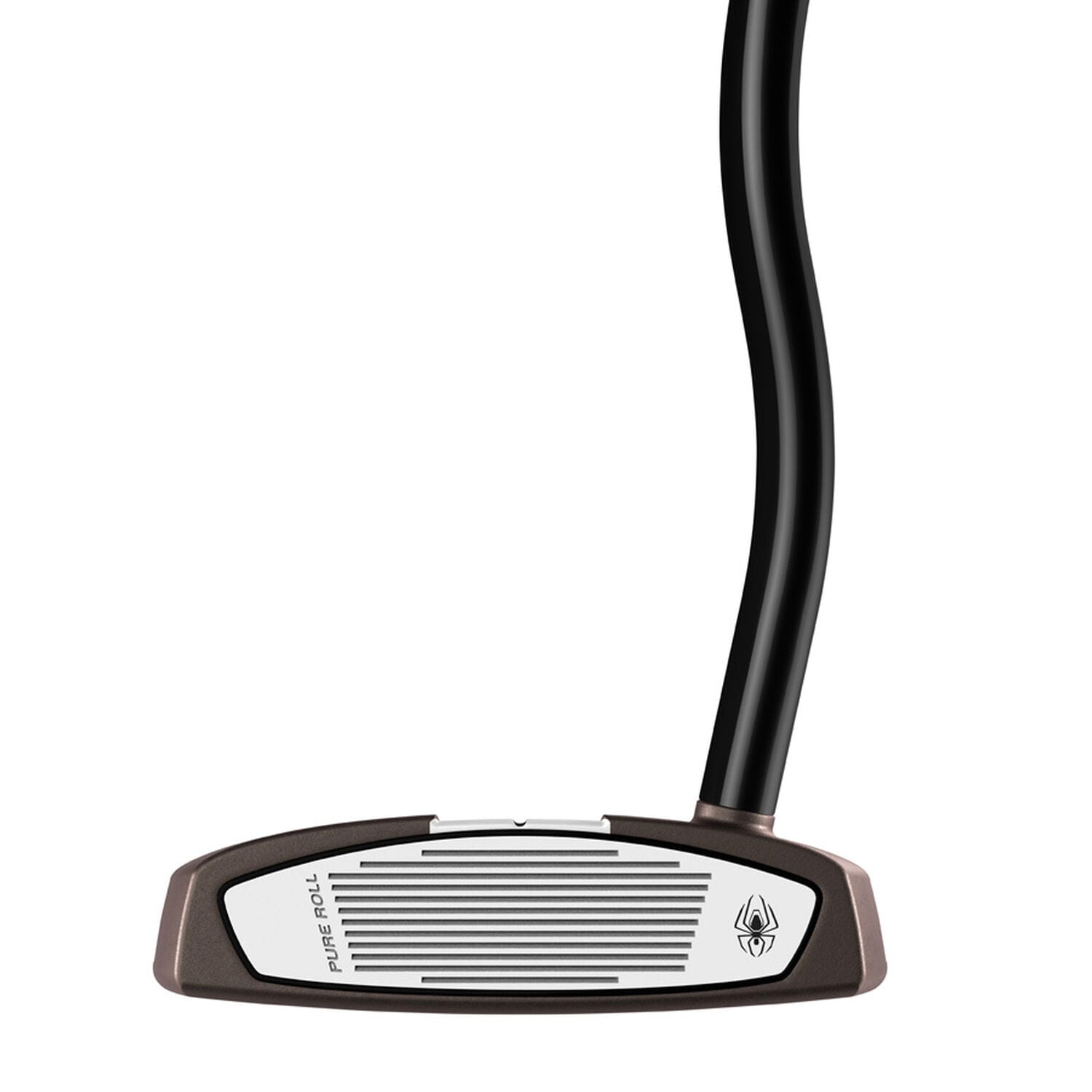
The necks change offset too. Every L-Neck with a listed offset has full-shaft offset, and the Small Slant and Double Bend rows have half-shaft offset. Offset is how far the face sits behind the shaft line. TaylorMade doesn’t give millimetres for either.
Spider Tour vs Tour X
Put the two side by side and the necks line up, but the numbers don’t. On the Small Slant, the Tour X hangs one degree more, 30° to 29°. On the L-Neck, it hangs two degrees less, 21° to 23°. Both Double Bends are face-balanced.
So “the X has more toe hang” isn’t true in either direction. It depends on which neck you compare.
CG tells a similarly small story. TaylorMade Korea lists 36 mm for the Tour. For the Tour X it lists 34 mm on the Small Slant and 36 mm on the other two necks. The US pages don’t state these figures.
TaylorMade calls the Tour “the shape that started it all,” a putter it says has been around for “nearly two decades” (Spider Tour Small Slant). The US pages don’t put numbers on how the X head differs, so I won’t guess.
My read: between these two, the neck makes most of the decision. Pick the neck for your stroke first. Then pick the head you’d rather look at over the ball.
Spider Tour F and Tour V: the forward-CG pair
The F and V move weight toward the face. The Tour F’s two forward weights put the CG 22 mm behind the leading edge (Spider Tour F L-Neck). TaylorMade says that delivers “blade-like feel.” It pitches the F at players “who want the feel of a traditional blade or mid-mallet.”
The Tour V goes one step further. Its page claims “the most forward CG location in the family,” at 21 mm, thanks to “shorter blade length and forward weights” (Spider Tour V L-Neck). TaylorMade describes it as a “smaller, mid-mallet profile.” Those feel claims are TaylorMade’s; I haven’t putted with either.
The F and V L-Necks carry 33° of toe hang. That’s the most in the family, more than either Small Slant. If you assumed every L-Neck sits around 21-23°, these two break the pattern.
Two more limits on the US site. The Tour V comes only as an L-Neck, and the F and V L-Necks are right-handed only. The F also comes as a face-balanced Double Bend with the same 22 mm CG.
Spider ZT and ZT Max: no neck to choose
The Spider ZT isn’t part of the Tour family, and you don’t pick a neck for it. The ZT page lists “Toe Up” for its standard, Counterbalance and Long versions, and the ZT Max page lists the same.
TaylorMade gets there by moving the shaft. On the ZT, “the KBS shaft is bored directly in line with the CG with slight forward shaft lean and 25mm onset behind the leading edge.” The company says this creates “a toe-up orientation” (Spider ZT).
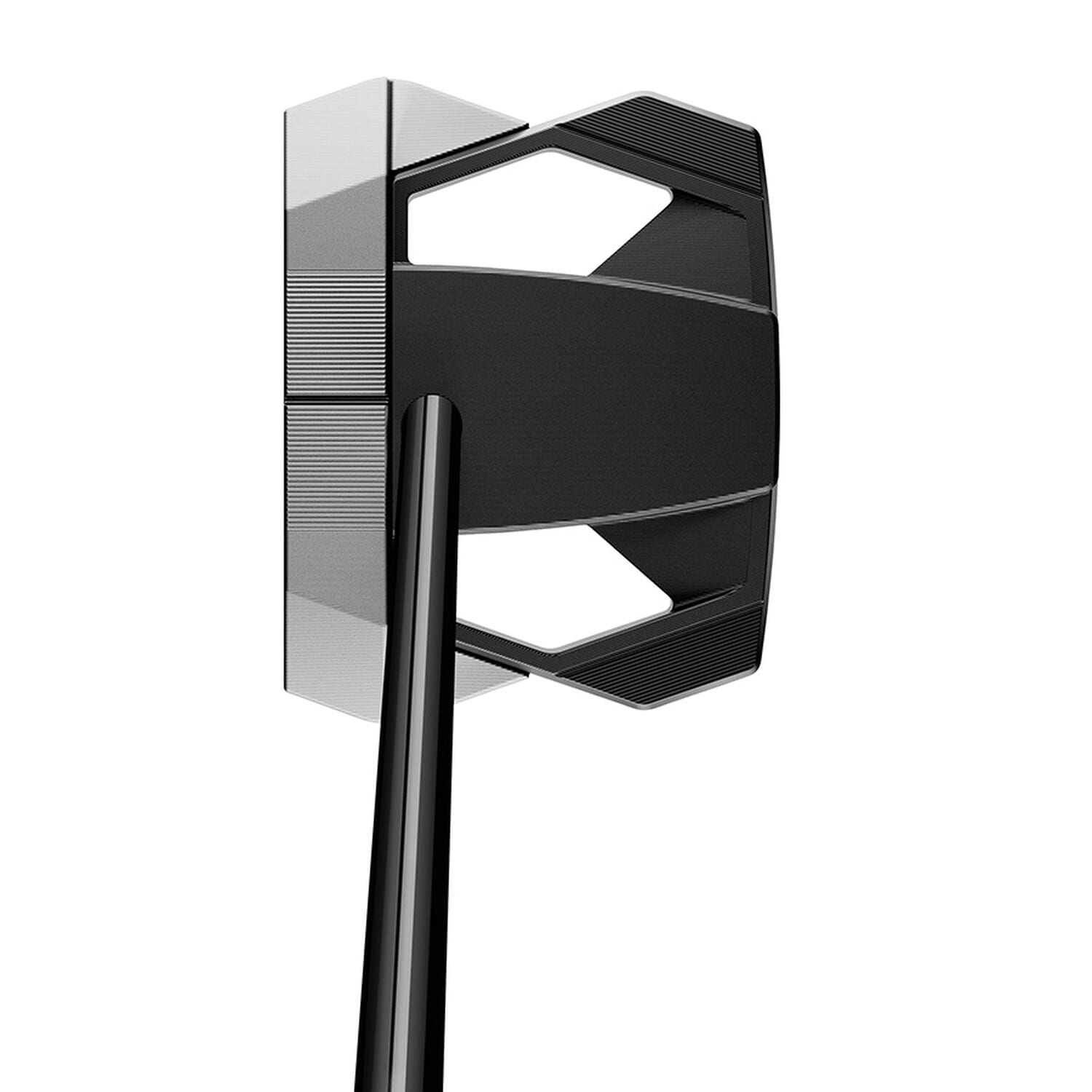
The ZT Max uses the same idea with bigger numbers: 34 mm of onset and 2° of shaft lean (Spider ZT Max). Loft goes from 2.5° on the ZT to 3.5° on the Max. TaylorMade lists head weights of 370 g for the ZT and 379 g for the Max.
The US page heads this section “LOW-TORQUE DESIGN.” TaylorMade Korea’s Spider ZT page says it’s built to deliver zero torque (checked 2026-11-09). Same putter, two grades of claim. My zero-torque guide argues the maker’s own wording is the only grade there is, so I’d go by the more careful one.
So the ZT answers a different question. It’s the Spider for someone who’d rather not match toe hang to a stroke at all.
Which Spider should you look at for your stroke?
Start with your stroke’s shape, then go to the rows. If you’re not sure of yours yet, why putts don’t start on line explains why a putting stroke swings on an arc in the first place.
- Straight back, straight through: look at the Double Bend rows on the Tour X, the Tour F, or the Tour Counterbalance. The catch is the Counterbalance grip. In the US, the face-balanced Tour is sold under that name with a heavier SuperStroke 2.0 XL grip, which TaylorMade says “adds mass to the grip end.”
- Slight arc: look at the Tour L-Neck (23°) or Tour X L-Neck (21°). Skip the F and V L-Necks here. It’s the same neck name, but 33° is paired with a stronger arc.
- Clear arc: look at the Small Slant rows (29° or 30°) or the F and V L-Necks (33°). If you’re coming from a blade and want a forward CG, that points to the F or V. What you give up with the V is choice: one neck, right hand only.
- You’d rather not match toe hang at all: look at the ZT. It costs more. TaylorMade listed the ZT and ZT Max at $449.99 on 2026-11-17, against $349.99 for the Tour family.
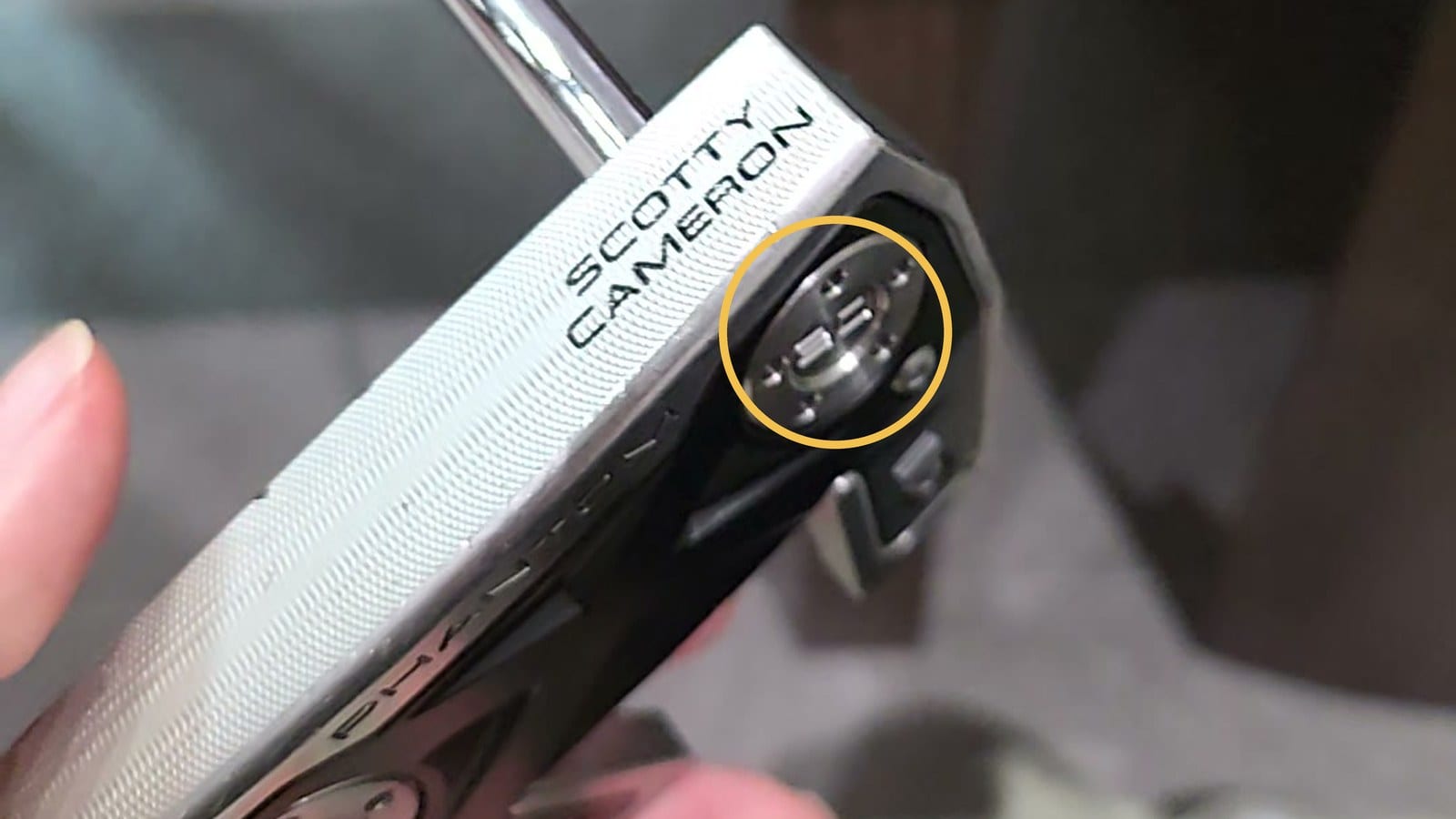
My own putter, a 2022 Scotty Cameron Phantom X 5, is one Titleist Korea calls “close to face balanced.” So if I were shopping Spiders, I’d start at the Double Bend rows.
Terms in this article
- Toe hang: how far the toe drops when you balance the shaft on a finger, quoted in degrees. In this lineup, it’s the number each neck sets.
- Face-balanced: the face points straight up in that same test. On a 2026 Spider Tour, only the Double Bend does this.
- Offset: how far the face sits behind the shaft line. Here, every listed L-Neck has full-shaft offset and the other necks have half.
- Onset: the reverse of offset, with the leading edge ahead of the shaft. TaylorMade lists 25 mm on the ZT and 34 mm on the ZT Max.
- CG: center of gravity. TaylorMade quotes it as a distance behind the leading edge, so a smaller number means weight closer to the face.
Buying a used Spider: read the neck photo
The same Spider names have come with different neck lineups in different generations. TaylorMade’s US site still carries a page for a previous-generation Spider Tour X. So in a used listing, trust the neck in the photos before the name in the title.
If I were scrolling listings, the first photo I’d open is the one of the heel.