
Zero torque vs low torque: where your own putter sits
Nobody certifies 'zero torque,' so the maker's own wording is the grade. What the words mean, how to sort your own putter with one finger, and why lie angle decides.
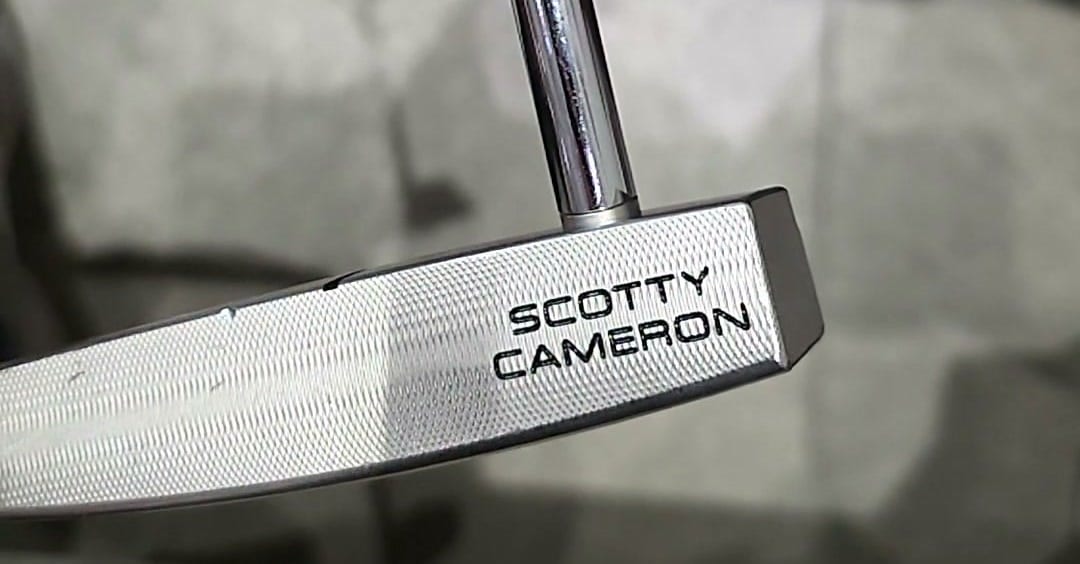
Every time I’m in a golf shop I end up on the mat with a L.A.B. putter. I putt with a 2022 Scotty Cameron Phantom X 5, right-handed, 33 inches, and I wanted to know what actually separates the two.
Not whether zero torque holes more putts. The step before that: what the words mean, who gets to use them, and which one my own putter is.
Mine gets called face balanced too, which is where the confusion starts. So this is the article I went looking for and didn’t find.
The short answer
- Nobody certifies “zero torque.” What each maker calls its own putter is the closest thing to a grade.
- Scotty’s 2026 OC neck is “low-to-zero torque,” and Titleist Korea calls my Phantom “close to face balanced.” Neither company rounds up, and that is the useful part.
- Face balanced and zero torque are judged in different positions, so one does not give you the other.
- You can sort your own putter in five seconds with one finger.
- L.A.B. balances its own putters for one lie angle, which is what makes buying one off a rack risky. Nobody grades the rest of the category.
Torque here is the twisting force that opens or closes the face. Zero torque aims to take it close to zero.
Zero torque and low torque are two different words
No standards body defines zero torque. The only grade you can check is the wording the maker chose, and makers choose carefully.
Scotty Cameron’s 2026 Phantom line gets a new neck: the OC, for Onset Center. Onset means the head sits forward of the shaft line. Scotty calls that neck “low-to-zero torque,” not zero torque.
Scotty ships that neck on some Phantom models and not others, so the wording travels with the neck rather than the family (Today’s Golfer, retrieved 2026-09-08). Buyers noticed. A Korean L.A.B. owners’ cafe thread is titled, near enough, “the Scotty OC is low torque, not zero torque” (Lab Putter user community).
The same split shows up at PING. Today’s Golfer reviewed the Scottsdale TEC Ally Blue Onset. Its verdict: “This isn’t a zero-torque putter, although we’ve categorized it as one for the purpose of our putters test” (Today’s Golfer).
Korean coverage went the other way. Edaily put the same putter in the zero-torque class (Edaily, August 9, 2026).
Neither is lying. If it were me, I’d take the name the company that built it uses. That’s the one you can check before you pay. PING’s own page would settle it, and I couldn’t get it open, so read this pair as one magazine against one newspaper.
Lines split inside themselves too. Odyssey’s TRTL comes as the CH, DB, S and S2S. Only the S2S is zero torque, with a 120g shaft where the others get 90g (GolfJournal, September 4, 2026).
Four labels are now in play, and they make a ladder. Toe hang means the toe droops in the finger test.
| Where it sits | Example | How its maker describes it |
|---|---|---|
| Toe hang | Phantom X 5.5 (2022) | about 30 degrees (Plugged In Golf) |
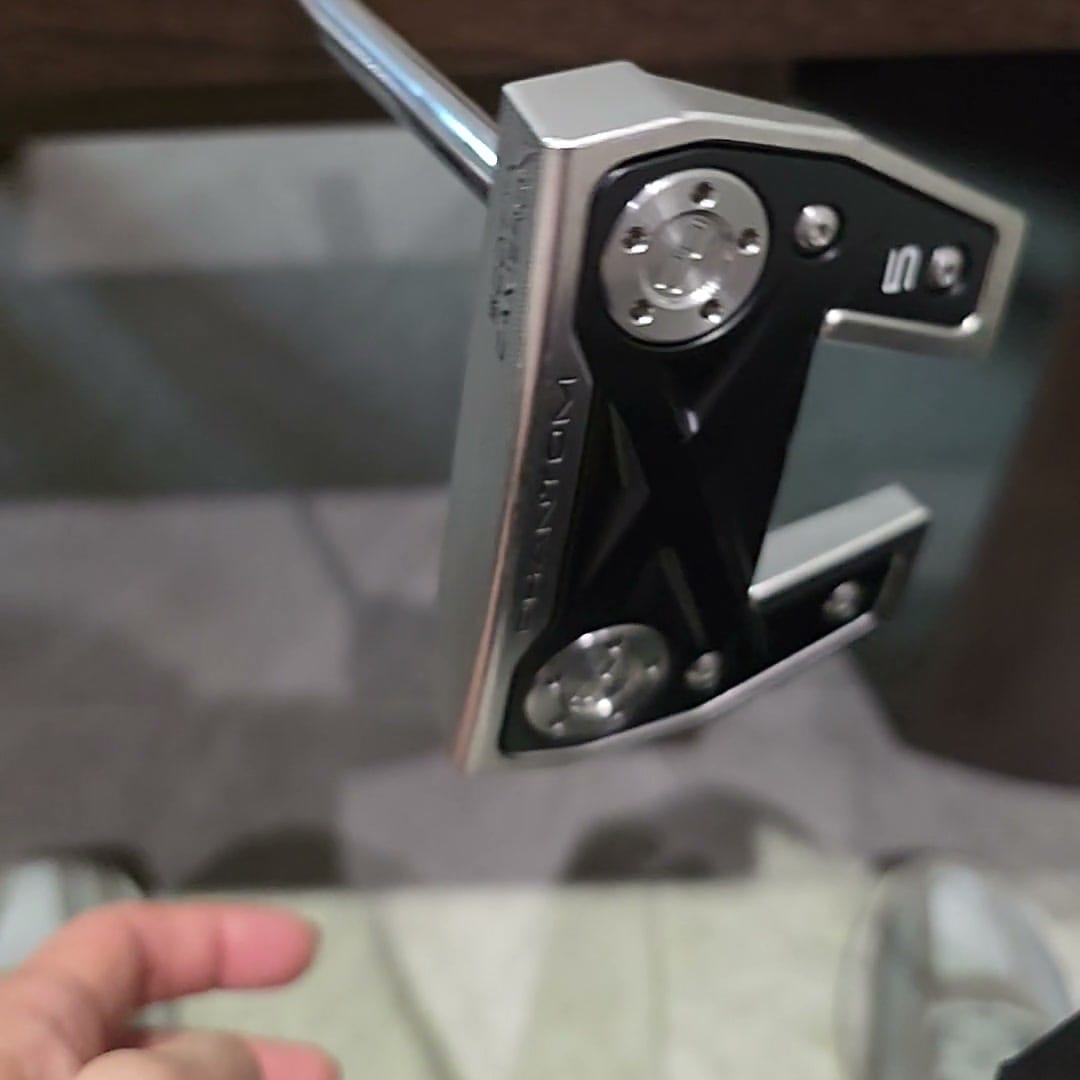
| Near face balanced | Phantom X 5 (2022), mine | “close to face balanced” |
| Low-to-zero torque | Phantom 5 OC (2026) | “low-to-zero torque” |
| Zero torque | L.A.B. | Lie Angle Balance |
Read that column, not the price tag. It is the only part of the label anyone has committed to in writing.
In Korean shops it’s all just “zero putter,” shorthand rather than a spec. The letters on a shaft aren’t standardized either, and the number on an iron isn’t a unit.
My Phantom is “close to face balanced.” Here’s what “close” is doing there.
The two labels get judged in different positions, so one doesn’t give you the other. Face balance uses the shaft flat; zero torque uses the putter at your address angle.
You can sort your own putter in five seconds. Rest the shaft on one finger and let the head go.
- The toe drops toward the floor: toe hang.
- The face points at the ceiling: face balanced.
- The toe points straight up: zero torque.
GolfPass puts the last one plainly: a zero-torque putter “will balance with its toe pointing straight up” (GolfPass, Tim Gavrich, December 1, 2025).
One caveat, from the same article. L.A.B. doesn’t use that shorthand for its own putters, saying they don’t balance in any direction. The originator declines the summary.
Mine lands in the middle. Lay the shaft flat and the face looks up. But at address it leans toward its lie angle, the angle the shaft sits at when soled.
There the head’s center of gravity, the point it balances around, leaves the shaft line. A zero-torque design removes that leftover twist.
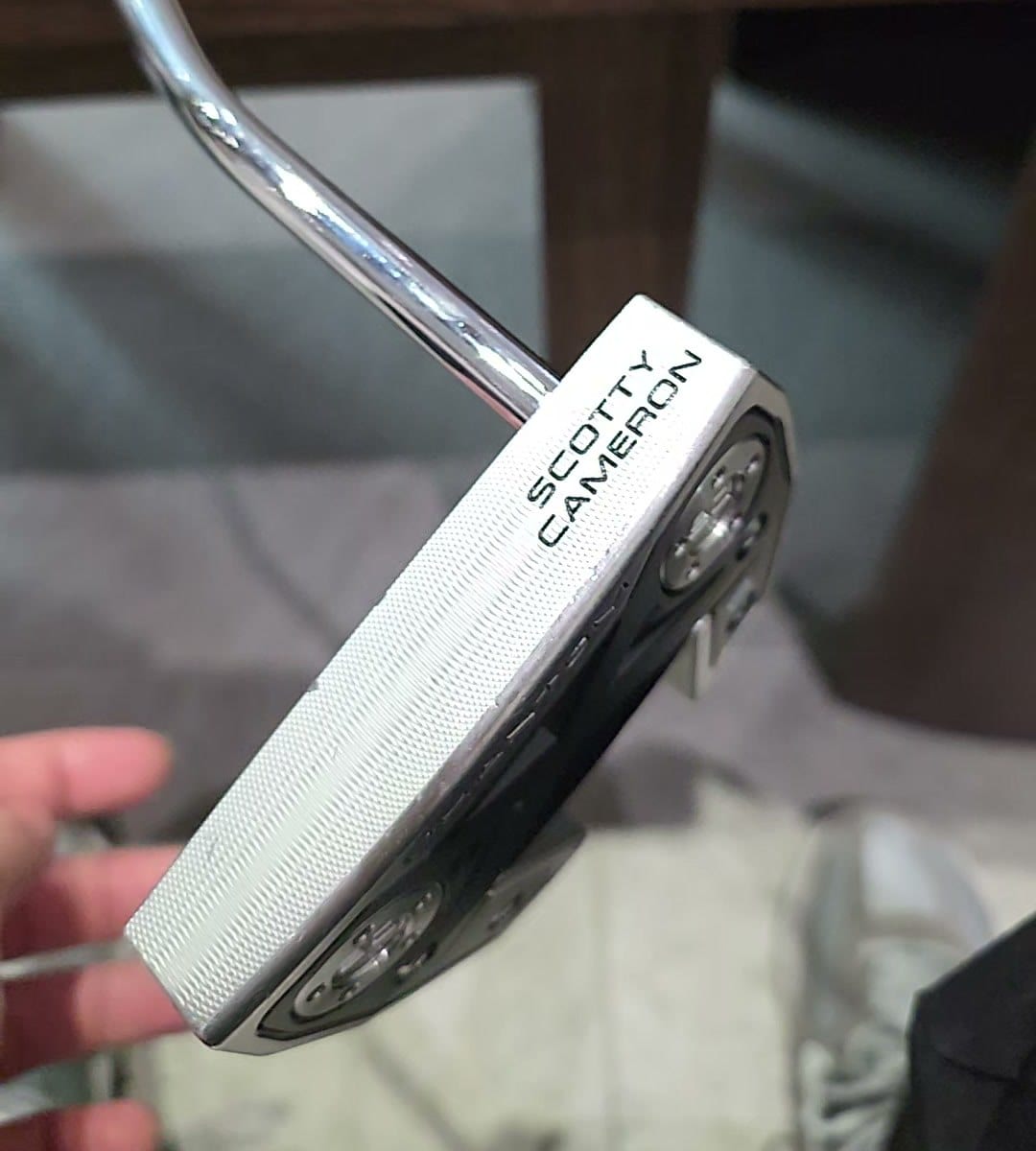
That’s what the qualifier is doing. Titleist Korea calls the Phantom X 5 close to face balanced, not face balanced. Its page for the Phantom X 12 calls that model the closest to face balanced Scotty makes, so the rest are less close.
Those pages block me, so I read the wording through titleist.co.kr’s search index on 2026-09-08.
The X 5 and the X 5.5 share a head, and Plugged In Golf says “the only difference is where the shaft bends.” The bend is higher on the X 5; on the X 5.5 it’s lower, giving about 30 degrees of toe hang (Plugged In Golf).
Plugged In Golf rounds my model to “face balanced,” which is the same rounding the importer’s own page avoids.
Extend the line of the shaft and in a zero-torque putter it runs through that center of gravity, leaving little for gravity to twist. L.A.B. Golf built the category; its version is Lie Angle Balance.
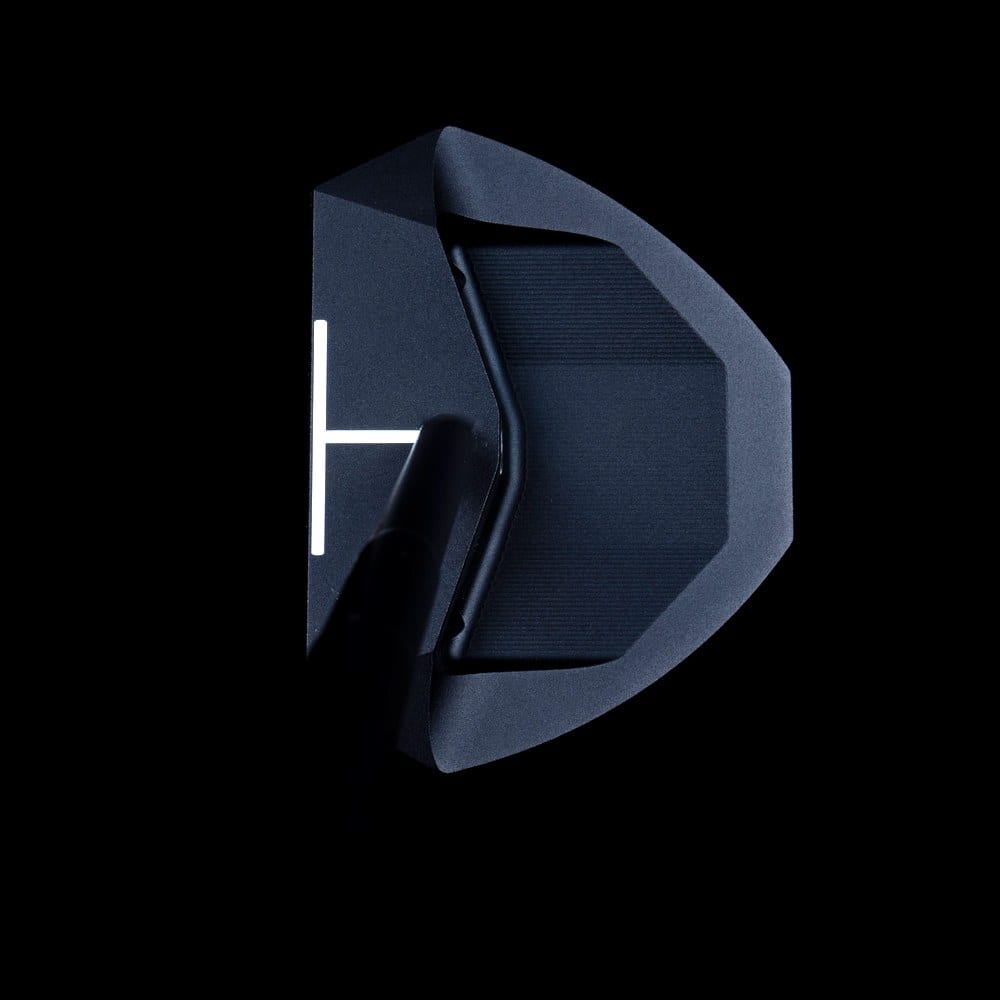
Side by side with my Phantom above, the difference stops being a word.
Who a zero-torque putter actually suits, and what to check first
Here is the part that surprised me, and the reason I’d slow down before buying one off a rack.
A zero-torque putter is balanced for one lie angle. That is how L.A.B. describes its own design, and the name says it: Lie Angle Balance (L.A.B. Golf, retrieved 2026-09-22). The shaft line runs through the head’s center of gravity at one particular angle.
Stand the putter at a different angle than the one it was built around and some of the twist comes back. How much, I can’t tell you. Nobody I found has measured it.
That is L.A.B.’s account of L.A.B.’s own putters. Read it as the mechanism behind the strictest version of the label, not as a rule covering everything shelved next to it. Nobody grades the rest, which is where this article started.
So the fit question is not a nice-to-have on these. It is the product.
That lands on me directly. I putt at 33 inches, shorter than shops stock by default. Someone on Korea’s Naver Knowledge iN went from 33 inches to a borrowed 34-inch DF3 and asked whether to order one. The answer they got: the same number on two putters doesn’t buy you the same balance point (Naver Knowledge iN).
The obvious dodge is to buy used, and the listings are there. The Korean owners’ cafe reads that supply as people who gave up on the switch (Lab Putter user community). Either way, that putter was balanced around somebody else’s lie angle, not yours.
So a zero-torque putter suits you if you’re having it fitted, or if you already know your own lie angle and can order to it. Fitting here means a shop measures how you actually stand to the ball and builds the putter to that. It is not the same as asking for a length. Pick one off a shelf because the category is having a moment and you get the shape without the thing that makes it work.
Four checks, in the shop:
- Read what the maker calls it, on the maker’s own page. “Low-to-zero torque” and “zero torque” are not the same claim.
- Write down the model code, not the family name. One line can hold both.
- Rest the shaft on your finger and see where the face ends up. That tells you which rung you’re actually moving from.
- Ask to be fitted for lie angle, or at least to address a ball with it while somebody watches the sole. If either end of the sole lifts off the mat while you’re set up, that lie angle isn’t yours. Length is the number shops ask for; lie angle is the one this design is built around.
That habit isn’t only for putters: it’s the same move as checking the maker’s published spec when two irons carry the same number.
What I’d tell someone looking this up
“Zero torque” is a good way to narrow a shortlist and a poor way to settle an argument. Shops and magazines stretch it over two rungs of that ladder, plus a putter one of them says isn’t zero torque at all. Only the wording its maker chose tells you which one you’re holding.
So read that wording first. Sort your own putter with a finger second. Then treat lie angle as the deciding spec, not a fitting detail.
I’m still on the Phantom. Knowing which rung it sits on turned out to be worth more to me than moving off it.
Terms in this article
- Torque. The twisting force that opens or closes the face during your stroke.
- Zero torque. A design that takes that force close to zero at your address angle.
- Toe hang. Balance the shaft on a finger and the toe droops. Quoted in degrees.
- Face balanced. Same test, and the face points at the ceiling instead.
- Onset. The head sits forward of the shaft line, not behind it. The O in Scotty’s OC neck.
- Lie angle. The angle the shaft stands at when the sole is flat on the ground. L.A.B. balances its putters around one of these.
- Center of gravity. The single point a body balances around.