Rules & Play
What Is a Mulligan in Golf? A Do-Over the Rules Don't Allow
A mulligan is a free do-over in casual golf. The Rules of Golf charge one stroke instead, and a round with a mulligan generally can't count for handicap.
The short answer
A mulligan is a replayed shot with no penalty, something players agree to in casual golf. The Rules of Golf have no mulligan. Replaying a shot under the rules costs one penalty stroke.
- 1 penalty stroke
- the cost of replaying a shot under the Rules of Golf (stroke and distance) R&A Rules of Golf, Rule 18.1, checked 2026-11-11
- 1931
- the earliest known use of "mulligan" in print Merriam-Webster, "mulligan", Detroit Free Press citation, checked 2026-11-11
- 1952
- the year David Mulligan first claimed he started it Wordorigins.org and Golf Digest, checked 2026-11-11
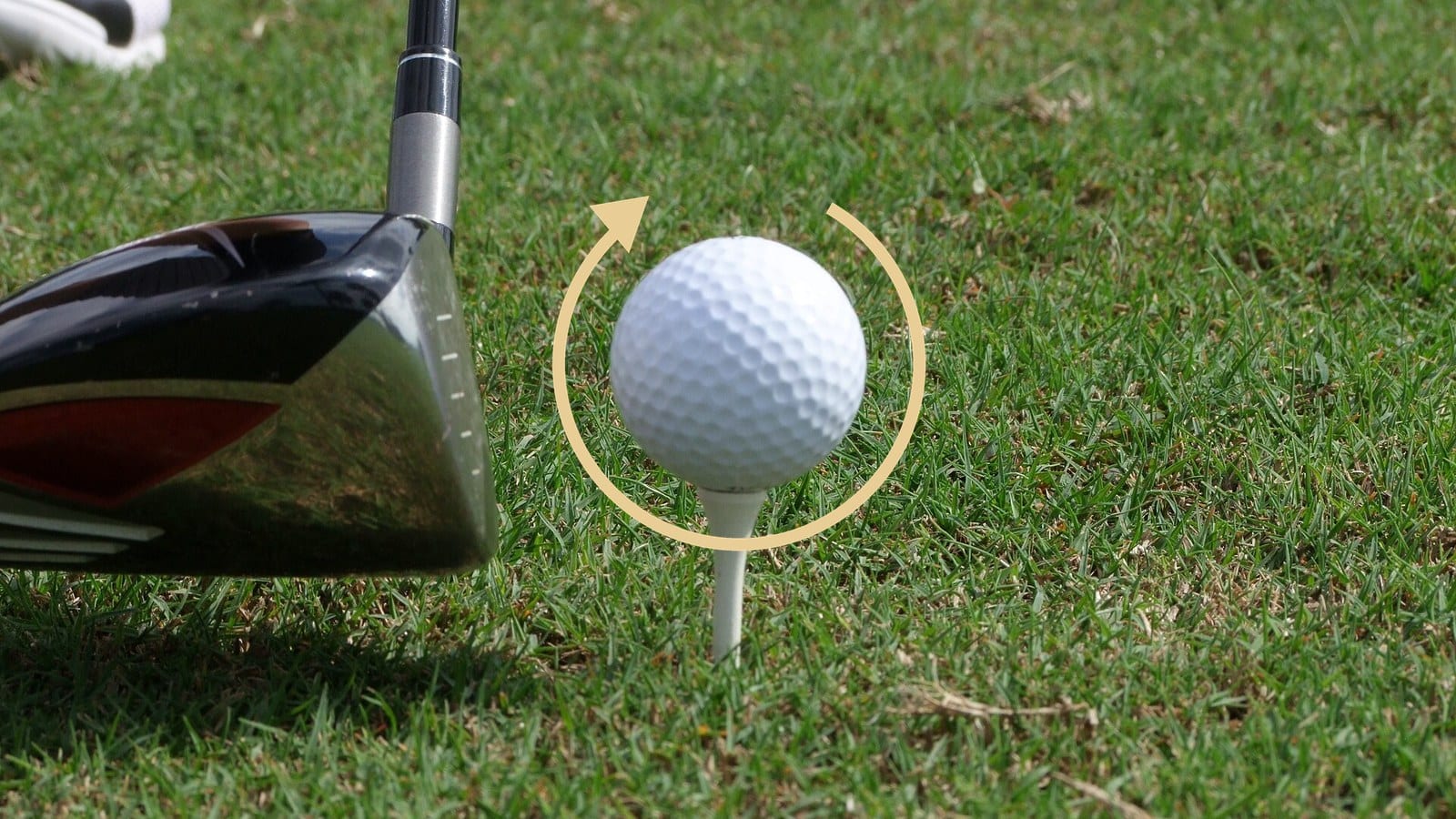
Your first drive of the day sails past the white out-of-bounds stakes. Before you reach for another ball, someone in your group says, “Take a mulligan.”
A mulligan means you hit the shot again, the first one doesn’t count, and nobody adds a penalty. It’s a habit of friendly rounds. It isn’t in the Rules of Golf, which have their own way to replay a shot. That way costs a stroke.
Quick ruling
- What it is: a replayed shot with no penalty stroke, usually off the first tee, agreed by the group in casual golf.
- The rules: the Rules of Golf have no mulligan. Replaying a shot under the rules costs one penalty stroke (Rule 18.1).
- Your handicap: a round with a mulligan in it is generally not acceptable for handicap purposes.
What is a mulligan in golf?
Merriam-Webster defines it as “a free shot sometimes given a golfer in informal play when the previous shot was poorly played” (Merriam-Webster).
“Free” means no penalty stroke goes on the card. “Informal” means the group grants it, not the rules.
It doesn’t have to be the first tee. Golf Monthly notes that a mulligan “can be taken at any time that the players have agreed” (Golf Monthly).
Is a mulligan legal? What the Rules of Golf offer instead
No. The Rules of Golf have no mulligan. The Southern California Golf Association says it plainly: “There is no ‘breakfast ball’ or do-over in the Rules of Golf” (SCGA).
What the rules do have is a paid version of the same idea. Rule 18.1 reads (R&A Rules of Golf, Rule 18):
At any time, a player may take stroke-and-distance relief by adding one penalty stroke and playing the original ball or another ball from where the previous stroke was made.
That relief is called stroke and distance: you add one penalty stroke and play again from where you hit the last shot.
So a mulligan is Rule 18.1 with the penalty stroke erased. You play from the same spot either way. Under the rules, the first swing and the penalty both stay on your card. With a mulligan, neither does. My guide to golf penalty strokes covers the other one-stroke penalties.
The rules also let you keep the first ball alive. Rule 18.3a says that if a ball might be lost outside a penalty area or out of bounds, “to save time the player may play another ball provisionally under penalty of stroke and distance.” That second ball is a provisional ball.
A provisional ball is a backup you play in case the first one turns out to be lost or out of bounds.
You have to say so first. Rule 18.3b says “the player must announce to someone that they are going to play a provisional ball.” Skip that, and the second ball becomes your ball in play under stroke and distance.
| Mulligan | Rules of Golf (stroke and distance) |
|---|---|
| Penalty: none | Penalty: one stroke |
| First ball: thrown out | First ball: given up, unless you announced a provisional and the first ball turns up in play |
| When: only when your group agrees, in casual play | When: “at any time” (Rule 18.1) |
In a competition, agreeing to mulligans can cost far more than a stroke. Rule 1.3b(1) says that if “two or more players agree to ignore any Rule or penalty they know applies” and any of them has started the round, “they are disqualified (even if they have not yet acted on the agreement)” (R&A Rules of Golf, Rule 1). That rule never names mulligans. It covers any knowing agreement like that.
What is a breakfast ball in golf?
A breakfast ball is a mulligan that belongs to the first tee. Golf Monthly’s definition is one line: “A breakfast ball is a Mulligan taken on the 1st tee.”
The idea, as the magazine explains it, is that you’re teeing off so early you “have not had a chance to prepare and warm up properly.” That explains the name. It isn’t a record of who coined it, and I couldn’t find one. One taken “after a hearty lunch is called a lunch ball.”
In practice, people mix the two words. Golf Monthly says breakfast ball is sometimes “used interchangeably with Mulligan.” Merriam-Webster’s usage examples include an October 2026 FOXNews.com piece: “almost all folks take multiple mulligans (breakfast balls).”
Strictly, a breakfast ball is for the first tee, and a mulligan is for whenever your group agrees. Neither one is in the rule book.
Mulligans and your Handicap Index
Generally, a round with a mulligan in it can’t count. The USGA Rules of Handicapping say that outside an organized competition, a score is “not generally acceptable for handicap purposes” if the player “deliberately ignores a Rule of Golf” (USGA Rules of Handicapping, Rule 2.1b).
A mulligan is a deliberate choice to ignore Rule 18.1. The SCGA article above puts it bluntly: once you take one, “your round, as is, is no longer acceptable to post for handicap purposes.”
There is an exception, and it’s the Committee’s call, not yours. The Committee here is the handicap committee at your golf club. Interpretation 2.1b/3 says that “depending on the circumstances, the Committee has the discretion to produce an acceptable score” in one of three ways:
- recording the actual score for the hole
- adjusting the hole score using net double bogey, the hole cap explained in my guide to how a Handicap Index is calculated
- applying a score of net par, which is par plus any handicap strokes you get on that hole
You may still see advice online to simply write net par for the mulligan hole. The current rule doesn’t say that. In it, net par is one of the Committee’s three options, not the player’s call. It has lost ground elsewhere too: the USGA’s 2024 FAQ on unplayed holes says net par was used “prior to January 2024,” and “expected score is the default position” now (USGA).
Mulligans at charity scrambles
At charity golf events, mulligans are often something you buy. A scramble is a team format: everyone hits, and the team plays on from the best shot. The Colorado Golf Association’s advice column, Dear Molly, notes that “it’s also common for nonprofits to sell mulligan packages and string” (Colorado Golf Association).
The string is its own shortcut: “any ball inside that distance to the hole is considered in.” The column says a head golf professional would like to drop both, and notes that neither one appears in the Rules of Golf. It also names the obvious problem: “Buy three mulligans, you may lose count and use five mulligans.”
The column also concedes the larger point: “charity events are not about playing by the rules.” A bought mulligan is a donation with a golf shot attached.
Why is it called a mulligan?
The USGA doesn’t settle it. Its history FAQ opens with “There is considerable debate about this topic, to say the least” (USGA).
Two men named Mulligan get most of the credit:
- David B. Mulligan (1869-1954), a Canadian hotelier and amateur golfer. The stories put him at a club in Saint-Lambert, outside Montreal, in the 1920s, or at Winged Foot in New York. In one USGA version, he re-teed after a long, crooked drive and called it a “correction shot.” The USGA calls this “the story most widely accepted.”
- John A. “Buddy” Mulligan, who worked at Essex Fells Country Club in New Jersey in the 1930s and “was known for replaying shots, particularly on the first tee.” The USGA calls this version “one of the latest” and says it “may therefore be less credible.”
Both stories run into one newspaper item. Merriam-Webster cites the word in the Detroit Free Press on October 13, 1931. A golfer named Byrd hit a drive that “barely missed carrying the creek, and he was given a ‘mulligan’ just for fun.” The writer didn’t explain the word, which suggests readers already knew it.
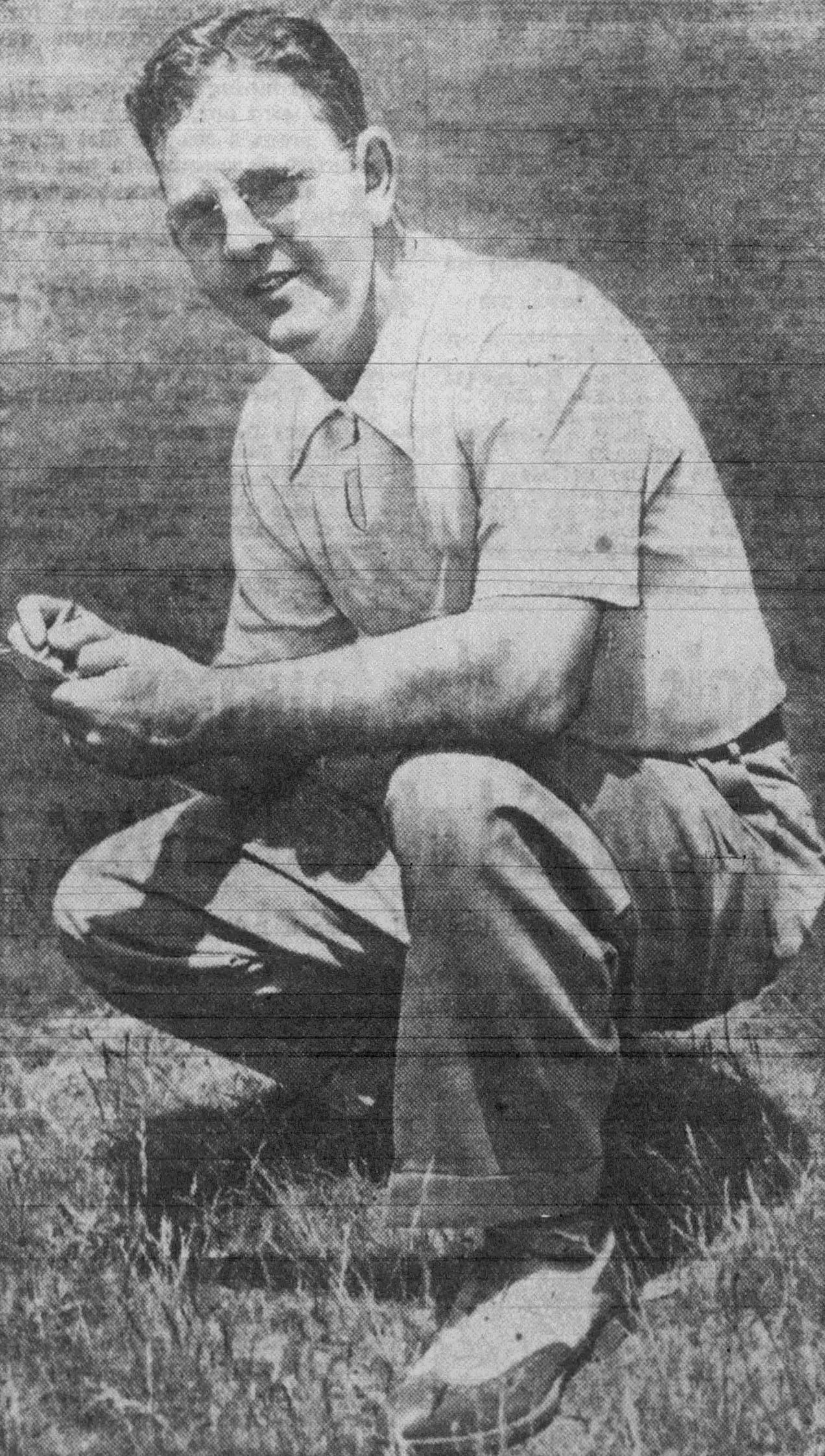 Sammy Byrd, the ballplayer in the 1931 Detroit Free Press item, in a 1942 newspaper photo. This is not a 1931 photo. Photo: Los Angeles Daily News (1942), via Wikimedia Commons, public domain.
Merriam-Webster identifies him as Sammy Byrd, “a major-league baseball player who was also a serious golfer.” It also mentions a baseball theory for the word and says the link “seems tenuous.”
Now set the claims against that date. Wordorigins.org notes that David Mulligan’s own Winged Foot story fails on timing. He “didn’t start playing with this particular foursome until 1932, a year after the term is recorded,” and “didn’t claim to have originated it until 1952” (Wordorigins.org). Golf Digest dates that claim to a 1952 newspaper interview (Golf Digest).
By my arithmetic, David’s 1952 claim came 21 years after the word was in print. Buddy Mulligan “didn’t start making his claim until the 1970s.”
The 1931 item doesn’t rule out a 1920s Montreal story. It does show the word was in a newspaper decades before either man said it was his. So I’d say nobody has proved whose name it is.
If the round is going on your handicap, you’ll want to pass on the mulligan. Take the stroke-and-distance penalty. If the first ball might be lost or out of bounds, announce a provisional before you hit the second one.