
Stock iron shafts: weight is the problem, not the brand
Eleven shaft maker pages publish grams. Only one of the three publishes torque and kick point, and none publishes a CPM. Weight is what you can act on.
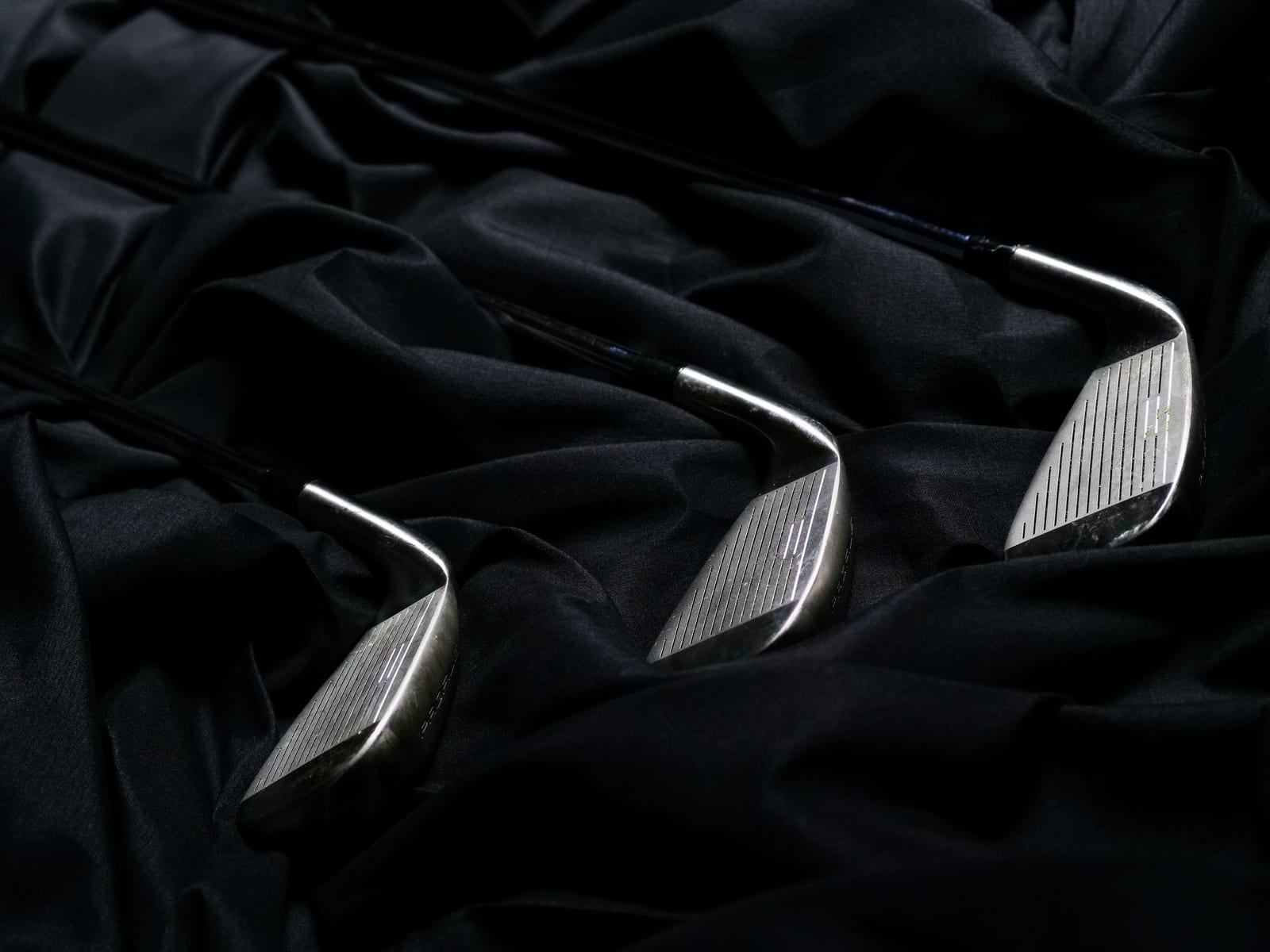
I’ve never reshafted a club. I’ve owned two iron sets, and both times the shaft arrived already decided. The used set came with whatever the previous owner left in it. The new set came with the shaft I picked off an order sheet in about ninety seconds.
My wedges still carry the shaft they shipped with. So there’s a bag in my house holding two different answers to the same question, and neither one was about quality. Both were about weight.
If you got here by searching for your stock shaft’s CPM, I have bad news and then better news. The bad news is that the number doesn’t exist. The better news is that the number you actually need is printed on the shaft.
The short answer
- No shaft maker publishes a CPM. I checked eleven product pages across Nippon Shaft, True Temper and KBS. All eleven list weight in grams. Only Nippon publishes both torque and kick point, and none of the eleven lists a CPM. The full list is under the table below, all retrieved 2026-09-20.
- The “stock shafts are cheap copies” story is about drivers. The named mechanism is premium carbon fiber being left out of a graphite layup (Golf.com, retrieved 2026-09-20). A steel iron shaft is drawn tubing with nothing in it to leave out.
- Plenty of stock iron shafts are the real catalog product. Nippon lists the N.S. Pro 750GH neo on its own site (Nippon Shaft), and Titleist’s launch announcement puts that shaft in the T250 Launch Spec (Titleist Newsroom, both retrieved 2026-09-20).
- Weight is the thing with a measured payoff. Seven golfers hit the same 6-iron head on four genuine Nippon shafts of different weights. Best weight to worst weight was 12.8 yards of total distance on average (Plugged In Golf, retrieved 2026-09-20).
- The cheap experiment comes before the expensive one. A launch monitor session tells you whether weight is your problem. One US clubmaking supplier charges 19.95 dollars per club in labor to reshaft, before you’ve bought a single shaft (The GolfWorks, retrieved 2026-09-20).
In this article:
- What’s in your irons, and how to look it up
- The spec sheet publishes grams. It doesn’t publish CPM.
- The stock shaft warning is a driver story
- Weight is the part that measurably changes your numbers
- Who should swap, and who shouldn’t
- Frequently asked questions
- Terms in this article
What’s in your irons, and how to look it up
Pick up a 7-iron and look at the band near the tip. That printed ring is the shaft band, and it’s the only record of what’s actually in that club. On a used set it’s often the only honest one. A spec sheet describes the club that left the factory, not the club you bought.
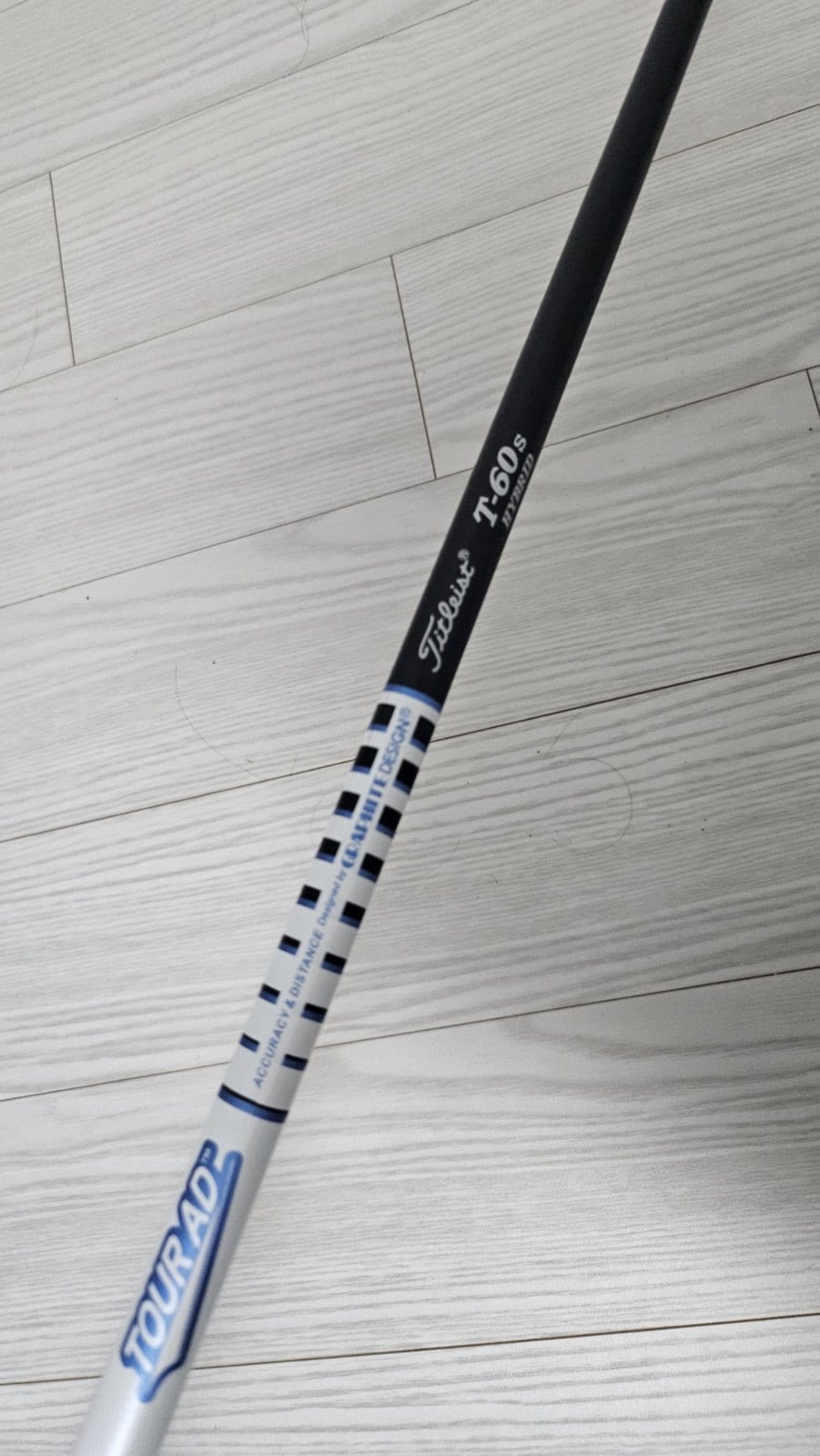
Photo: what a band looks like, and why the name on one isn’t always the shaft maker’s name. This is a Titleist model name, T-60 S, on a shaft the band says Graphite Design built. I couldn’t find T-60 on Graphite Design’s own site. It’s a hybrid rather than an iron, and that distinction matters two sections down.
Once you’ve read the name, one search sorts your shaft into one of three groups. The answer to “should I change it” is different for each.
It’s in the shaft maker’s catalog. Nippon lists the N.S. Pro 750GH neo at 74.5 g in R, with 2.4 degrees of torque (Nippon Shaft, retrieved 2026-09-20). Torque is how far the shaft twists along its length under load, and a lower number resists that twist more.
Titleist’s own launch announcement puts that shaft in the T250 Launch Spec (Titleist Newsroom, retrieved 2026-09-20). If your band matches a catalog page like that, you own the real product, and the “downgraded version” worry doesn’t apply to you.
It’s the club maker’s own model. PING publishes AWT 2.0 in the i230 at 98.0 g in R and AWT 3.0 in the G440 at 96.0 g (PING i230, PING G440, both retrieved 2026-09-20). There’s no aftermarket AWT to compare against, so “downgraded version of the real one” has nothing to point at.
The band at the top of this article lands in this group too. It’s a club maker’s model name with no aftermarket entry to check it against.
You can’t tell. Titleist ships shafts it calls AMT Tour White, Tour Silver and Tour Red (Titleist Newsroom, retrieved 2026-09-20). True Temper sells AMT White, Silver and Red (True Temper, retrieved 2026-09-20). Whether those are the same product, I couldn’t confirm from either company, and I’d rather say so than guess.
Expect gaps like that. Mizuno’s own JPX925 Hot Metal page lists every shaft as an option and designates none as stock (Mizuno, retrieved 2026-09-20). So “what came in it” isn’t always a fact the maker publishes at all.
The spec sheet publishes grams. It doesn’t publish CPM.
CPM stands for cycles per minute. Clamp one end of a club, pluck the other, and count how fast it vibrates. Higher means stiffer.
Fitters lean on it because flex letters aren’t standardized. The R-to-S step is where we put the figure they use, about 12 CPM per flex.
So people go looking for their own shaft’s CPM. It isn’t there. Here’s what eleven manufacturer pages publish, checked on 2026-09-20.
| What | Nippon Shaft | True Temper | KBS |
|---|---|---|---|
| Weight in grams | yes | yes | yes |
| Torque in degrees | yes | the word “Low” | not published |
| Kick point, where the shaft bends most | yes | not published | not published |
| Launch profile | not published | prose only | not published |
| CPM | no | no | no |
All eleven, retrieved 2026-09-20.
- Nippon Shaft: 950GH, 950GH neo, 750GH neo
- True Temper: AMT White, AMT Silver, AMT Red, AMT Black, Dynamic Gold 105, Dynamic Gold Tour Issue, Vector
- KBS: Tour
The reason isn’t secrecy. A CPM belongs to an assembled club, not to a shaft.
You can see that in the one place published CPM numbers do exist. The GolfWorks built its frequency charts from more than 1,100 shafts across 27 manufacturers. To mean anything, those charts state their build conditions: heads installed, cut to length, trimmed per instructions, tested with no grip (The GolfWorks, iron chart, both retrieved 2026-09-20).
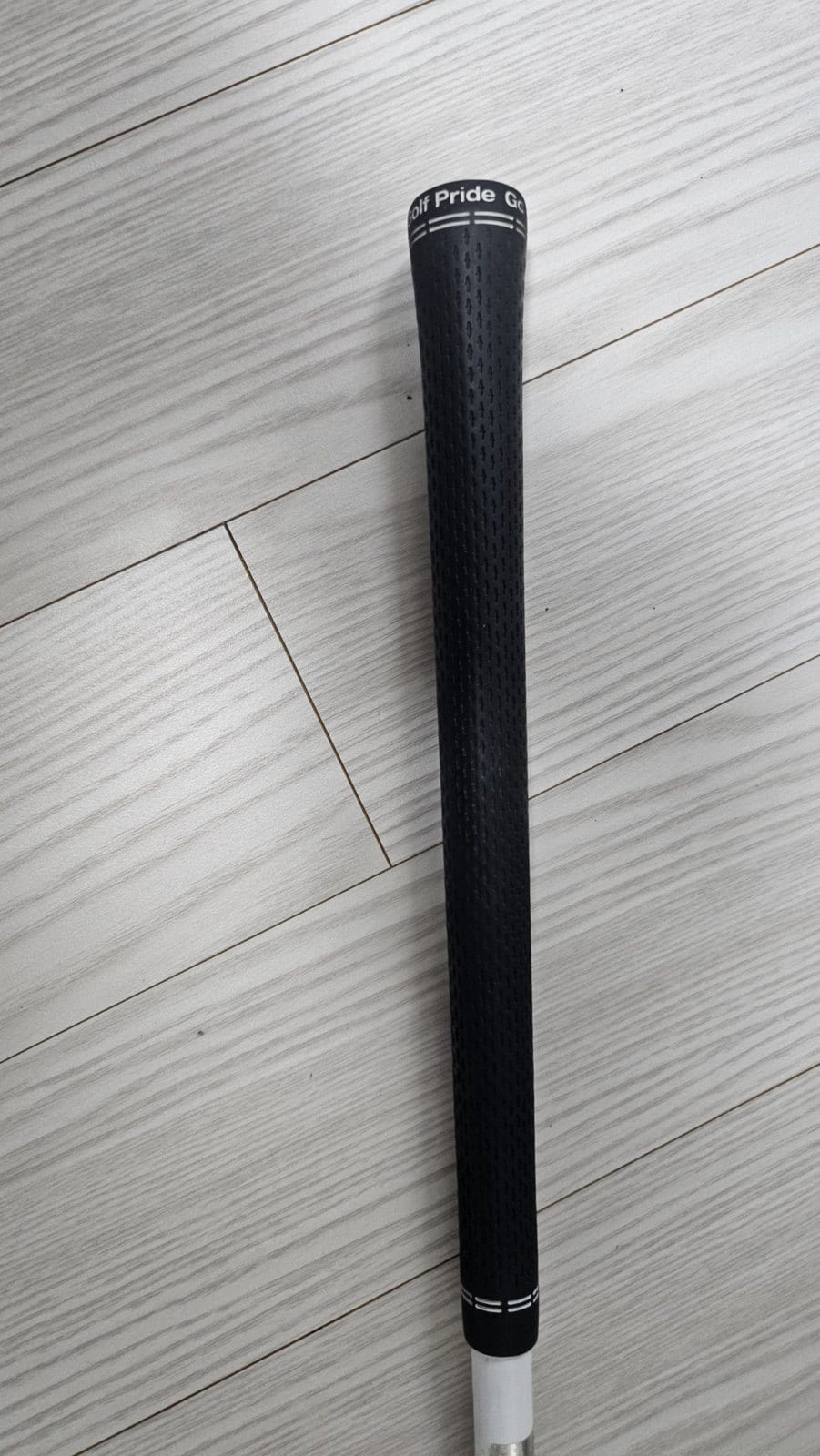
Photo: the grip on one of my clubs. A grip damps the shaft, so a frequency reading taken with one installed comes out lower than the same club measured bare (Ralph Maltby, retrieved 2026-09-20). That’s why the charts above specify no grip.
Britt Lindsey at Maltby puts the limit plainly. Two shafts that read the same frequency don’t necessarily play or feel the same. Frequency is one number, and a shaft isn’t equally stiff along its whole length. The map of where it’s stiff is its bend profile, and one reading can’t describe it (Ralph Maltby, retrieved 2026-09-20).
A fitter quoted by Golf.com says it better: CPM puts you in the right area of the stadium, not the right seat (Golf.com, retrieved 2026-09-20). A fitter can measure yours in a few minutes. You just can’t look it up, and a number off a forum came from somebody else’s build.
The stock shaft warning is a driver story
I went through the driver half of this warning in the flex chart guide. Here’s the part that doesn’t carry over.
Plugged In Golf put five golfers on Trackman with two stock shafts and their aftermarket counterparts. The aftermarket shaft won ball speed in nine of ten trials, by 2.66 mph on average, and carried 9.63 yards further (Plugged In Golf, retrieved 2026-09-20). Every one of those shafts was a 60 g stiff graphite driver shaft. The band photographed at the top of this article is graphite too, which is why it sits on this side of the line.
The explanation matters more than the result. John Oldenburg, chief product officer at LA Golf, told Golf.com that the expensive part of a shaft is controlling torque. So that’s the first thing to go when a company designs a shaft to ship installed in a retail club.
A made-for shaft is built to a club maker’s order but wears the aftermarket brand’s graphics. He puts those one to two degrees higher in torque. What gets left out, he says, is premium carbon fiber and materials like Boron and Zylon (Golf.com, retrieved 2026-09-20).
That’s a carbon fiber story from start to finish. A graphite shaft is sheets of fiber rolled and cured, so there are always cheaper sheets to reach for. A steel iron shaft is a drawn tube.
Nobody has published a test of whether an equivalent shortcut even exists for steel. I went looking for a teardown or a spec comparison against an aftermarket namesake, and came back with nothing.
What is documented for steel runs on a different axis. Standard Dynamic Gold gets sorted into S200, S300 and S400, sub-grades inside one flex letter, because production weight varies from shaft to shaft (True Temper, retrieved 2026-09-20).
Golf.com puts standard Dynamic Gold at plus or minus 2 g per shaft, against plus or minus 0.5 g for the Tour Issue version (Golf.com, retrieved 2026-09-20). That figure is Golf.com’s. True Temper’s own page claims the industry’s tightest weight tolerance without putting a number on it (True Temper, retrieved 2026-09-20). Either way that tier sits in the public catalog, which makes it the opposite of a secret.
Weight is the part that measurably changes your numbers
Here’s the test that reframed this whole question for me. Plugged In Golf put seven players, plus-handicap to mid-teens, on Trackman with the same 6-iron head. The only thing that changed was the shaft: Nippon N.S. Pro 850GH, 950GH, 1050GH and 1150GH, running 85 to 115 g.
Between each player’s best weight and their worst, total distance moved 12.8 yards on average, and one tester found 21. Accuracy is a separate measurement, and it moved too: players finished 4 to 26 yards nearer the target line on their best weight.
For some of them, distance dispersion collapsed from 20 or 30 yards to under 10. No single weight worked best for everyone (Plugged In Golf, retrieved 2026-09-20).
All four shafts were genuine Nippon catalog products. Nobody escaped a made-for shaft. The 12.8 yards came from landing on the right weight.
Which brings up something most people miss about their own set.
The three bars are ascending mass sets: the shorter the iron, the heavier its shaft. True Temper’s AMT White table steps R300 from 109 g at 40 inches up to 127 g at 37 inches, three grams at a time (True Temper, retrieved 2026-09-20). PING publishes one figure per flex instead, 96.0 g for AWT 3.0 in R (PING, retrieved 2026-09-20).
So a single published gram figure doesn’t tell you what your own 4-iron weighs. Either way, “my shaft is 95 g” is often wrong about your own set.
Where the two sides disagree
I’ve just told you to judge your shaft by its published weight, so here’s the argument against doing that.
Tom Wishon, who designs shafts, holds that five published elements fully describe one. They are overall stiffness, bend profile, weight, torque, and balance point, meaning how far up the shaft its center of mass sits. Match those five and two shafts play the same for the same golfer, whatever they cost. He reports comparing a 300 dollar shaft against a 20 dollar one on all five and finding the differences insignificant (Wishon Golf, retrieved 2026-09-20).
Plugged In Golf tested that directly. They took three iron shafts matched on published weight, flex, torque and bend profile, and put five golfers on Trackman. Between best and worst of those supposedly identical shafts: 5.4 yards of carry, 7.5 yards of total, and 18 yards of left-to-right dispersion (Plugged In Golf, retrieved 2026-09-20).
Before you spend money on the strength of those yards, look at what you’d be trusting. That’s five shots per player, measured at Club Champion, a fitting retailer that sells shaft upgrades. Wishon sells his own shafts and published no head-to-head data at all.
What they agree on is the useful part. Price doesn’t predict fit.
If I had to pick, I’d go with the spec sheet and stop there. Not because Wishon is right. It’s because weight is the one variable you can read off a band, check on a maker’s site, and feel inside one range session. The residue the matched-spec test found is real, and it’s also the part you’d need a fitter to chase.
Who should swap, and who shouldn’t
Leave it alone if your band matches a catalog page and nothing in your ball flight bothers you. The most repeated reason to reshaft is escaping a made-for shaft, and that reason doesn’t apply to you at all. A shaft being free doesn’t make it bad. Plugged In Golf’s review of the 950GH neo notes Mizuno offers it at no upcharge, and TaylorMade gave it away on the 2019 P790 (Plugged In Golf, retrieved 2026-09-20).
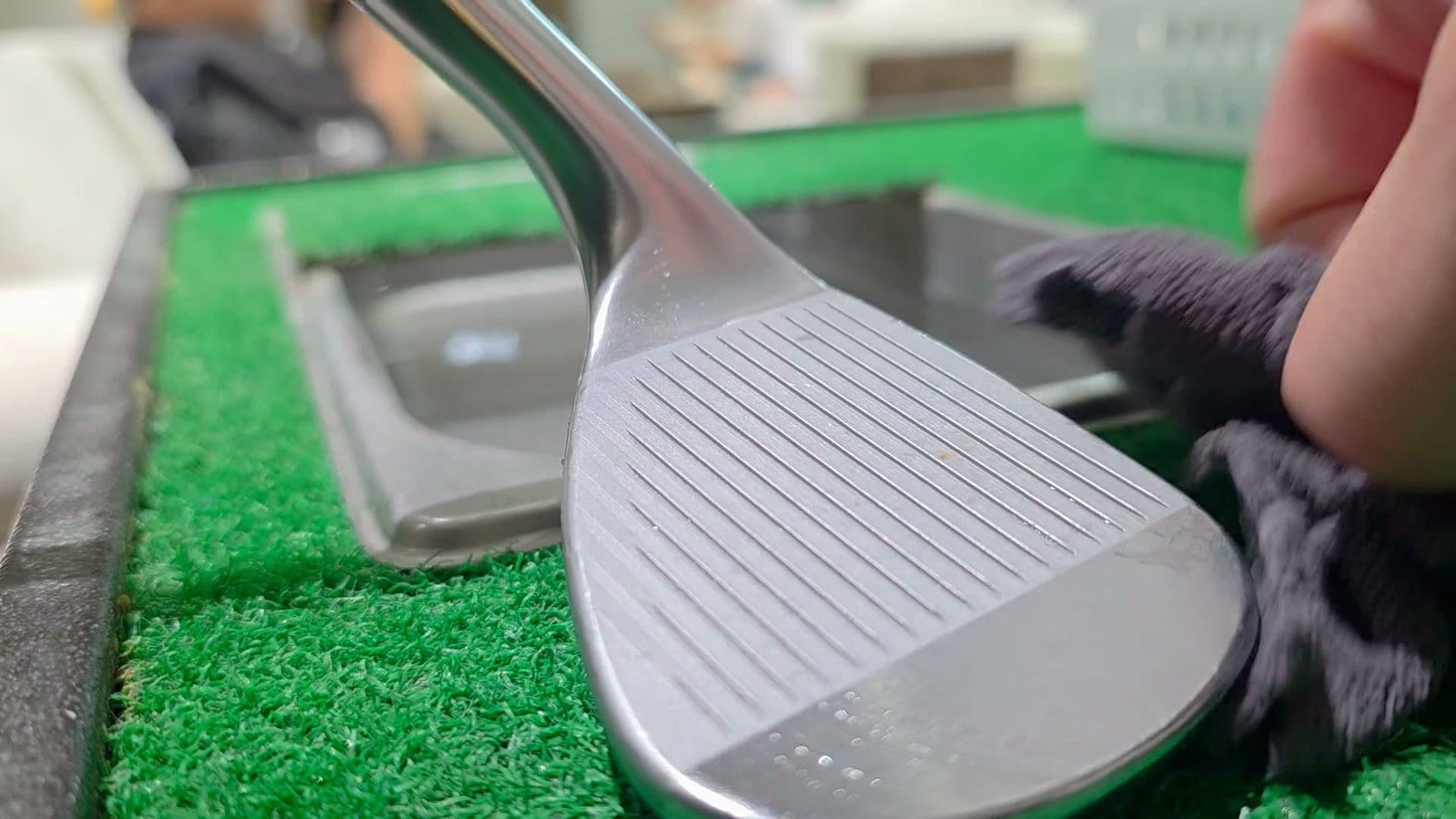
Photo: one of my wedges on the mat. What’s in frame is the ferrule, the black collar where the shaft enters the hosel, and you can’t read the shaft itself from here. I know it’s the stock one because I never had it changed. The irons in the same bag are on a different shaft, and that’s because I bought a different set rather than reshafting.
Look harder if your ball flight already bothers you. Fitters publish symptom lists for shafts that are too light and too heavy. They’re the same ones I worked through on the driver side, and they transfer.
Too light: erratic dispersion and a hook you can’t stop. Too heavy: late-round distance loss and shots pushed right.
Those are shop convention rather than measurement, so I’m not putting numbers on them. Dan Sueltz at True Fit Clubs adds a caveat worth keeping. Past a certain point, your swing path exaggerates directional misses no matter what shaft you’re holding (True Fit Clubs, retrieved 2026-09-20).
Do the cheap experiment first. Hitting two weights on a launch monitor costs one session, and the band tells you where to start. Ask for one step either side of the number printed on it. The weight test above moved in roughly 10-gram steps, which is about what one weight class is worth.
Here’s what the other order costs.
| Labor per club | A 7-club set | |
|---|---|---|
| United States | 19.95 dollars to pull and install, 4.50 more to regrip | 171.15 dollars, before the shafts and grips themselves |
| Korea | 20,000 to 50,000 won, clustering at 30,000 to 40,000 | 210,000 to 280,000 won at that cluster, before shafts and grips |
The US figures are The GolfWorks’ published service rates (The GolfWorks, retrieved 2026-09-20). Your Korean quote won’t come off a price list. I couldn’t find a Korean shop that publishes one, so those numbers are what golfers said they were quoted on forums (Dealbada, December 2024; Clien, October 2019; both retrieved 2026-09-20). None of them said how many clubs, so your bill moves with your set size and the right-hand column is my arithmetic, not theirs.
Grips aren’t included in that labor anywhere I looked, and The GolfWorks recommends a new one unless yours is nearly new (The GolfWorks, retrieved 2026-09-20).
One consideration only shows up in Korean threads, and I think it travels. The conclusion there keeps landing in the same place: a full steel reshaft costs roughly what a used set costs, so sell and rebuy instead. One commenter adds that a reshafted set is harder to move secondhand in Korea because it falls outside the manufacturer’s service (Dealbada, March 2025, retrieved 2026-09-20). That’s forum talk rather than a measurement, and it’s the sort of thing nobody mentions until after you’ve paid.
Frequently asked questions
Can I find my stock shaft’s CPM anywhere?
No. None of the eleven manufacturer pages I checked publishes one, because CPM describes a built club rather than a shaft.
Length, head weight and the grip all move it. So does tip trimming, which is cutting length off the head end before the shaft goes in. A fitter with a frequency analyzer can measure yours.
The club maker and the shaft maker list different weights for the same shaft. Why?
Shaft makers publish raw, uncut weight. Club makers publish the weight as built.
PING lists KBS Tour in R at 104 g (PING) while KBS lists the same shaft from 110 g (KBS, both retrieved 2026-09-20). Neither is wrong. They’re measuring different objects.
Should my driver and iron shafts be a set number of grams apart?
I looked and couldn’t find a published target from any manufacturer or testing outlet. What does get published is total assembled club weight, and swingweight, which measures how head-heavy a club feels rather than what it weighs (Golf.com, retrieved 2026-09-20). Neither one is a shaft weight.
Anyone quoting an exact gram gap is quoting a rule of thumb. Our 50 g vs 60 g driver shaft piece covers what that weight does at the driver end.
I’m buying a used set with a non-stock shaft in it. Is that bad?
It isn’t bad, but the manufacturer’s published spec no longer describes that club. The band is your only record, and it won’t tell you what length the shaft was trimmed to. Price the head and the shaft as two separate decisions.
Terms in this article
- Stock shaft: the shaft a club ships with at no upcharge, as opposed to one you pay to have fitted.
- Made-for: a shaft built to a club maker’s order that carries aftermarket branding but a different construction. Well documented in graphite driver shafts, untested in steel iron shafts.
- Shaft band: the printed ring near the tip of the shaft, carrying the model name and usually the flex letter and weight.
- CPM: cycles per minute. A stiffness reading taken on an assembled club by clamping one end and counting the oscillations. Higher is stiffer.
- Torque: how far the shaft twists along its length under load, in degrees. Lower resists twisting more.
- Kick point: the point along the shaft where it bends most. Covered in full in the shaft flex chart.
- Bend profile: the map of how stiffness is distributed along the whole shaft. A single CPM reading can’t describe it.
- Balance point: how far up from the tip the shaft’s own center of mass sits.
- Swingweight: a measure of how head-heavy an assembled club feels, on a letter-and-number scale rather than in grams.
- Ascending mass: a set built so each shorter iron gets a slightly heavier shaft.
- Tip trimming: cutting length off the head end of a shaft before it’s installed, which stiffens it.
- Reshaft: pulling the shaft out of a head and installing a different one. Charged per club, and usually paired with a new grip.