Woods & Hybrids
TaylorMade Hybrid Adjustment Chart: Max Rescues Don't Adjust
Only the standard Qi4D and Qi35 Rescue have a loft sleeve; Max and Max Lite are bonded. TaylorMade's Qi10-era Rescue chart: 12 settings, 11 more upright.
The short answer
Only the standard Qi4D and Qi35 Rescue have a loft sleeve. The Max and Max Lite versions are bonded. TaylorMade's published Rescue chart (Qi10-era, the latest it prints) shows 12 settings within 1.5° of loft either way, and 11 of them make the lie more upright.
- Yes / No / No
- loft sleeve on Qi4D Rescue, Max Rescue and Max Lite Rescue TaylorMade Qi4D Rescue product pages
- ±1.5°
- loft range on TaylorMade's Qi10-era Rescue sleeve chart, 0.5° per click TaylorMade Loft Sleeve manual (Qi10-era Rescue chart), 2024-07-15
- 11 of 12
- settings on the Qi10-era Rescue chart that make the lie more upright; none make it flatter TaylorMade Loft Sleeve manual (Qi10-era Rescue chart), 2024-07-15
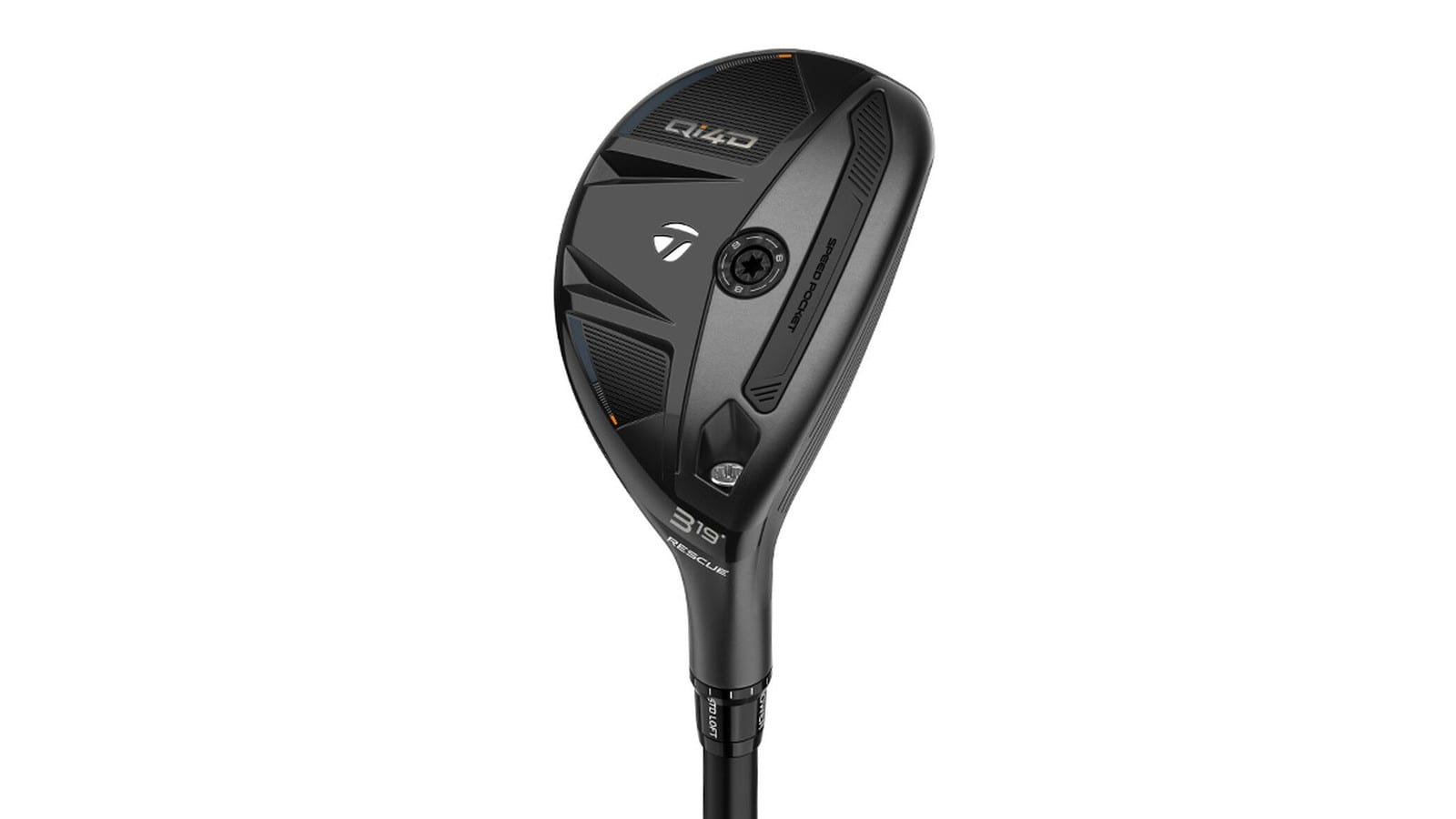
Before you look for a TaylorMade hybrid chart, check your hosel. If your club says Max, there’s probably nothing to turn. In the last two generations, Qi4D and Qi35, only the plain Rescue model has a loft sleeve. TaylorMade calls its hybrids Rescue clubs, so that’s the name on the sole and in the model names below.
Before you reach for the wrench
- Qi4D and Qi35: the standard Rescue has a sleeve. Max and Max Lite are bonded, so they don’t adjust.
- Range: TaylorMade’s published Rescue chart (Qi10-era, the latest it prints) shows 12 settings, up to 1.5° more or less loft, in 0.5° clicks.
- Lie: on that chart, 11 of the 12 settings make the lie more upright. None make it flatter.
- Loft only: the setting closer to STD LOFT (6 o’clock) adds the least lie.
Sources: TaylorMade Qi4D Rescue and Qi35 launch release; TaylorMade Loft Sleeve manual, updated 2024-07-15.
A loft sleeve is the part on the tip of the shaft that slides into the head. Turn it with the wrench and the head sits at a different angle. The hosel is the neck of the head where the shaft goes in.
“Every TaylorMade hybrid has a loft sleeve”
Not the Max ones. On each Qi4D Rescue page, TaylorMade’s comparison table lists “Loft Sleeve: Yes” for the standard Rescue. It lists “No” for both the Max Rescue and the Max Lite Rescue (TaylorMade, Qi4D Max Rescue page, read 2026-11-09). The Qi4D launch release says every loft of the standard model comes with a “3° loft sleeve” (TaylorMade, 2026-01-08).
Qi35 split the same way. TaylorMade wrote that the Qi35 Rescue “features 3° loft sleeves.” The Qi35 Max Rescue “is bonded,” and the Max Lite is “bonded and significantly lighter” (TaylorMade, 2025-01-07). Bonded means the shaft is glued straight into the head, with no sleeve.
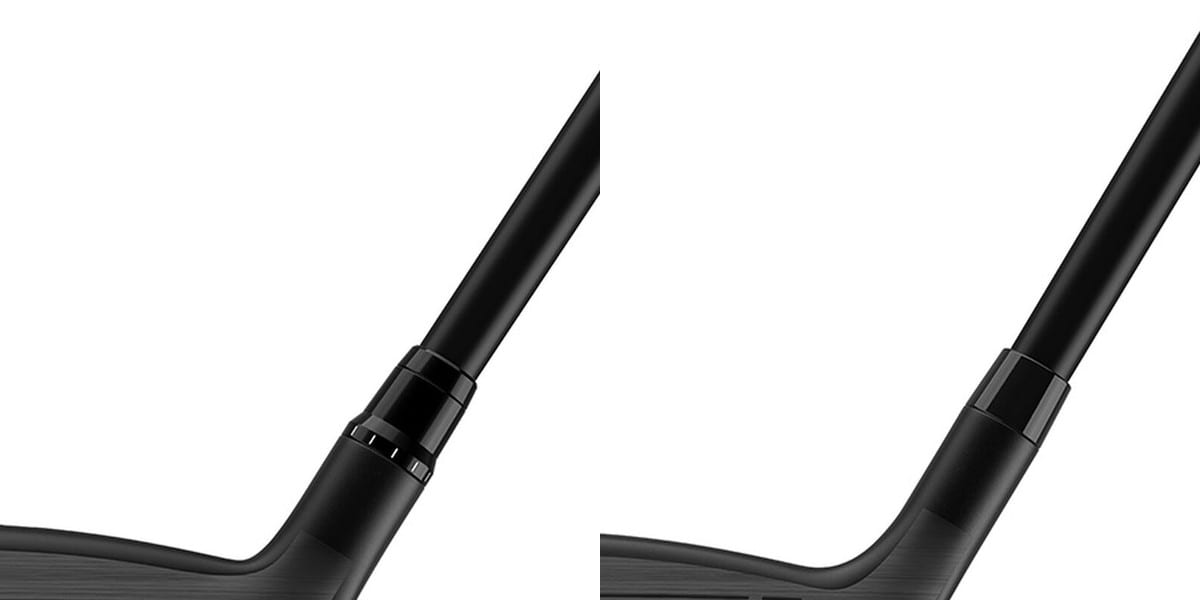
Before Qi35, the adjustable Rescue had a different name. Here’s what I could confirm, generation by generation.
| Generation | Has a sleeve | No sleeve | Source |
|---|---|---|---|
| Qi4D (2026) | Qi4D Rescue | Qi4D Max, Qi4D Max Lite | TaylorMade product pages |
| Qi35 (2025) | Qi35 Rescue | Qi35 Max, Qi35 Max Lite | TaylorMade launch release |
| Qi10 (2024) | Qi10 Tour Rescue | Qi10, Qi10 Max | Golf press, not TaylorMade |
| Stealth 2 (2023) | Stealth 2 Plus Rescue | Not stated | GOLF.com only |
For Qi10, Golf Digest listed the Qi10 and Qi10 Max “with fixed hosel” and the Qi10 Tour “with adjustable hosel” (Golf Digest, 2024-01-09). Plugged In Golf wrote that “The Tour model is the only Rescue with an adjustable hosel” (Plugged In Golf, 2024-04-08). I couldn’t open TaylorMade’s own Qi10 launch release, so that row rests on the press. For Stealth 2, GOLF.com named “hosel adjustability” as what sets the Plus apart (GOLF.com, 2023-01-10). I didn’t find a source I trust for older Rescues, so they’re not in the table.
The Max name doesn’t mean the same thing on a driver. TaylorMade’s Qi4D Max driver page says “A 4° loft sleeve adds another level of adjustability” (TaylorMade, Qi4D Max Driver). So a Qi4D Max driver turns and a Qi4D Max Rescue doesn’t.
If the model name is worn off, the spec sheet gives a hint. The Qi4D Rescue lists lie as a range, such as 56.5°-60.5° for the 3-hybrid. The Qi4D Max Rescue lists one number, 59°, for its 3-hybrid. That’s my reading of the two tables side by side. TaylorMade doesn’t say a range means a sleeve.
One buying note follows from the lofts. Qi4D Rescue comes as a 2, 3, 4 and 5. If you want a 6 or 7 hybrid (30° or 34°, right-handed only) in Qi4D, only the bonded Max and Max Lite offer them (TaylorMade, Qi4D Max Lite Rescue page).
“Changing loft leaves the lie alone”: the Rescue loft sleeve chart
It almost never does. TaylorMade’s Rescue loft sleeve chart, in its Loft Sleeve manual, shows 12 positions on a clock. Each click moves loft 0.5° and lie 0.5° (TaylorMade Loft Sleeve manual, updated 2024-07-15).
Loft is how far the face tilts back from vertical. It mostly sets how high the ball flies. Lie angle is the angle between the shaft and the ground when the sole sits flat. Upright means a bigger lie angle, with the shaft standing taller. Flat is the opposite.
| Clock | Label on the sleeve | Loft | Lie |
|---|---|---|---|
| 12 | UPRT | Stated loft | 3° upright |
| 1 | +0.5° | 2.5° upright | |
| 2 | +1° | 2° upright | |
| 3 | HIGHER | +1.5° | 1.5° upright |
| 4 | +1° | 1° upright | |
| 5 | +0.5° | 0.5° upright | |
| 6 | STD LOFT | Stated loft | Standard |
| 7 | -0.5° | 0.5° upright | |
| 8 | -1° | 1° upright | |
| 9 | LOWER | -1.5° | 1.5° upright |
| 10 | -1° | 2° upright | |
| 11 | -0.5° | 2.5° upright |
Values read position by position from the Rescue page of TaylorMade’s Loft Sleeve manual, retrieved 2026-11-09.
By my count, only STD LOFT leaves lie at standard. The other 11 positions all go upright, by 0.5° to 3°. No position makes the lie flatter. Titleist’s hybrid grid at least has one flat column, as my Titleist hybrid adjustment chart shows. Callaway’s version is in my Callaway hybrid adjustment chart.
Most loft changes show up at two positions, and they don’t add the same lie.
So if you only want loft, the position nearer 6 o’clock is the better pick. Adding 0.5° at 5 o’clock costs 0.5° of upright lie. The same 0.5° at 1 o’clock costs 2.5°.
The lie change matters because TaylorMade says an upright setting “will affect your start line” and helps a right-handed golfer move it “farther to the left.” The same article says a higher loft setting sits the face “slightly closed” at address (TaylorMade, 2026-03-07). Start line is the direction the ball first leaves the face. Address is the moment you set the club behind the ball before swinging. That article covers drivers, fairways and hybrids together, and its numbers are for the 4° sleeve. So I’m only borrowing the direction here, not any numbers.
“It’s the driver sleeve, only smaller”
Half right. The labels are the same: UPRT, HIGHER, STD LOFT and LOWER sit at the same four spots on the same 12-position clock. The range, the stamp on the sleeve and what the chart prints all differ. Here are the two charts from the same manual side by side.
| TaylorMade Loft Sleeve manual | Driver and fairway | Rescue |
|---|---|---|
| Name in the manual | 4° Loft Sleeve | 1.5° Loft Sleeve |
| Loft range | ±2° | ±1.5° |
| Most upright setting | 4° upright | 3° upright |
| Loft per click | 0.5-0.75° | 0.5° |
| Face angle per click | 1.0-2.0° | 0.25-1° |
| Lie per click | 0.5-0.75° | 0.5° |
| Stamp on the sleeve | .335 | .370 |
| Each position lists | Face, loft, lie, rpm | Loft and lie only |
Source: TaylorMade Loft Sleeve manual, updated 2024-07-15.
Face angle is where the clubface points at address, open (right of target for a right-hander) or closed (left). The Rescue chart gives one face range per click and no number per position, so I won’t make one up.
The .370 on the Rescue sleeve matches the tip size TaylorMade lists for its Qi4D hybrid shafts, “.370” (TaylorMade, Qi4D Rescue page). Every driver position, with face angle and spin, is in my TaylorMade loft sleeve post.
“A 3° sleeve moves loft 3 degrees each way”
It doesn’t. The 3° is the whole span. TaylorMade’s product pages call the part a “3° loft sleeve,” but the manual calls it a “1.5° Loft Sleeve” and tops out at 1.5° either way. Plugged In Golf put it plainly: the Qi35 sleeve lets you “add or subtract 1.5 degrees of loft” (Plugged In Golf, 2025-05-14).
On a Qi4D Rescue 3-hybrid, stated at 19°, that’s 17.5° to 20.5° by my arithmetic. Where that sits against your irons is in my 3 hybrid loft and distance post.
The press split on the Qi10 Tour Rescue. Golf Digest gave it ”+/- 1.5 degrees.” MyGolfSpy wrote ”+/- 3°” (MyGolfSpy, 2024-01-09), and GOLF.com called it a “(4-degree) loft sleeve” (GOLF.com, 2024-01-09). I’d go with ±1.5°. TaylorMade’s own Rescue chart, the one in the table above, carries the Qi10 logo and stops at 1.5° each way.
That logo matters if you own a Qi35 or Qi4D Rescue: you’re reading a Qi10-era chart. Your product page describes the same “3° loft sleeve,” but I found nothing from TaylorMade saying the positions match the chart value for value.
If you have a Qi4D Rescue, its spec sheet lists lie as a 4° range on the 3-hybrid (56.5°-60.5°). The chart spans only 3° and has no flat setting. So if lie matters to you, it’s worth having it checked on a lie board after you turn the sleeve.
If you’re thinking of moving a sleeve from one Rescue generation to another, you’d be on your own: I couldn’t find a TaylorMade statement on whether they fit.
If your Rescue is in your bag right now, it pays to read the hosel before you open the chart. If it says STD LOFT, the table above is the closest map TaylorMade publishes; if it’s plain, the wrench stays in the box.
Terms in this article
- Rescue: TaylorMade’s name for its hybrids.
- Loft sleeve: the part on the shaft tip that slides into the head and changes loft and lie when you turn it.
- Hosel: the neck of the head where the shaft goes in.
- Bonded: a shaft glued straight into the head, with no sleeve to turn.
- Loft: how far the face tilts back from vertical; it mostly sets how high the ball flies.
- Lie angle: the angle between the shaft and the ground when the sole sits flat.
- Upright / flat: a bigger lie angle (shaft standing taller) or a smaller one (shaft lying lower).
- Face angle: where the face points at address, open (right of target for a right-hander) or closed (left).
- Address: setting the club behind the ball before you swing.
- Start line: the direction the ball first leaves the face.