Drivers & Ball Flight
Titleist GT2 vs GT3: Which One Fits Your Swing Speed?
With GTS out, Titleist Certified lists a new GT2 or GT3 at $449. Over 105 mph, GT3 ranked 3rd of 42 in MyGolfSpy's test. Robot data shows the spin trade-off.
The short answer
Pick GT3 if your club speed is over 105 mph or your drives already spin a lot. Pick GT2 below that, or if your spin already runs low. Ball speed won't decide it: in Golf Digest's robot test the two were 0.2 mph apart.
- 293 rpm
- less average spin for GT3, robot test at about 95 mph Golf Digest, 2026-07-01
- 21.2 vs 23.5 yards
- left-to-right width of 95% of shots, GT2 vs GT3 Golf Digest, 2026-07-01
- 105 mph
- club speed above which GT3 ranked 3rd of 42 drivers and GT2 37th MyGolfSpy, 2026-06-26
Titleist’s newer GTS drivers reached golf shops on June 11, 2026 (Titleist, 2026-05-13). So a GT2 or GT3 today is a prior-generation club, bought new at a discount or used. Both launched at a $649 MAP (minimum advertised price) in 2024 (Titleist, 2024-08-01). Titleist’s own outlet now lists either one at $449 new.
Ball speed won’t pick the head for you: on a swing robot the two came out 0.2 mph apart. Your club speed decides it first, then your spin and where you miss on the face.
If you’re buying one now
- GT3 if your club speed is over 105 mph, or your drives already spin a lot.
- GT2 if you swing slower than that, or your spin already runs low.
- Not ball speed. Golf Digest’s robot measured 137.1 mph for GT2 and 136.9 for GT3.
Sources: MyGolfSpy, 2026-06-26; Golf Digest, 2026-07-01.
What a GT2 or GT3 costs now, and where the weight sits
Titleist Certified, Titleist’s own outlet, lists these prices now.
| Titleist Certified, listed 2026-11-08 | GT2 | GT3 |
|---|---|---|
| New | $449 | $449 |
| Mint | $419 | $379 |
| Excellent | $389 | $339 |
| Very good | $359 | $319 |
Source: the GT2 and GT3 listings. Used, the GT3 is the cheaper head in every grade.
The spec sheet won’t choose for you either.
| GT2 | GT3 | |
|---|---|---|
| Head size | 460cc | 460cc |
| Lofts | 8°, 9°, 10°, 11° | 8°, 9°, 10°, 11° |
| Standard length | 45.5” | 45.5” |
| Hosel | SureFit, fits TSR, TSi and TS shafts | Same |
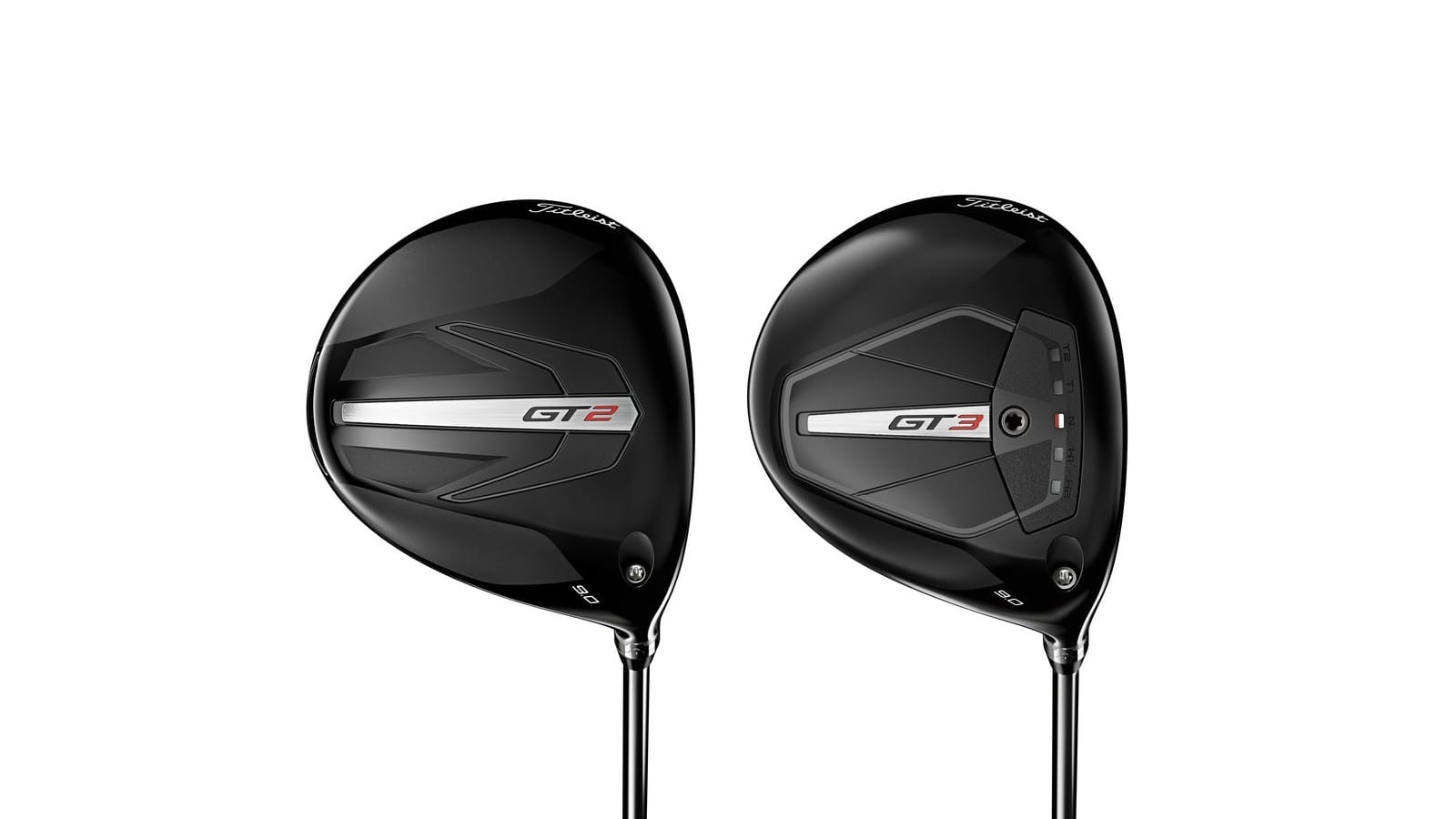
| Adjustable weight | One weight in a rear port | One weight in a five-position CG track near the face |
| Titleist’s one-liner | “High launch, low spin” | “High launch, lower spin” |
Source: the Details and Specs blocks in Titleist’s GT launch release, 2024-08-01.
SureFit is Titleist’s adjustable hosel. It changes loft and lie in 0.75-degree steps (Titleist SureFit), and every setting is in my Titleist SureFit chart post.
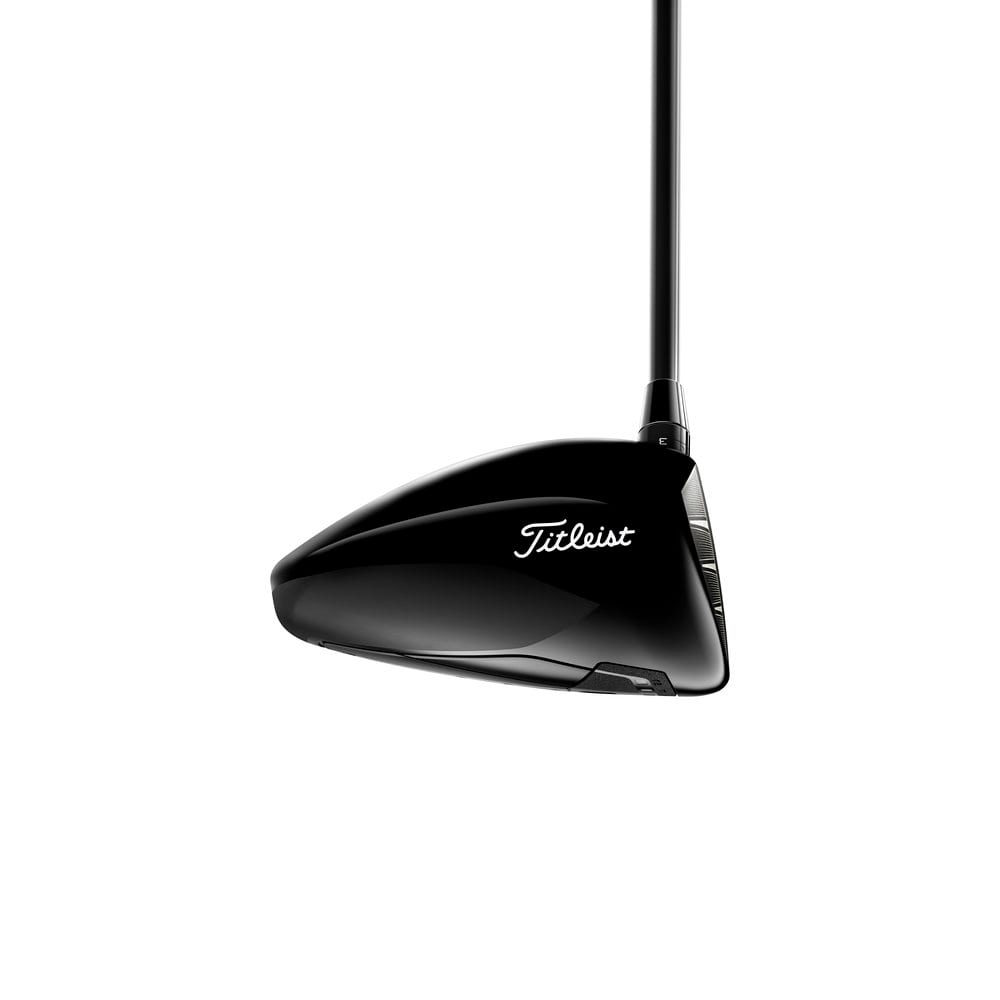
The main difference is where the weight sits. The CG (center of gravity) is the head’s balance point. GT2 has one swappable weight at the back, which Titleist says is there to fine-tune how heavy the head is. GT3 has a CG track, a slot with five positions (H2, H1, N, T1, T2) that slides the weight toward the heel or toe. Titleist says it sits closer to the face than the track on the TSR3.
If you’re coming from a TSR, your current shaft fits either head. Titleist’s SureFit page says TSR and GT shafts are interchangeable. How a shaft swap works is in the driver shaft replacement post.
The shapes differ a little. Titleist describes the GT2 as “longer front-to-back” with a clubface that is “marginally shallower.”
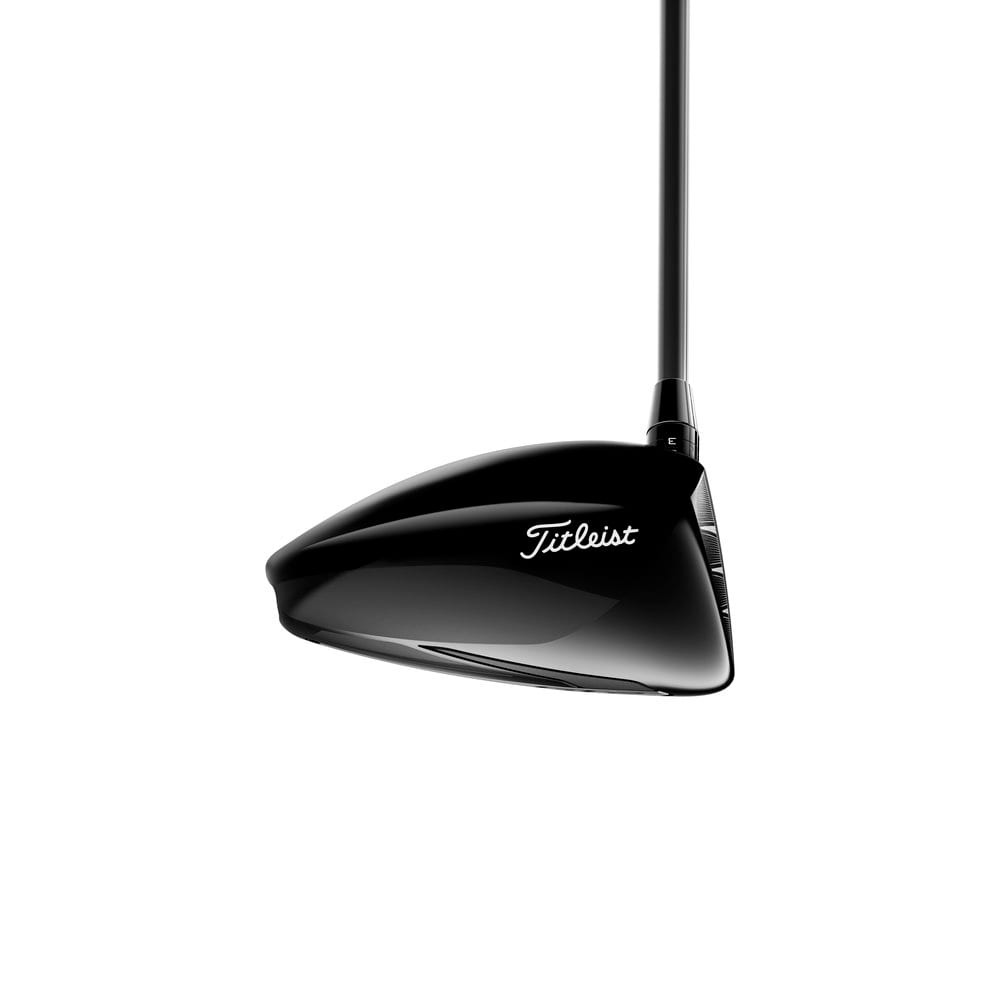
For GT3, Titleist says the head looks “more compact and pear-shaped, and its clubface sits taller.” GOLF.com’s fitters added that GT3 looks like it sits more “open” at address (GOLF.com, 2024-10-29). How face angle changes where the ball starts is in the loft sleeve and face angle post.
If you swing over 105 mph, GT3 is the one that pays off
Club speed (swing speed) is how fast the clubhead is moving at impact, in mph. It’s the clearest dividing line between these two heads.
MyGolfSpy’s 2026 Most Wanted test sorted its human testers into three speed groups, with Pro V1 balls and a Foresight GC Quad launch monitor, a device that measures the ball and club on every shot (MyGolfSpy, 2026-06-26).
- Over 105 mph: GT3 ranked third of 42 drivers. It led on distance at 293.2 yards with a 77.0 percent playable shot rate. GT2 ranked 37th, with a playability rate of 61.9 percent.
- 90 to 105 mph: GT2 ranked 10th of 42, with 253.6 total yards and 83.8 percent playable shots. GT3 went “a few yards” farther, but its straight-shot rate was 45.0 percent.
- Under 90 mph: MyGolfSpy gave no GT3 result. GT2 led the GT line in distance at 200.8 yards and ranked 18th. Its top GT pick here was the GT1, a fourth model outside this comparison.
Be careful with the middle group. MyGolfSpy reports a “playable” rate for GT2 and a “straight-shot” rate for GT3. They’re different measures, so the 45.0 doesn’t mean GT3 was half as playable.
The 2025 test drew a similar line. Its verdict was “Buy the GT2 if: You swing under 100 mph” and “Buy the GT3 if: You swing 105-plus mph.” In its words, “The GT2 is steady. The GT3 is speed-sensitive” (MyGolfSpy, 2025-06-16).
If you don’t know your club speed, any launch monitor session will show it. My swing speed and distance chart shows roughly where your number sits.
If your drives already spin low, GT3 can take too much off
Spin here is backspin on the ball, in revolutions per minute (rpm). Too much and the drive balloons. Too little and it drops out of the air early.
Golf Digest’s robot test, run by Golf Laboratories in March 2026, hit 54 shots with each head at about 95 mph. All heads were 10-degree, on the same shaft, with a Pro V1x ball (Golf Digest, via Yahoo, 2026-07-01). You won’t find a GT2-versus-GT3 line in the story, which compares GT to GTS, so every gap below is my subtraction from its tables.
| Average of 54 shots | GT2 | GT3 |
|---|---|---|
| Ball speed | 137.1 mph | 136.9 mph |
| Carry | 218.2 yds | 219.8 yds |
| Launch angle | 10.6° | 10.9° |
| Spin | 2,695 rpm | 2,402 rpm |
Same ball speed, 1.6 yards more carry, and 293 rpm less spin for GT3. That’s Titleist’s “low” versus “lower” spin, measured.
Golf Digest names 2,400-3,000 rpm as the window “a 95-mph golfer wants to live in,” and GT2 put more of its shots in that window despite its higher average.
The two heads missed the window in opposite directions. GT2 had 11 of 54 shots above 3,100 rpm. GT3 had 15 under 2,100, which Golf Digest called “on the razor’s edge of playable spin for a majority of golfers.” Golf Digest also noted that the GTS2 cut GT2’s high-spin tail in half, which it called good news for golfers with a negative angle of attack, meaning they hit down on the driver.
So read your own launch monitor numbers first. If your drives already spin low, GT3 is more likely to push some of them under that edge. If they balloon, GT3’s lower average is exactly what you’re paying for, and GT2’s high-spin shots are the risk.
Where you miss on the face changes the answer
Golf Digest split each head’s 54 shots across nine face zones, six per zone, and reported carry for each. Carry is the distance the ball flies before it lands. The heel is the end of the face nearest the shaft, and the toe is the far end.
By my count, GT3 carried farther in seven of the nine zones. GT2 won only high in the center, by 0.6 yards, and high on the toe, by 10.0 (223.5 to 213.5). Golf Digest called that “a genuine soft spot on the GT3,” adding that “No head had a worse high-toe number during the test.”
GT3’s biggest gain was low on the heel, 9.1 yards. Measured from each head’s own center hit, GT2 lost 25.4 yards there and GT3 lost 17.9.
If your misses spread across all eight off-center zones, you’d lose almost the same on average: 11.0 yards with GT2 and 11.1 with GT3, by Golf Digest’s figures. What changes is where each head gives it up.
Dispersion is how widely your shots scatter. Golf Digest measured it two ways, and the two point in opposite directions.
| 95% of shots | GT2 | GT3 |
|---|---|---|
| Left-to-right width | 21.2 yds | 23.5 yds |
| Total area | 517 sq yds | 436 sq yds |
GT2 held “the tightest left-right pattern in the entire test.” GT3 covered less ground overall because its carry varied less. Fifty-two of its 54 shots carried between 210 and 230 yards, the tightest 20-yard band in the test. GT2 had 46 of 54 in its tightest 20-yard band.
One pair of sources disagrees. GOLF.com’s True Spec fitters, working with real golfers, said GT2 “was responsive for players who tend to miss toward the heel and low on the face” (GOLF.com, 2024-10-29). On the robot, low heel was where GT2 lost the most. If that’s your miss, I’d start with GT3 and check it against GT2 on a launch monitor.
Before you lean on the robot, check how far your swing is from it. It swung at one speed, about 95 mph, with one loft, shaft and ball, and yours may differ on any of them. You also can’t copy its settings, because Golf Digest doesn’t say where GT2’s weight or GT3’s track was set. And it weighted all nine zones equally, while your own misses probably cluster in a few spots.
GT2 vs GT3 driver, one condition at a time
| Your situation | Lean toward | What you give up |
|---|---|---|
| Club speed over 105 mph | GT3 | Little: GT2 ranked 37th of 42 in that group |
| Club speed 90-105 mph | GT2 | The few extra yards GT3 found there |
| Club speed under 90 mph | GT2 over GT3 | MyGolfSpy’s top GT pick here was GT1; it gave no GT3 result |
| Drives balloon with high spin | GT3 | GT2’s narrower left-right pattern |
| Drives already spin low | GT2 | GT3’s 293 rpm lower average |
| You miss high on the toe | GT2 | GT3’s lead in the other zones |
| You miss low on the heel | GT3, then test | The sources disagree here |
| You miss left and right | GT2 | GT3’s tighter carry band |
If two rows point different ways, I’d let speed decide. Two years of MyGolfSpy testing with real golfers agree on that split, while the robot swung at one speed only.
If you’d rather look at the newer GTS2, my 2026 driver roundup covers it.
If I were buying one used this month, I’d get my club speed and spin read on a launch monitor first. Those two numbers pick the head. The price grade comes after.
Terms in this article
- MAP (minimum advertised price): the lowest price a maker lets retailers advertise. Titleist quotes launch prices this way.
- Launch monitor: a device that measures the ball and club on every shot, such as club speed, ball speed, spin and carry.
- Playable shot rate: MyGolfSpy’s share of shots that stayed playable; the article doesn’t give an exact cutoff.
- Straight-shot rate: a separate MyGolfSpy measure it reported for GT3 at 90-105 mph. The article doesn’t define it, so don’t read it as a playable rate.
- SureFit: Titleist’s adjustable hosel, which changes loft and lie in 0.75-degree steps.
- CG (center of gravity): the balance point of the head. Moving it toward the heel favors a draw, toward the toe a fade.
- CG track: a slot in the GT3’s sole that slides its weight between five positions.
- Club speed: how fast the clubhead is moving at impact, in mph. Also called swing speed.
- Ball speed: how fast the ball leaves the face, in mph.
- Spin: backspin on the ball, in revolutions per minute (rpm).
- Angle of attack: whether the club is moving up or down at impact. Negative means hitting down.
- Carry: how far the ball flies in the air before it lands.
- Launch angle: the angle the ball starts upward at.
- Heel / toe: the end of the face nearest the shaft (heel) and the far end (toe).
- Dispersion: how widely your shots scatter around the target.